
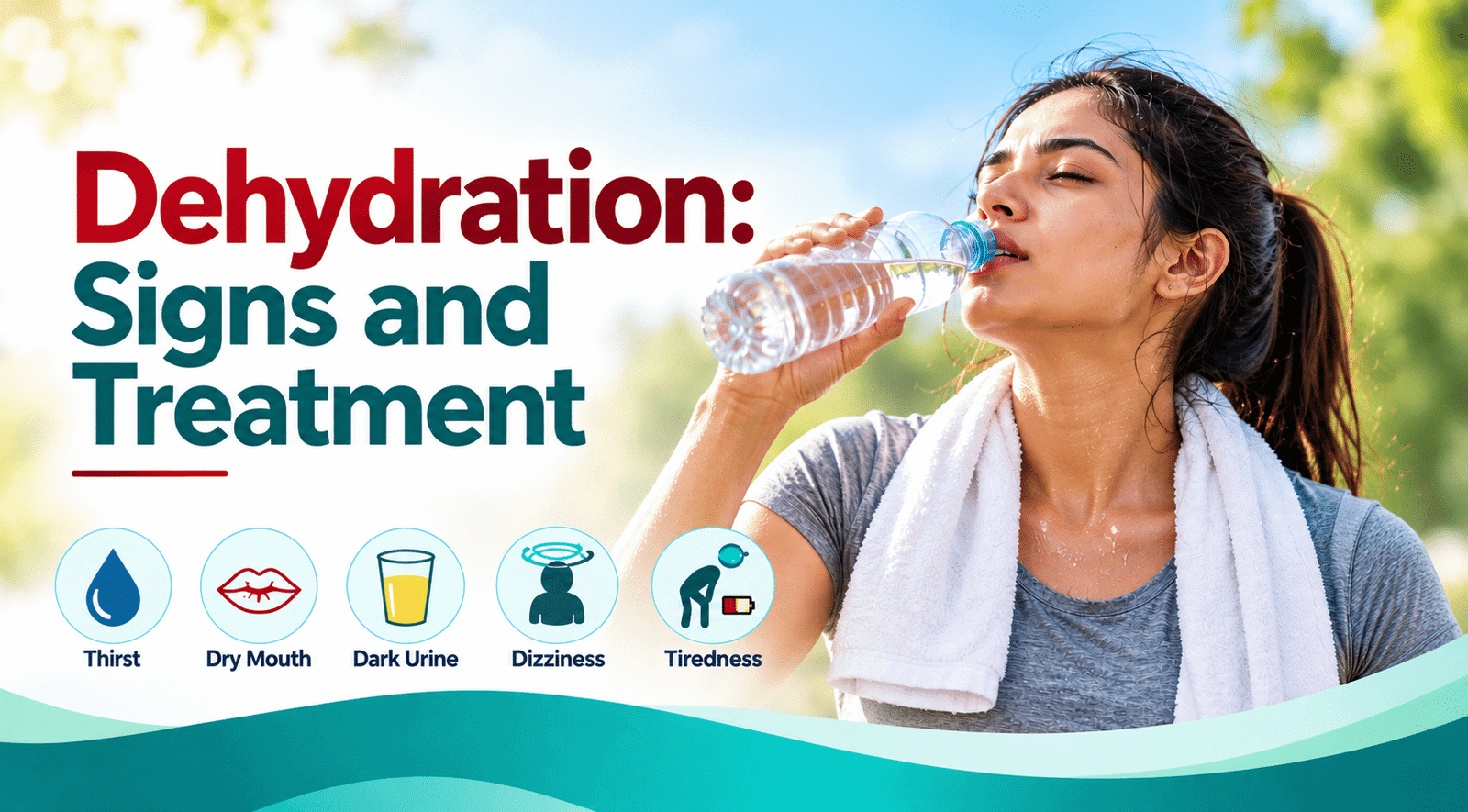
Dehydration: Signs, Symptoms, Causes and Treatment
Have you ever felt unusually tired, dizzy or thirsty after spending time outdoors in hot weather? These symptoms can sometimes indicate dehydration. It occurs when your body loses more fluid than it takes in, leaving it without enough water to function properly.
Dehydration can develop during hot weather, exercise, fever, vomiting or diarrhoea. Mild cases can often be managed by replacing lost fluids, but severe dehydration can become a medical emergency. Recognising the warning signs early can help prevent complications.
What Is Dehydration?
Dehydration happens when your body loses more water and other fluids than you replace. Water is essential for regulating body temperature, supporting circulation, helping the kidneys remove waste and maintaining normal body functions.
Your body continually loses water through urine, sweat and breathing. You also lose fluid when you have a fever, vomiting or diarrhoea. If you do not drink enough to replace these losses, dehydration can develop.
The condition can range from mild to severe. Mild dehydration may improve with appropriate fluid intake, while significant fluid loss can affect blood circulation, kidney function and the body’s electrolyte balance.
What Are the Signs and Symptoms of Dehydration?
The symptoms can vary depending on how much fluid you have lost, your age and your general health. Early warning signs are sometimes easy to overlook, particularly during busy workdays or hot weather.
1. Feeling Very Thirsty
Thirst is one of the body’s signals that it needs more fluid. However, thirst alone cannot tell you how severe dehydration is, and some older adults may not feel thirsty even when they need more fluids.
2. Dark Yellow Urine
Urine that is darker than usual can be a sign that you need more fluids. You may also notice that you urinate less often. Urine colour can be affected by certain foods, medicines and health conditions, so it should not be used as the only measure of hydration.
3. Dry Mouth, Lips and Tongue
Reduced fluid levels can leave your mouth feeling dry or sticky. Your lips may also become dry. These symptoms can occur alongside thirst and reduced urination.
4. Tiredness and Weakness
Dehydration can make ordinary activities feel more difficult. You may feel unusually tired, weak or less energetic than normal. These symptoms can also have other causes, so persistent fatigue should not automatically be attributed to dehydration.
5. Dizziness or Light-headedness
Some people feel dizzy, particularly when standing up. Fluid loss can affect blood volume and blood pressure. If dizziness is severe, persistent or accompanied by fainting or confusion, seek urgent medical care.
6. Headache and Muscle Cramps
A headache or muscle cramps may occur when you have lost fluids, especially after exercise or sweating in hot weather. These symptoms are not specific to dehydration and may need assessment if they continue or become severe.
| Possible symptom | What to watch for |
|---|---|
| Thirst | Unusual or persistent thirst |
| Urine changes | Darker urine or urinating less frequently |
| Dryness | Dry mouth, lips or tongue |
| Low energy | Unusual tiredness or weakness |
| Dizziness | Feeling light-headed, especially on standing |
| Severe warning signs | Confusion, fainting, very little urine or rapid breathing |
What Causes Dehydration?
Dehydration can occur because you do not drink enough fluids, because your body loses too much fluid, or because both happen at the same time.
Hot Weather and Excessive Sweating
Hot and humid conditions can increase sweating. People who work outdoors, exercise in the heat or spend long periods in the sun may lose more fluid than usual.
Vomiting and Diarrhoea
Vomiting and diarrhoea can cause substantial fluid and electrolyte loss in a short time. This is particularly concerning in infants, young children and older adults.
Fever and Illness
Fever can increase fluid loss. When you are unwell, nausea, weakness or a reduced appetite may also make it harder to drink enough.
Not Drinking Enough Water
Busy schedules, limited access to drinking water and reduced thirst can all contribute to dehydration. Older adults may be especially vulnerable because the sensation of thirst can become less reliable with age.
Medicines and Certain Health Conditions
Some medicines, including diuretics (water tablets), increase urine production. Conditions such as uncontrolled diabetes can also increase fluid loss. If you take regular medication or have a chronic illness, ask your healthcare professional about your fluid needs.
Who Is at Higher Risk of Dehydration?
Dehydration can affect anyone, but certain groups need extra care:
- Babies and young children: They can lose fluid quickly during vomiting or diarrhoea.
- Older adults: They may have a reduced sense of thirst or need help accessing drinks.
- People working outdoors: Prolonged heat exposure and sweating can increase fluid loss.
- Athletes and people exercising: Sweating during physical activity increases fluid requirements.
- People with ongoing illnesses: Fever, vomiting, diarrhoea, diabetes and some kidney-related conditions can affect fluid balance.
- People taking certain medicines: Some medicines increase fluid loss or affect the body’s fluid balance.
How Is Dehydration Treated?
Treatment depends on the severity of dehydration and the reason for fluid loss. The main goal is to replace lost fluids and, when necessary, electrolytes such as sodium and potassium.
1. Drink Water Regularly
For mild dehydration, drinking water may be enough. If you feel nauseated, start with small, frequent sips rather than drinking a large amount at once. Increase the amount gradually as tolerated.
If you have been told to restrict fluids because of heart disease, kidney disease or another medical condition, follow your healthcare professional’s advice instead of increasing your intake without guidance.
2. Use an Oral Rehydration Solution (ORS) When Appropriate
When vomiting or diarrhoea causes significant fluid loss, water alone may not replace the salts and glucose your body has lost. An oral rehydration solution (ORS) contains a carefully balanced combination of water, glucose and electrolytes to help the body absorb fluids.
- Choose a reputable ORS product when appropriate.
- Mix the contents with exactly the amount of safe water stated on the packet.
- Do not add extra sugar or salt.
- Take small, frequent sips if you feel nauseated.
- Ask a healthcare professional or pharmacist for advice about use in infants, children or people with chronic illnesses.
Avoid trying to treat significant dehydration with salt tablets or improvised mixtures containing unmeasured amounts of salt. Incorrect concentrations can be dangerous.
3. Replace Fluids After Exercise or Heat Exposure
After physical activity, move to a cooler place and drink fluids to replace sweat losses. Water is usually appropriate for routine, shorter exercise sessions. Electrolyte-containing drinks may be useful during prolonged strenuous activity or heavy sweating, depending on individual needs.
If you develop confusion, collapse or other signs of heatstroke, seek emergency medical care. Do not delay treatment by attempting to manage the condition with drinks alone.
4. Seek Medical Treatment for Severe Dehydration
Severe dehydration may require hospital treatment with intravenous (IV) fluids. A healthcare professional can assess circulation, electrolyte levels, kidney function and the underlying cause of fluid loss.
Do not try to manage severe symptoms at home. Prompt medical treatment can reduce the risk of serious complications.
Dehydration in Babies and Children
Children can become dehydrated more quickly than adults, especially during diarrhoea, vomiting or fever. Parents and caregivers should pay attention to changes in drinking, urination and behaviour.
Warning Signs in Children
- A dry mouth and tongue.
- Fewer wet nappies or less frequent urination than usual.
- Few or no tears when crying.
- Sunken eyes or, in babies, a sunken soft spot on the head.
- Unusual irritability, reduced activity or excessive sleepiness.
- Difficulty drinking or keeping fluids down.
Continue breastfeeding when possible. For children with vomiting or diarrhoea, an appropriate ORS may help replace lost fluid and electrolytes. Give it according to professional guidance and the product instructions.
Do not dilute infant formula beyond its instructions. Seek prompt medical advice if a child has signs of dehydration, and emergency care if the child is difficult to wake, confused, breathing abnormally or unable to drink.
When Should You Seek Medical Help?
Mild symptoms may improve after appropriate fluid replacement. However, dehydration can become serious, and some symptoms need immediate assessment.
Seek emergency medical care immediately if you notice:
- Confusion, unusual behaviour or difficulty waking.
- Fainting, collapse or loss of consciousness.
- Very little or no urine, particularly with other serious symptoms.
- Rapid breathing or a very fast heartbeat with signs of severe illness.
- Cold, pale or blotchy skin, or other signs of shock.
- Suspected heatstroke, especially with confusion or collapse.
Seek prompt medical assessment if dizziness when standing does not go away, urine output is much lower than normal, vomiting prevents you from keeping fluids down, or symptoms continue to worsen despite drinking fluids.
People with diabetes, kidney disease, heart disease, or other significant medical conditions should seek advice early if they develop symptoms of dehydration.
How Can You Prevent Dehydration?
Simple habits can reduce the risk of dehydration, especially during hot weather, exercise or illness.
Drink Fluids Throughout the Day
Drink regularly rather than waiting until you feel very thirsty. Keep drinking water accessible at home, at work and when travelling. Your fluid needs depend on activity, climate, age and health.
Take Extra Care During Hot Weather
Limit strenuous outdoor activity during the hottest part of the day when possible. Take breaks in shaded or cool areas, wear suitable clothing and replace fluids lost through sweating.
Pay Attention During Illness
Fever, vomiting and diarrhoea can increase fluid requirements. Take small, frequent sips if you feel sick and use ORS when appropriate to replace lost fluids and electrolytes.
Include Water-Rich Foods
Foods such as watermelon, oranges, cucumber and soups can contribute to your overall fluid intake. They should complement regular drinking rather than replace fluids when you are significantly dehydrated.
Monitor Older Adults and Children
Check that children and older adults have access to drinks throughout the day. During illness or hot weather, pay particular attention to changes in urination, alertness and drinking habits.
How Do Doctors Diagnose Dehydration?
A healthcare professional assesses your symptoms, recent fluid losses, medical history and physical condition. They may check your heart rate, blood pressure and other vital signs.
Depending on the situation, investigations may include:
- Blood tests to assess electrolyte levels and kidney function.
- Urine tests to help assess hydration or identify an underlying problem.
- Blood glucose testing when diabetes or abnormal blood sugar is suspected.
- Additional tests based on symptoms and the suspected cause.
Not everyone with mild dehydration needs laboratory tests. The investigations depend on the severity of symptoms and the person’s overall health.
What Happens If Dehydration Is Left Untreated?
Untreated dehydration can worsen and lead to complications. Severe fluid loss may reduce blood circulation and affect the kidneys and other organs.
Possible complications include:
- Electrolyte imbalances.
- Low blood pressure and fainting.
- Acute kidney injury.
- Heat-related illness.
- Shock in severe cases.
Early recognition and appropriate treatment can help prevent these complications. Do not wait for symptoms to become severe before seeking medical advice.
Frequently Asked Questions About Dehydration
1. What are the first signs of dehydration?
Early signs may include thirst, dry mouth, darker urine, reduced urination, tiredness and dizziness. Symptoms vary between individuals.
2. How can I treat mild dehydration at home?
Drink water regularly and take small, frequent sips if you feel nauseated. If vomiting or diarrhoea has caused fluid loss, an appropriate ORS can help replace lost fluids and electrolytes. Seek medical advice if symptoms persist or worsen.
3. Can dehydration cause headaches?
Yes, headaches can occur with dehydration. However, headaches have many possible causes. A severe, sudden or persistent headache, or one accompanied by confusion or other concerning symptoms, needs medical assessment.
4. Is drinking water enough to treat dehydration?
Water may be enough for mild dehydration. When substantial fluid and electrolyte losses occur, such as with diarrhoea or vomiting, ORS may be more appropriate. Severe dehydration may require hospital treatment.
5. Who is most likely to develop dehydration?
Babies, young children, older adults, people with vomiting or diarrhoea, and people exposed to hot weather or strenuous activity are at increased risk.
6. When should I go to the hospital for dehydration?
Seek emergency care for confusion, fainting, difficulty waking, very little or no urine with serious symptoms, rapid breathing, collapse or suspected heatstroke. Seek prompt medical advice if you cannot keep fluids down or symptoms are getting worse.
7. Can dehydration affect the kidneys?
Yes. Significant dehydration can reduce blood flow to the kidneys and may cause acute kidney injury. People with existing kidney disease should follow their clinician’s individual fluid advice.
Conclusion
Dehydration is common, particularly during hot weather, exercise and illnesses that cause vomiting or diarrhoea. Thirst, dry mouth, dark urine, tiredness and dizziness are important signs to notice.
Drinking appropriate fluids early can help in mild cases. ORS may be useful when fluid and electrolyte losses occur, while severe dehydration needs urgent medical assessment and may require IV fluids.
Pay attention to your body’s warning signs, take extra care of children and older adults, and seek medical advice when symptoms persist or become severe.
Need Medical Advice?
If you or a family member has persistent symptoms of dehydration, consult a qualified healthcare professional. Severe symptoms require emergency medical care.
Jeevika Hospital
Karthik Nagar, Marathahalli,
Bangalore – 560037
Phone: 7022288504 | 8904739711
Website: www.jeevikahospital.com

