Dietitian vs Nutritionist: What Is the Difference?
Choosing the right nutrition professional can make it easier to understand your dietary needs and make informed decisions about your health. However, the terms “dietitian” and “nutritionist” are often used interchangeably, which can make it difficult to know whom to consult.
Both professionals may help people understand food, nutrition, and healthy eating. Their responsibilities, however, depend on their education, practical training, qualifications, and area of expertise. A professional with clinical nutrition training may be particularly valuable when dietary changes form part of medical care.
This article explains the differences between dietitians and nutritionists, the qualifications to look for in India, and how to choose a professional who is suitable for your needs.
Understanding the Difference Between a Dietitian and a Nutritionist
Dietitians and nutritionists both work with food and nutrition, but their professional roles are not necessarily identical. The distinction depends on their qualifications, training, professional framework, and responsibilities.
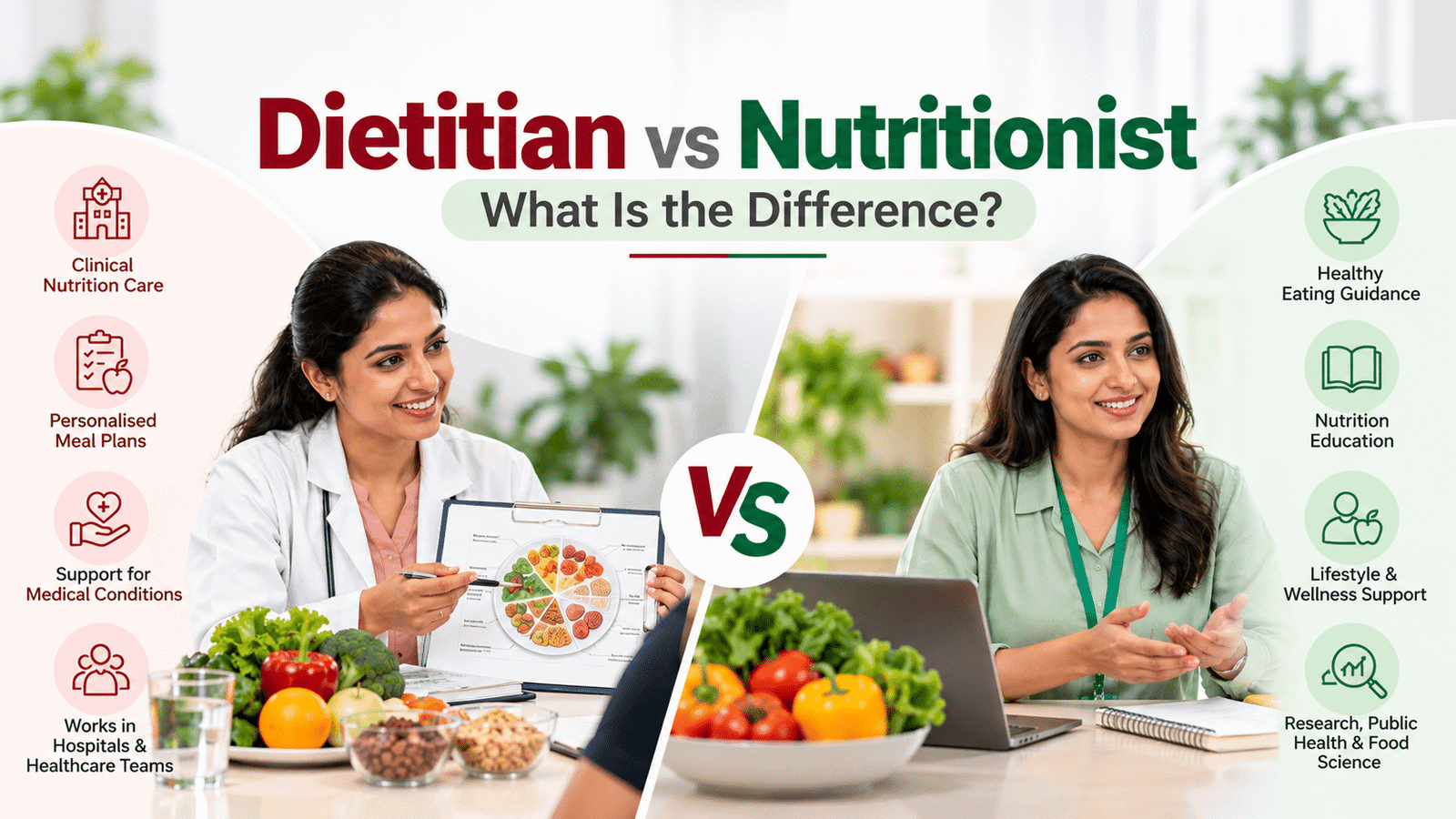
A dietitian may assess nutritional needs, develop individualised meal plans, and provide dietary support for people managing medical conditions, provided their training and professional scope support that work.
A nutritionist may focus on healthy eating, nutrition education, public health, food science, research, or wellness. Some nutritionists also have advanced clinical training, so the title alone does not determine the type of care they can provide.
The use of these professional titles varies between countries. In India, patients should verify an individual’s education and credentials rather than assume that everyone using either title has the same training or professional responsibilities.
What Does a Dietitian Do?
A dietitian uses nutrition science to assess dietary needs and support appropriate food choices. Depending on their training and work setting, dietitians may support healthy individuals, hospital patients, or people with specific nutritional requirements.
1. Nutritional assessment
A dietitian may review a person’s usual diet, medical history, weight changes, lifestyle, nutritional requirements, and relevant clinical information. This assessment helps identify dietary concerns and establish suitable nutrition goals.
2. Individualised meal planning
Dietary recommendations should reflect the person’s health, food preferences, cultural background, budget, and daily routine. A dietitian can help translate general nutrition guidance into practical meals that fit everyday life.
For example, an Indian meal plan may include appropriate combinations and portions of rice or roti, pulses, vegetables, fruits, dairy or suitable alternatives, and other foods according to individual nutritional needs.
3. Clinical nutrition support
Dietitians with appropriate clinical training may help patients manage dietary requirements associated with conditions such as:
- Diabetes and blood glucose management.
- High cholesterol and cardiovascular risk.
- Kidney disease and condition-specific dietary requirements.
- Digestive disorders and nutritional concerns.
- Malnutrition and unintentional weight loss.
- Nutrition needs during cancer treatment or recovery.
- Dietary support during recovery from illness or selected procedures.
Nutrition care for these conditions must be individualised. For example, people with kidney disease may need different amounts of protein, sodium, potassium, phosphorus, or fluids depending on their condition and treatment.
4. Monitoring and follow-up
Follow-up consultations help review progress, address practical challenges, and adjust dietary recommendations when necessary. The aim is to support appropriate nutrition through realistic, sustainable changes rather than unnecessary food restrictions.
What Does a Nutritionist Do?
A nutritionist works with the relationship between food, nutrients, and health. Their responsibilities vary according to their education, professional experience, and specialisation.
1. Promoting balanced eating
Nutritionists may explain how to build balanced meals, include a variety of food groups, understand portion sizes, and make informed food choices.
2. Supporting general wellness
Some nutritionists work with individuals who want to improve their eating habits, understand nutritional requirements, or develop a sustainable approach to weight management.
3. Nutrition education and public health
Nutritionists may contribute to health education programmes, community nutrition initiatives, workshops, and educational materials that help people understand healthy eating.
4. Research and food-related work
Depending on their qualifications, nutrition professionals may work in nutrition research, food science, product development, public health, or nutrition communication.
Dietitian vs Nutritionist: Qualifications to Check in India
Before booking a consultation, review the professional’s education, practical training, and relevant experience. This is particularly important if you need nutrition care alongside medical treatment.
Academic qualifications
Look for relevant education in dietetics, nutrition, clinical nutrition, or an appropriate related field. Ask which institution awarded the qualification and whether it is recognised for the professional’s intended role.
Practical and clinical experience
For people with medical conditions, supervised practical experience and relevant clinical exposure can be important. Ask whether the professional has worked with patients who have similar nutritional needs.
Professional credentials
Where applicable, verify professional registration, certification, or membership with the organisation that issued it. Requirements can vary according to the role and professional framework, so check current requirements rather than relying on a title or certificate alone.
Continuing professional development
Nutrition recommendations should reflect credible evidence. Ongoing professional education helps practitioners maintain and update their knowledge as evidence and guidance develop.
Dietitian vs Nutritionist: A Professional Comparison
| Area | Dietitian | Nutritionist |
|---|---|---|
| Typical focus | Nutrition assessment and dietary care, including clinical nutrition where appropriately trained. | Nutrition education, healthy eating, public health, research, or other areas depending on training. |
| Qualifications | Relevant dietetics or nutrition education, with clinical training where required for the role. | Qualifications vary according to education, specialisation, and professional responsibilities. |
| Individual meal planning | May develop personalised meal plans based on nutritional needs and clinical assessment. | May provide meal-planning guidance within their qualifications and professional scope. |
| Medical conditions | Clinical dietitians may provide condition-specific dietary support as part of a care plan. | Appropriate involvement depends on clinical training, credentials, and scope of practice. |
| General nutrition education | May provide education within their expertise. | May provide education within their expertise. |
| Choosing a professional | Check qualifications, experience, and relevant credentials. | Check qualifications, experience, and relevant credentials. |
These are general descriptions, not absolute distinctions. Professional responsibilities depend on actual qualifications, training, applicable requirements, and the setting in which the individual works.
Which Professional Should You Consult?
Your health needs and reason for seeking nutrition advice should guide your decision. The following examples can help you identify the type of expertise to look for.
For diabetes management
Consider a dietitian or appropriately qualified nutrition professional with experience in diabetes care. Nutrition guidance may cover meal composition, carbohydrate sources, portion sizes, and how food choices fit into your treatment plan.
Dietary advice should complement medical care. Do not adjust insulin or other prescribed diabetes medicines without guidance from your treating healthcare professional.
For weight management
A qualified professional with relevant weight-management experience can help you develop realistic eating habits that fit your health needs and lifestyle. Look for an evidence-based approach rather than promises of rapid or guaranteed weight loss.
For kidney disease
Seek guidance from a clinical dietitian experienced in kidney nutrition or another appropriately qualified professional working with your medical team. Dietary requirements vary according to kidney function, treatment, laboratory results, and other health factors.
For pregnancy and breastfeeding
Choose a professional with relevant maternal nutrition experience. Nutritional needs change during pregnancy and breastfeeding, and advice should reflect the individual’s health, nutritional status, and stage of pregnancy or recovery.
For general healthy eating
If you are generally healthy and want to improve your eating habits, either a suitably qualified dietitian or nutritionist may be appropriate. Check that the professional’s training matches your goals.
What to Expect During a Nutrition Consultation
An initial appointment usually involves discussing your health, current eating habits, and goals. The details will vary depending on your needs and the professional’s role.
Review of your health history
You may be asked about medical conditions, medicines, allergies, food preferences, symptoms, daily routine, and previous attempts to change your diet.
Assessment of your usual eating habits
Discussing your typical meals, snacks, drinks, and eating schedule helps the professional understand your current habits and identify practical areas for improvement.
Personalised recommendations
Depending on the consultation, recommendations may include meal planning, portion guidance, food substitutions, or strategies for meeting specific nutritional needs. Clinical nutrition recommendations may also take account of relevant medical information and your treatment plan.
Follow-up and progress review
Follow-up appointments can help assess how the plan is working and identify changes that may be needed. The objective is to develop a practical approach that supports your health over time.
To prepare for your appointment, consider bringing relevant test results, a list of current medicines, and a brief record of your usual meals.
How to Choose a Qualified Nutrition Professional
A suitable professional should explain recommendations clearly, consider your circumstances, and respect your individual needs. Before booking, consider asking:
- What are your relevant qualifications and areas of specialisation?
- Do you have experience supporting people with my health condition or goal?
- Can I verify your professional credentials, where applicable?
- Will the recommendations account for my medical history and food preferences?
- How will progress be reviewed?
- Will you coordinate with my treating doctor when necessary?
Be cautious about recommendations that promise guaranteed results, promote unnecessary food restrictions, or advise stopping prescribed medicines without consulting the treating healthcare professional.
A professional nutrition plan should be evidence-based, realistic, and appropriate for the person’s health and nutritional requirements.
Frequently Asked Questions
Is a dietitian better than a nutritionist?
Neither title alone establishes who is more suitable. The right choice depends on your needs, the professional’s qualifications, and relevant experience. For medical conditions, look for appropriate clinical nutrition expertise.
Can a nutritionist help with diabetes?
A qualified nutrition professional may support healthy eating for diabetes, depending on their training and scope of practice. Choose someone with relevant expertise who can work alongside your treating healthcare team.
Can a dietitian help with weight loss?
Yes. A dietitian can help develop a personalised eating plan that supports appropriate weight management while considering your nutritional needs, medical history, and lifestyle.
Do dietitians and nutritionists provide meal plans?
Both may provide meal-planning guidance, depending on their qualifications and professional role. Recommendations should reflect the individual’s goals, preferences, and health needs.
Are dietitians and nutritionists the same in India?
The titles are sometimes used interchangeably, but they do not necessarily indicate identical education or expertise. Verify the individual’s qualifications, practical experience, and relevant credentials before choosing a professional.
How often should I consult a dietitian?
The frequency depends on your health needs and goals. Some people need occasional advice, while others may benefit from follow-up appointments during treatment or dietary changes. Your professional can recommend an appropriate schedule.
What should I bring to my first consultation?
Bring relevant medical records or test results, a list of current medicines, information about food allergies, and notes about your usual meals. These details may help the professional understand your needs.
Conclusion
Dietitians and nutritionists both contribute to nutrition education and healthier food choices, but their roles and qualifications may differ. Dietitians may provide clinical dietary care when appropriately trained, while nutritionists may work in general nutrition, public health, research, wellness, or other specialised areas.
Nutrition Guidance at Jeevika Hospital
If you need help understanding your nutritional needs, consult an appropriately qualified healthcare or nutrition professional. Personalised guidance can help you make informed decisions that suit your health and lifestyle.
Jeevika Hospital
Karthik Nagar, Marathahalli, Bangalore – 560037
Call: 8904739711 | 7022288504
Website: www.jeevikahospital.com
Medical disclaimer: This article is intended for general educational purposes and does not replace individual medical or nutrition advice.

