
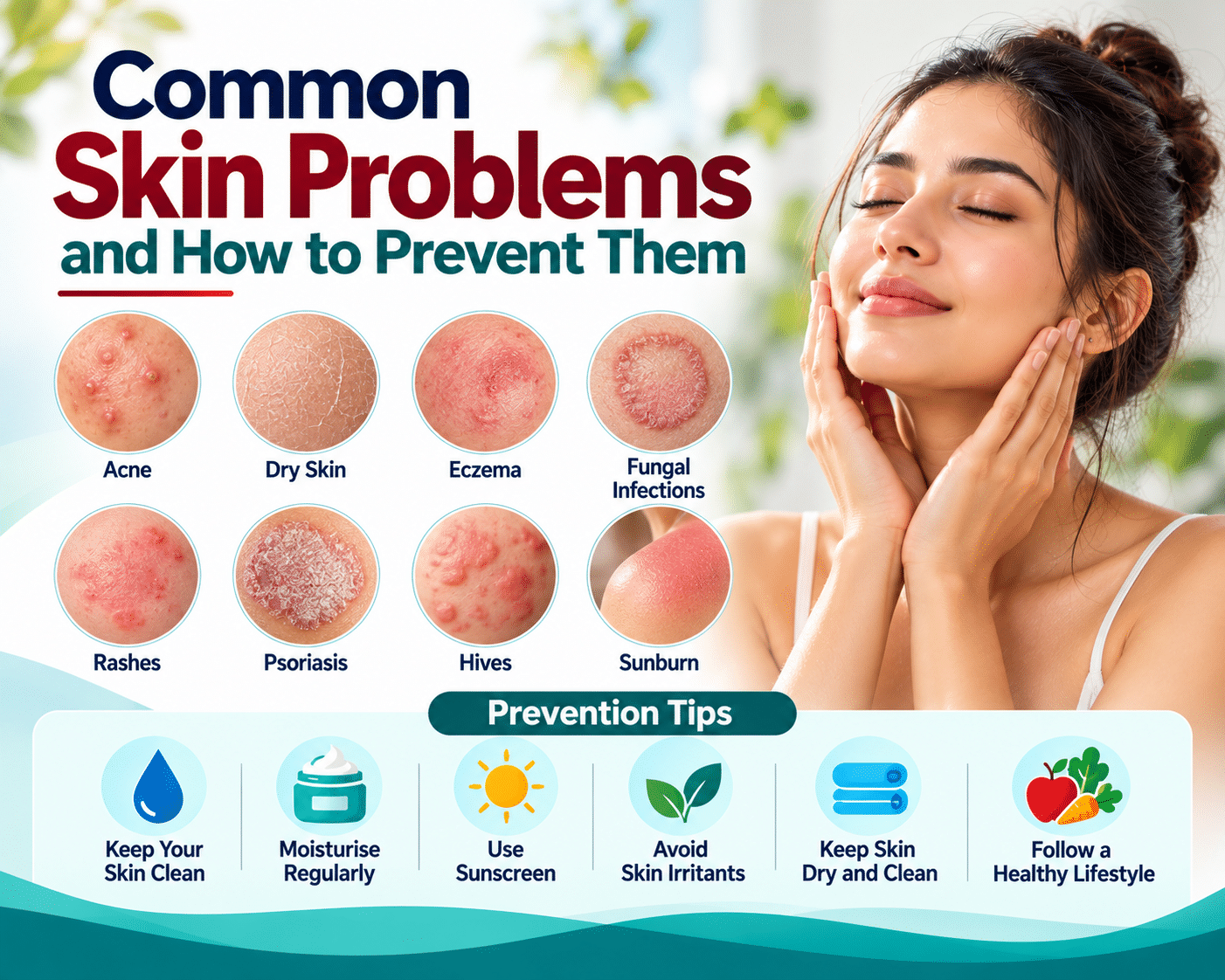
Common Skin Problems and How to Prevent Them
Your skin protects your body every day. It helps regulate body temperature, retains moisture and acts as a barrier against many harmful substances and germs. But changes in weather, sweat, skin products, infections and underlying health conditions can affect how your skin looks and feels.
A few pimples, an itchy patch or unusually dry skin may seem minor at first. However, some skin problems can persist, spread or cause scarring if they are not managed properly. Knowing what to look for can help you choose the right care and recognise when you need medical advice.
What Are Common Skin Problems?
Skin problems are conditions that affect the skin’s appearance, texture or normal function. They may cause pimples, redness, itching, dryness, scaling, swelling or changes in skin colour. Some last only a few days, while others need long-term care.
The causes vary. Acne often develops when hair follicles become blocked with oil and dead skin cells. Eczema involves skin inflammation, while fungal infections are caused by fungi. Psoriasis is an immune-mediated condition that can cause thick, scaly patches.
Several skin conditions can look alike. For example, a fungal infection and eczema may both cause itchy, red or scaly skin. The correct diagnosis matters because their treatments differ.
8 Common Skin Problems and How to Prevent Them
1. Acne and Pimples
Acne is a common skin condition that causes blackheads, whiteheads, pimples and sometimes deep, painful lumps. It often affects the face, chest, shoulders and back.
Acne develops when hair follicles become blocked by oil and dead skin cells. Hormonal changes can contribute, which is why acne commonly begins during adolescence. Adults can also develop acne.
Common signs include:
- Blackheads and whiteheads.
- Red or inflamed pimples.
- Pus-filled spots.
- Deep, tender lumps in more severe cases.
- Dark marks or scars after some breakouts.
How to reduce acne flare-ups:
- Wash your face gently, usually twice daily and after heavy sweating.
- Choose products labelled non-comedogenic when possible.
- Avoid scrubbing your face or squeezing pimples.
- Remove makeup before sleeping.
- Use acne treatments appropriate for your skin and follow their instructions.
Acne is not a sign of poor hygiene. Washing too often and using harsh products can irritate the skin. Consult a dermatologist if acne is painful, severe, causing scars or not improving with appropriate treatment.
2. Eczema
Eczema is a group of conditions that cause inflamed, itchy and irritated skin. Atopic dermatitis is a common type. It can affect children and adults and often follows a pattern of flare-ups and improvement.
The skin may become dry, rough, cracked or sore. Depending on your skin tone, inflammation may appear red, purple, brown, grey or darker than the surrounding skin.
Common signs include:
- Persistent itching.
- Dry or sensitive skin.
- Inflamed patches or scaling.
- Cracked skin during severe flare-ups.
- Thickened skin after repeated scratching.
How to reduce flare-ups:
- Use a fragrance-free moisturiser regularly.
- Take short baths or showers with lukewarm water.
- Choose gentle cleansers instead of harsh soaps.
- Avoid personal care products that trigger irritation.
- Wear comfortable clothing that does not irritate your skin.
Eczema is not contagious. Although good skin care can help manage symptoms, it cannot guarantee that flare-ups will be prevented. A clinician may recommend prescription treatment depending on the type and severity.
3. Fungal Skin Infections
Fungal infections can affect the feet, groin, body folds, scalp and other areas. Ringworm, athlete’s foot and jock itch are examples. Despite its name, ringworm is caused by a fungus, not a worm.
These infections often thrive in warm, moist areas. Some spread through direct skin contact, shared personal items or contaminated surfaces.
Possible symptoms include:
- Itchy or scaly patches.
- Ring-shaped rashes with a more noticeable outer edge.
- Cracked or peeling skin between the toes.
- Redness or irritation in skin folds.
- Changes to the scalp or hair in some infections.
How to reduce the risk:
- Dry your skin carefully after bathing, especially between the toes and in skin folds.
- Change out of sweaty clothes promptly.
- Wear clean socks and breathable footwear.
- Avoid sharing towels, clothing, footwear or grooming tools.
- Wear suitable footwear in communal showers and changing areas.
Fungal infections usually need an appropriate antifungal treatment. Do not assume every itchy rash is fungal, and avoid using steroid-containing combination creams without medical advice. Steroids can mask or worsen some fungal infections.
Seek medical advice if the rash spreads, affects the scalp or nails, keeps returning or does not improve with appropriate treatment.
4. Contact Dermatitis
Contact dermatitis occurs when the skin reacts to something it touches. It may be caused by an irritant, such as a harsh cleaning product, or an allergen, such as a particular fragrance, metal or cosmetic ingredient.
Common signs include:
- Itching or burning.
- Dry, cracked or inflamed skin.
- A rash in the area that touched the trigger.
- Swelling or blisters in some cases.
How to prevent contact dermatitis:
- Identify and avoid the product or substance causing the reaction.
- Use suitable protective gloves when handling irritants.
- Choose fragrance-free products if fragrances trigger symptoms.
- Wash exposed skin gently after contact with an irritant.
- Use a suitable moisturiser to support the skin barrier.
If the rash continues despite avoiding the suspected trigger, a dermatologist can help identify the cause. Allergy patch testing may be useful in selected cases.
5. Psoriasis
Psoriasis is a long-term inflammatory condition involving the immune system. It can cause raised, thick or scaly patches of skin. The patches may be itchy, sore or cracked. Common areas include the scalp, elbows, knees and lower back.
Psoriasis is not contagious. It can run in families, and flare-ups may be associated with factors such as infections, stress, skin injury or certain medicines.
How to manage psoriasis:
- Use moisturisers to help reduce dryness.
- Avoid scratching or injuring affected areas.
- Learn which factors appear to trigger your flare-ups.
- Follow the treatment plan recommended by your dermatologist.
- Seek advice if you develop joint pain, swelling or stiffness.
Psoriasis cannot currently be prevented completely, but treatment can help control symptoms and reduce flare-ups. Do not stop prescribed treatment or change medicines without discussing it with your clinician.
6. Dry Skin
Dry skin can feel tight, rough, flaky or itchy. It may develop in cold or dry weather, after frequent hot showers, or because of ageing, skin conditions or certain medicines.
Ways to prevent and manage dry skin:
- Apply a suitable moisturiser regularly, especially after bathing.
- Use lukewarm rather than very hot water.
- Choose mild, fragrance-free cleansers.
- Avoid excessive scrubbing and long, hot showers.
- Protect your hands from harsh cleaning products.
Thick creams or ointments may work better than light lotions for very dry skin. If dryness becomes painful, cracks, bleeds or persists despite regular care, seek medical advice.
7. Hives (Urticaria)
Hives are raised, itchy welts that may appear suddenly and change shape or location. They can occur as part of an allergic reaction or in response to infections, medicines, heat, pressure or other triggers. Sometimes no clear cause is found.
How to manage hives:
- Notice whether particular foods, medicines or exposures trigger symptoms.
- Avoid known triggers when it is safe to do so.
- Use a cool compress to help relieve itching.
- Ask a pharmacist or clinician whether an antihistamine is appropriate.
- Seek medical advice if hives recur or persist.
8. Sunburn and Sun Damage
Too much ultraviolet (UV) radiation from sunlight can cause sunburn and contribute to premature skin ageing and skin cancer. Sunburn may cause warmth, tenderness, swelling and peeling. Skin of all tones can be damaged by UV radiation.
How to protect your skin:
- Use a broad-spectrum sunscreen with SPF 30 or higher.
- Apply enough sunscreen to exposed skin and reapply as directed, especially after swimming, sweating or towel drying.
- Wear protective clothing, sunglasses and a wide-brimmed hat.
- Seek shade when UV exposure is high.
- Avoid tanning beds and deliberate tanning.
Check your skin for new or changing spots, moles or growths. Arrange a medical assessment if a spot changes in size, shape or colour, bleeds, or does not heal.
Daily Skin Care Routine for Healthy Skin
A good skin care routine does not need to include many products. The aim is to clean the skin gently, maintain moisture and protect it from the sun without causing unnecessary irritation.
Morning Routine
- Cleanse your face gently, or rinse with water if that suits your skin.
- Apply a moisturiser suited to your skin type.
- Use broad-spectrum SPF 30 or higher sunscreen on exposed skin.
Evening Routine
- Remove makeup and wash away sweat, dirt and sunscreen.
- Use prescribed skin treatments according to their instructions.
- Apply moisturiser to help reduce dryness and support the skin barrier.
Introduce new products gradually, especially if your skin is sensitive. Stop using a product that causes a clear irritation or allergic reaction and seek advice if symptoms are significant.
10 Practical Ways to Prevent Common Skin Problems
1. Keep Your Skin Clean Without Overwashing
Wash gently to remove sweat, dirt and excess oil. Harsh soaps, rough scrubbing and frequent washing can damage the skin barrier and increase irritation.
2. Moisturise Regularly
Use a moisturiser that suits your skin. Fragrance-free products are often a good choice for sensitive skin. Moisturising is particularly helpful after bathing.
3. Protect Your Skin from the Sun
Combine sunscreen with protective clothing and shade. Sun protection helps reduce sunburn and long-term UV damage.
4. Change Out of Sweaty Clothes
After exercise or outdoor work, change into clean, dry clothing. Keep areas such as the feet and skin folds dry to reduce moisture-related irritation and the risk of some fungal infections.
5. Avoid Sharing Personal Items
Do not share towels, razors or other personal items that may spread certain infections. Use suitable footwear in communal showers and changing rooms.
6. Choose Products Carefully
Select cleansers, moisturisers and cosmetics suited to your skin. If you have acne, non-comedogenic products may help reduce clogged pores. If you have eczema or contact dermatitis, avoid ingredients that trigger your symptoms.
7. Avoid Picking or Scratching
Picking pimples can increase inflammation and the risk of scars. Repeated scratching can damage the skin and may lead to infection. Treat the underlying cause of itching instead of relying on scratching for relief.
8. Follow a Balanced Lifestyle
Eat a varied, balanced diet, sleep adequately and stay physically active. These habits support general health, although they cannot guarantee that acne, eczema or other skin conditions will be prevented.
9. Avoid Unnecessary Skin Treatments
Strong exfoliants, unverified home remedies and multiple active ingredients may irritate your skin. Introduce treatments carefully and seek professional guidance when you are unsure which product is suitable.
10. Get Persistent Symptoms Checked
A rash that repeatedly returns or does not improve may need a specific diagnosis. Early assessment can help you avoid unsuitable treatments and reduce the chance of complications.
Common Skin Care Mistakes to Avoid
- Using too many products: Combining several active ingredients may irritate the skin.
- Scrubbing acne: Rough scrubbing can worsen irritation and inflammation.
- Using someone else’s prescription cream: A treatment that helps one person may be unsuitable for another.
- Using steroid combination creams without advice: These can mask symptoms and worsen some infections when used incorrectly.
- Ignoring persistent rashes: Ongoing symptoms may need diagnosis and targeted treatment.
- Skipping sunscreen: UV exposure can damage skin even when the weather does not feel particularly hot.
- Expecting instant results: Many skin treatments take time. Follow product instructions and your clinician’s advice.
When Should You See a Dermatologist?
Many mild skin problems improve with appropriate care. However, professional assessment is important when symptoms persist, worsen or affect your daily activities.
Arrange a medical consultation if you have:
- A rash that does not improve or keeps returning.
- Severe or persistent itching.
- Painful acne, deep lumps or developing scars.
- A suspected fungal infection that spreads or does not respond to appropriate treatment.
- Skin that becomes increasingly red, warm, swollen or painful.
- A new or changing mole, growth or non-healing sore.
- Skin symptoms that interfere with sleep or affect your quality of life.
How Are Skin Problems Diagnosed?
A dermatologist usually starts by examining the affected skin and asking when the symptoms began, whether they itch or hurt, and what makes them better or worse.
The clinician may also ask about:
- Personal and family history of skin conditions.
- New skin care products, medicines or workplace exposures.
- Recent travel, close contacts or possible infections.
- Other symptoms, including fever or joint pain.
Depending on the suspected condition, further tests may include a skin scraping, fungal test, allergy patch test or skin biopsy. Not every skin problem requires testing.
Correct diagnosis helps determine whether you need a moisturiser, topical medicine, antifungal treatment, acne treatment or another form of care.
Frequently Asked Questions
1. What are the most common skin problems?
Common problems include acne, eczema, fungal infections, contact dermatitis, psoriasis, dry skin, hives and sunburn. Their causes and treatments differ, so persistent symptoms should be assessed appropriately.
2. How can I keep my skin healthy every day?
Cleanse gently, moisturise regularly, use sunscreen, avoid known irritants and choose products suited to your skin. Avoid scrubbing or picking at affected areas.
3. Can drinking more water prevent skin problems?
Drinking enough water supports overall health, but extra water alone will not prevent acne, eczema, psoriasis or fungal infections. Skin care should match the condition and its underlying cause.
4. Are all itchy rashes caused by fungal infections?
No. Itching can occur with eczema, contact dermatitis, hives, fungal infections and other conditions. A clinician can help identify the cause and recommend suitable treatment.
5. Can I use the same cream for every skin problem?
No. Different conditions require different treatments. Using the wrong cream may irritate the skin, delay diagnosis or worsen certain infections. Seek advice if you are unsure which treatment is appropriate.
6. When should I consult a dermatologist?
Consult a dermatologist for persistent, recurrent, painful or worsening skin symptoms, acne that causes scars, or unexplained changes in a mole. Seek urgent care for severe symptoms or a possible serious allergic reaction.
7. Are skin problems contagious?
Some are, including certain fungal and bacterial infections. Acne, eczema and psoriasis are not contagious. The risk depends on the specific condition, so diagnosis is important.
8. Does oily skin mean I do not need moisturiser?
No. Oily skin can still become dehydrated or irritated. A lightweight, non-comedogenic moisturiser may be suitable. Choose products based on how your skin responds.
Conclusion
Common skin problems can range from occasional pimples and dry patches to persistent inflammatory conditions and infections. Understanding the symptoms is a useful first step, but appearance alone does not always reveal the cause.
A gentle skin care routine, regular moisturising, sun protection, clean and dry clothing, and avoiding known irritants can help support healthy skin. Some conditions, however, need specific medical treatment and cannot be prevented completely.
If a skin problem persists, spreads, becomes painful or affects your everyday life, consult a qualified healthcare professional. Getting the right diagnosis can help you choose appropriate treatment and protect your skin over time.
Need Help With a Skin Problem?
Persistent itching, acne, rashes or other skin changes may need professional assessment. A qualified dermatologist can help identify the cause and recommend appropriate treatment.
Jeevika Hospital
Karthik Nagar, Marathahalli,
Bangalore – 560037
Phone: 7022288504 | 8904739711
Website: www.jeevikahospital.com
