
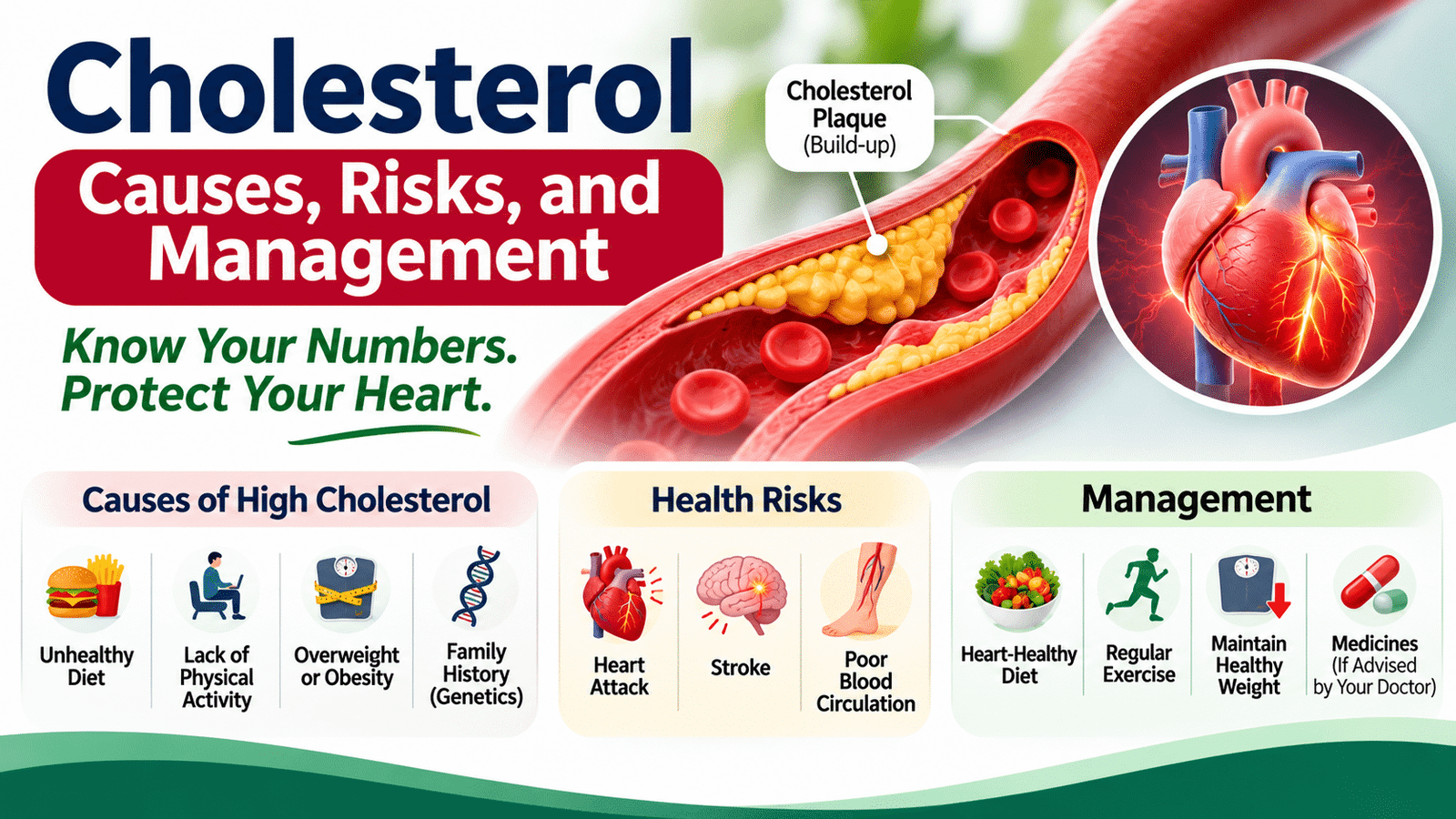
Cholesterol: Causes, Risks, and Management
Cholesterol is often discussed as something harmful, especially when people receive an abnormal blood test report. However, cholesterol itself is not bad. Your body needs it to produce hormones, build healthy cells, and support several important functions.
The problem begins when certain types of cholesterol become too high in the blood. Over time, excess cholesterol can collect inside blood vessels, forming deposits that narrow the arteries. This can increase the risk of heart attack, stroke, and other cardiovascular problems.
High cholesterol usually does not cause noticeable symptoms. Many people discover it only during a routine blood test. Understanding your cholesterol levels, identifying risk factors, and making appropriate lifestyle changes can help protect your long-term heart health.
What Is Cholesterol?
Cholesterol is a waxy, fat-like substance found in your blood and in every cell of your body. Your liver naturally produces cholesterol because your body needs it for several essential functions.
Cholesterol helps your body:
- Build and maintain healthy cell membranes
- Produce certain hormones
- Make vitamin D
- Produce bile acids that help digest fats
Because cholesterol does not mix well with blood, it travels through the bloodstream in particles called lipoproteins. The two commonly discussed types are LDL and HDL.
Types of Cholesterol
1. LDL Cholesterol – The “Bad” Cholesterol
Low-density lipoprotein (LDL) carries cholesterol from the liver to different parts of the body. When LDL levels are too high, cholesterol can build up in the walls of arteries.
This buildup may gradually form plaque, making arteries narrower and less flexible. High LDL cholesterol is a major risk factor for cardiovascular disease.
2. HDL Cholesterol – The “Good” Cholesterol
High-density lipoprotein (HDL) helps carry cholesterol away from tissues and blood vessels toward the liver, where it can be processed and removed.
HDL is often called good cholesterol because higher levels are generally associated with a lower cardiovascular risk. However, HDL levels alone do not determine your heart health. Your complete cholesterol profile and other risk factors matter.
3. Triglycerides
Triglycerides are another type of fat found in your blood. Your body uses them to store energy. When you consume more calories than your body needs, especially from excess sugar, refined carbohydrates, and alcohol, those calories may be converted into triglycerides.
High triglyceride levels, particularly when combined with high LDL or low HDL cholesterol, can increase cardiovascular risk. Very high triglyceride levels can also increase the risk of pancreatitis.
What Is a Lipid Profile Test?
A lipid profile is a blood test that measures different types of fats in your blood. It helps doctors understand your cholesterol levels and assess your risk of cardiovascular disease.
A typical lipid profile includes:
- Total cholesterol: The overall amount of cholesterol in your blood.
- LDL cholesterol: The cholesterol that can contribute to plaque buildup in arteries.
- HDL cholesterol: The cholesterol involved in transporting cholesterol back toward the liver.
- Triglycerides: The main type of fat used by the body for energy storage.
Doctors may also calculate non-HDL cholesterol or recommend additional tests such as apolipoprotein B (ApoB) or lipoprotein(a), depending on your risk factors and medical history.
Whether you need to fast before a lipid profile depends on the test and your doctor’s instructions.
What Causes High Cholesterol?
High cholesterol can develop due to a combination of lifestyle habits, inherited factors, age, and certain medical conditions. It is not always caused by eating fatty foods.
1. Eating Too Much Saturated Fat
Regularly eating foods high in saturated fat can raise LDL cholesterol in many people. These foods may include:
- Fatty cuts of meat
- Butter and ghee in excess
- Full-fat dairy products
- High-fat processed meats
- Some bakery products
- Foods made with palm oil or coconut oil
Reducing saturated fat and replacing it with healthier unsaturated fats can support better cholesterol levels.
2. Lack of Physical Activity
A sedentary lifestyle may contribute to unhealthy cholesterol levels, weight gain, and a higher risk of cardiovascular disease.
Regular physical activity can help improve your overall lipid profile, support weight management, and improve blood pressure and blood sugar control.
3. Overweight and Obesity
Excess body weight can be associated with higher triglycerides, higher LDL cholesterol, and lower HDL cholesterol.
Even gradual weight loss, when medically appropriate, may help improve cholesterol and other metabolic risk factors.
4. Smoking and Tobacco Use
Smoking damages blood vessels and can lower HDL cholesterol. It also makes cardiovascular disease more likely.
Stopping smoking is one of the most important steps you can take to protect your heart and blood vessels.
5. Diabetes and Other Medical Conditions
Diabetes, hypothyroidism, chronic kidney disease, and some other health conditions can affect cholesterol and triglyceride levels.
People with diabetes may have a combination of high triglycerides, low HDL cholesterol, and cholesterol particles that increase cardiovascular risk.
6. Family History and Genetics
Some people inherit genes that cause their bodies to produce too much cholesterol or remove LDL cholesterol from the blood less effectively.
Familial hypercholesterolemia is an inherited condition that can cause very high LDL cholesterol from an early age. People with a family history of premature heart disease or very high cholesterol may need earlier testing and medical evaluation.
7. Age and Hormonal Changes
Cholesterol levels may change with age. Women may experience changes in LDL and total cholesterol after menopause.
8. Certain Medicines
Some medicines may affect lipid levels. If your cholesterol changes unexpectedly after starting a medicine, discuss it with your doctor. Do not stop prescribed medicines without medical advice.
What Are the Symptoms of High Cholesterol?
High cholesterol usually does not cause symptoms. You may feel completely healthy even when your LDL cholesterol is elevated.
It generally cannot be detected by appearance, body weight, or how energetic you feel. A blood test is needed to identify abnormal cholesterol levels.
In some people with inherited or severe cholesterol disorders, cholesterol deposits may develop in certain tissues. These can include:
- Yellowish deposits around the eyelids
- Small cholesterol deposits in tendons
- A pale ring around the cornea, especially at a younger age
These findings are not present in everyone with high cholesterol and should be evaluated by a healthcare professional.
Health Risks of High Cholesterol
1. Atherosclerosis
Excess LDL cholesterol can contribute to the formation of plaque inside artery walls. This process is called atherosclerosis.
As plaque develops, arteries may become narrower and less flexible, restricting blood flow to important organs.
2. Heart Disease
If the arteries supplying blood to the heart become narrowed, a person may develop coronary artery disease.
Reduced blood flow may cause chest discomfort or angina. If blood flow becomes completely blocked, it may lead to a heart attack.
3. Stroke
Cholesterol-related plaque can affect arteries supplying blood to the brain. If blood flow is blocked or a blood vessel is affected, a stroke may occur.
Sudden weakness on one side of the body, difficulty speaking, facial drooping, or sudden loss of balance requires immediate emergency medical attention.
4. Peripheral Artery Disease
Plaque buildup in arteries supplying the legs may reduce blood flow. Some people experience leg pain while walking, cold feet, slow-healing wounds, or other circulation-related symptoms.
5. Increased Cardiovascular Risk
The risk associated with cholesterol depends on several factors, including LDL levels, age, blood pressure, diabetes, smoking, kidney disease, family history, and whether a person has already experienced cardiovascular disease.
Doctors assess these factors together rather than relying on a single cholesterol number.
How to Manage High Cholesterol
Cholesterol management usually involves healthy lifestyle habits, regular monitoring, and medication when appropriate. The treatment plan depends on your cholesterol levels and overall cardiovascular risk.
1. Follow a Heart-Healthy Diet
Making healthier food choices is an important part of cholesterol management.
Try to include more:
- Vegetables and fruits
- Whole grains such as oats, millets, and whole wheat
- Beans, lentils, and pulses
- Nuts and seeds in appropriate portions
- Fish and lean protein sources
- Foods containing unsaturated fats
Limit foods high in saturated fats and trans fats. Reduce frequent consumption of deep-fried foods, processed snacks, fatty meats, and products containing partially hydrogenated oils.
For an Indian diet, healthier choices may include dal, vegetables, whole grains, beans, nuts, and appropriate amounts of vegetable oils rather than regularly relying on foods rich in saturated fats.
2. Exercise Regularly
Physical activity supports heart health and may help improve triglycerides and HDL cholesterol.
Adults should aim for at least 150 minutes of moderate-intensity aerobic activity each week, or an equivalent amount of vigorous activity, if appropriate for their health and fitness level.
Examples include:
- Brisk walking
- Cycling
- Swimming
- Dancing
- Light jogging
- Regular movement breaks during long periods of sitting
If you have a heart condition, significant joint problems, or have been inactive for a long time, consult your doctor before starting an intense exercise programme.
3. Maintain a Healthy Weight
If you are overweight, gradual and sustainable weight loss may help improve cholesterol, blood pressure, and blood sugar levels.
Focus on consistent habits rather than crash diets or extreme weight-loss methods.
4. Stop Smoking
Smoking affects blood vessels and increases cardiovascular risk. Quitting smoking can improve overall cardiovascular health.
Ask your healthcare professional for support if you find it difficult to stop smoking.
5. Limit Alcohol
Alcohol may raise triglyceride levels, particularly when consumed in excess. Reducing or avoiding alcohol may be recommended depending on your triglyceride levels and other medical conditions.
6. Manage Diabetes and Blood Pressure
Cholesterol is only one part of cardiovascular health. High blood sugar and high blood pressure can also damage blood vessels.
Managing these conditions together can help reduce your overall risk of heart disease and stroke.
7. Take Prescribed Medicines
Some people need cholesterol-lowering medicines even after making lifestyle changes.
Statins are commonly prescribed medicines that lower LDL cholesterol and reduce the risk of cardiovascular events in people who may benefit from treatment.
Depending on your medical condition and cholesterol levels, your doctor may recommend other medicines or a combination of treatments.
Never start, stop, or change cholesterol medication without consulting your doctor.
Can Cholesterol Be Reduced Naturally?
Lifestyle changes can improve cholesterol levels and support heart health. However, lifestyle changes alone may not be sufficient for everyone.
Natural approaches that may help include:
- Eating more soluble fibre from oats, beans, fruits, and vegetables
- Replacing saturated fats with unsaturated fats
- Regular physical activity
- Maintaining a healthy body weight
- Avoiding smoking
- Limiting excess alcohol
- Getting adequate sleep
Some people with very high LDL cholesterol, inherited cholesterol conditions, diabetes, or established cardiovascular disease may require medication alongside lifestyle changes.
Do not rely on supplements or home remedies as a replacement for prescribed cholesterol treatment.
When Should You Get Your Cholesterol Checked?
Consider discussing a cholesterol test with your healthcare professional if:
- You have not had your cholesterol checked in several years.
- You have diabetes or high blood pressure.
- You are overweight or have obesity.
- You smoke or use tobacco.
- You have a family history of high cholesterol.
- A close family member experienced heart disease or stroke at a young age.
- You have kidney disease or thyroid problems.
- You have previously been diagnosed with high cholesterol.
Your doctor can advise how often testing is needed based on your age, health history, test results, and treatment plan.
How Is High Cholesterol Treated?
Doctors consider your LDL cholesterol level, other lipid values, age, family history, diabetes, blood pressure, smoking status, kidney health, and previous cardiovascular disease when deciding on treatment.
Treatment may include:
- Dietary changes
- Regular physical activity
- Weight management
- Smoking cessation
- Statins or other cholesterol-lowering medicines
- Regular lipid profile monitoring
The goal is not simply to reduce a cholesterol number. It is to lower your risk of heart attack, stroke, and other complications over time.
Frequently Asked Questions (FAQs)
1. Does high cholesterol cause symptoms?
Usually, no. Most people with high cholesterol do not experience symptoms. A blood test is required to identify elevated cholesterol levels.
2. What causes high cholesterol?
Common causes include a diet high in saturated fat, lack of physical activity, excess body weight, smoking, diabetes, genetics, age, and certain medical conditions or medicines.
3. Can high cholesterol be reduced without medicine?
Some people can improve their cholesterol levels through diet, exercise, weight management, and smoking cessation. However, others may need medication depending on their LDL levels and cardiovascular risk.
4. Which foods help manage cholesterol?
Foods such as oats, beans, lentils, fruits, vegetables, nuts, seeds, whole grains, and sources of unsaturated fats can support a heart-healthy eating pattern.
5. Is cholesterol testing important if I feel healthy?
Yes. High cholesterol often causes no symptoms. Testing helps identify risk early, even in people who feel healthy.
6. Can young adults have high cholesterol?
Yes. High cholesterol can affect young adults due to inherited conditions, dietary habits, physical inactivity, or other medical factors. Early testing may be important when there is a family history of premature heart disease.
7. Is HDL cholesterol always good?
HDL is generally considered beneficial, but a higher HDL number does not automatically eliminate cardiovascular risk. LDL, triglycerides, blood pressure, diabetes, smoking, and other factors must also be considered.
8. How often should cholesterol be checked?
The frequency depends on your age, medical history, risk factors, previous test results, and whether you are taking cholesterol medication. Your doctor can recommend an appropriate testing schedule.
Conclusion
Cholesterol is essential for the body, but unhealthy levels can increase the risk of heart disease, stroke, and circulation problems. Since high cholesterol usually has no symptoms, regular testing is important for identifying it early.
Healthy eating, physical activity, weight management, avoiding tobacco, and controlling diabetes and blood pressure can help protect your heart. Some people may also need prescribed cholesterol-lowering medicines.
Understanding your cholesterol levels and taking action early can make a meaningful difference to your long-term health.
Medical disclaimer: This article is intended for general health education and does not replace professional medical advice, diagnosis, or treatment. Cholesterol targets and treatment decisions should be individualised by a qualified healthcare professional.

