
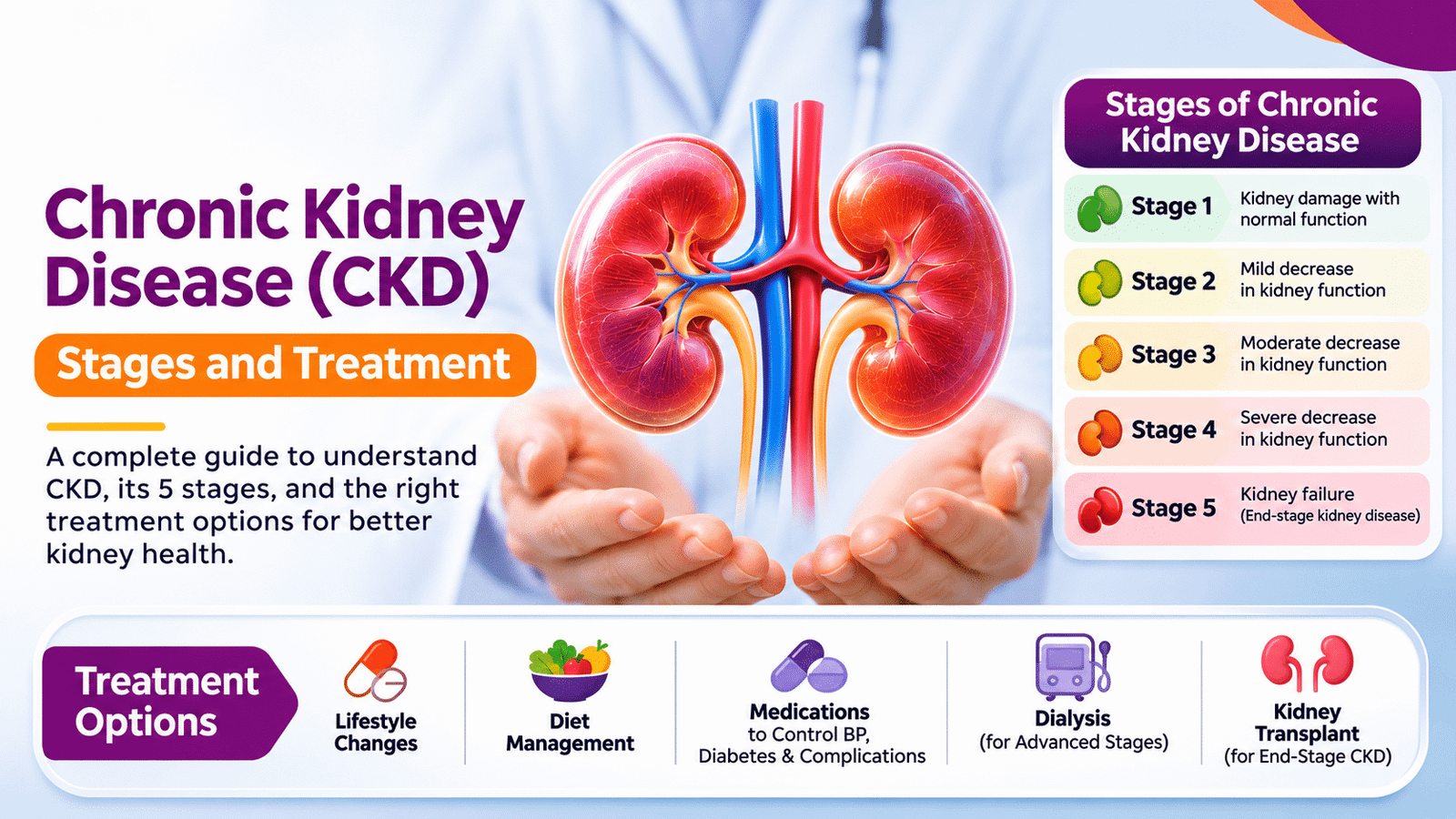
Chronic Kidney Disease: Stages and Treatment
Your kidneys work quietly every day to remove waste, balance fluids, control minerals, and help regulate blood pressure. When the kidneys are damaged and their function gradually declines over time, the condition is known as chronic kidney disease (CKD).
Chronic kidney disease can develop slowly over months or years. Many people do not notice any symptoms during the early stages. By the time symptoms appear, kidney function may already be significantly reduced.
Early diagnosis is important. Regular blood and urine tests can detect kidney problems before serious symptoms develop. With proper treatment, monitoring, and lifestyle changes, many people can slow the progression of CKD and protect their overall health.
What Is Chronic Kidney Disease?
Chronic kidney disease is a condition in which the kidneys are damaged or do not work as well as they should for a prolonged period.
Your kidneys perform several important functions:
- Remove waste products and excess fluid from the blood.
- Maintain the balance of electrolytes such as sodium and potassium.
- Help regulate blood pressure.
- Support the production of red blood cells.
- Help maintain healthy bones through mineral balance.
- Remove certain medicines and toxins from the body.
When kidney function declines, waste and excess fluid may build up in the body. CKD can also affect blood pressure, red blood cell production, bone health, and heart health.
What Causes Chronic Kidney Disease?
Several health conditions and factors can damage the kidneys over time.
1. Diabetes
Diabetes is one of the leading causes of chronic kidney disease. High blood sugar over many years can damage the small blood vessels and filtering structures inside the kidneys.
People with diabetes should regularly check their blood sugar, kidney function, and urine albumin levels as advised by their healthcare professional.
2. High Blood Pressure
Uncontrolled high blood pressure can damage kidney blood vessels. At the same time, kidney disease can make blood pressure harder to control.
Managing blood pressure is an important part of protecting kidney function.
3. Glomerular Diseases
Glomeruli are tiny filtering units inside the kidneys. Certain inflammatory or immune-related conditions can damage these structures and lead to protein or blood in the urine and reduced kidney function.
4. Polycystic Kidney Disease
Polycystic kidney disease is an inherited condition in which fluid-filled cysts develop in the kidneys. Over time, these cysts may affect kidney function.
5. Recurrent Kidney Infections or Urinary Problems
Repeated kidney infections, urinary tract obstruction, kidney stones, or certain structural problems may contribute to kidney damage in some people.
6. Long-Term Use of Certain Medicines
Some medicines can harm the kidneys, particularly when taken frequently, in high doses, or without medical supervision.
Non-steroidal anti-inflammatory drugs (NSAIDs), including some painkillers, may affect kidney function. Certain herbal products and unregulated supplements can also be harmful.
Always tell your doctor about all medicines, supplements, and herbal products you take.
What Are the Symptoms of Chronic Kidney Disease?
Early CKD often has no noticeable symptoms. Many people feel completely normal during the initial stages.
As kidney function becomes more impaired, symptoms may include:
- Swelling in the feet, ankles, legs, or around the eyes
- Changes in urination frequency
- Foamy urine
- Persistent tiredness or weakness
- Loss of appetite
- Nausea or vomiting
- Difficulty concentrating
- Muscle cramps
- Dry or itchy skin
- Sleep problems
- Shortness of breath
These symptoms can occur for many reasons and do not automatically mean kidney disease. Blood and urine tests are needed to evaluate kidney health.
How Is Chronic Kidney Disease Diagnosed?
Doctors use a combination of blood tests, urine tests, medical history, physical examination, and sometimes imaging to diagnose CKD and understand its cause.
1. Serum Creatinine and eGFR Blood Test
Creatinine is a waste product produced by muscles. Healthy kidneys remove it from the blood.
A blood creatinine test helps calculate the estimated glomerular filtration rate (eGFR). The eGFR estimates how well the kidneys filter blood.
A lower eGFR generally indicates reduced kidney filtering function. However, doctors interpret the result along with age, medical history, previous test results, and other findings.
2. Urine Albumin-Creatinine Ratio (uACR)
This urine test checks for albumin, a protein that may leak into the urine when kidney filters are damaged.
Albumin in the urine can be an early sign of kidney damage, even when eGFR is still within a relatively normal range.
3. Urine Routine Examination
A urine examination can help detect blood, protein, infection, and other abnormalities that may provide clues about kidney disease.
4. Ultrasound of the Kidneys
Kidney ultrasound may help assess kidney size, structure, cysts, stones, and urinary obstruction.
5. Additional Tests
Depending on the suspected cause and severity, a doctor may recommend electrolytes, blood counts, mineral and bone tests, other imaging studies, or a kidney biopsy.
What Are the Five Stages of Chronic Kidney Disease?
CKD is classified into five main stages based on estimated glomerular filtration rate (eGFR), along with evidence of kidney damage. Urine albumin levels are also important for assessing the risk of progression and complications.
The stages help doctors understand kidney function, plan treatment, and decide how closely a person needs to be monitored.
| CKD Stage | eGFR (mL/min/1.73 m²) | Kidney Function |
|---|---|---|
| Stage 1 (G1) | 90 or higher | Normal or high filtration, but evidence of kidney damage is present |
| Stage 2 (G2) | 60–89 | Mildly decreased filtration, with evidence of kidney damage |
| Stage 3a (G3a) | 45–59 | Mild to moderate decrease in kidney function |
| Stage 3b (G3b) | 30–44 | Moderate to severe decrease in kidney function |
| Stage 4 (G4) | 15–29 | Severely decreased kidney function |
| Stage 5 (G5) | Below 15 | Kidney failure |
Note: Stages 1 and 2 require evidence of kidney damage, such as persistent albumin in the urine or another kidney abnormality. An eGFR of 60 or higher alone does not necessarily mean CKD.
Stage 1 Chronic Kidney Disease
Kidney filtration is normal or high, but there is evidence of kidney damage.
In stage 1 CKD, the kidneys may still filter blood efficiently. However, urine albumin, structural abnormalities, or other findings may indicate kidney damage.
Most people do not experience symptoms at this stage.
Treatment for Stage 1 CKD
- Control blood pressure.
- Manage blood sugar if you have diabetes.
- Monitor urine albumin and kidney function.
- Maintain a healthy weight.
- Follow a balanced diet with appropriate salt intake.
- Avoid smoking and unnecessary kidney-harming medicines.
- Treat the underlying cause of kidney damage.
Early management can help reduce the risk of kidney disease progression.
Stage 2 Chronic Kidney Disease
Mildly reduced kidney function, with evidence of kidney damage.
Stage 2 CKD may still have few or no symptoms. Some people discover the condition during routine health checks.
It is important to identify the cause of kidney damage and monitor whether the condition is stable or progressing.
Treatment for Stage 2 CKD
- Manage diabetes and blood pressure.
- Monitor eGFR and urine albumin.
- Follow a kidney-friendly eating pattern recommended by your healthcare team.
- Stay physically active.
- Review medicines with your doctor.
- Attend regular follow-up appointments.
Stage 3 Chronic Kidney Disease
Stage 3 CKD is divided into two categories: Stage 3a and Stage 3b.
Stage 3a CKD
Mild to moderate reduction in kidney function.
In stage 3a, waste products may begin to accumulate in the blood. Some people remain symptom-free, while others may experience fatigue, swelling, or changes in urine.
Stage 3b CKD
Moderate to severe reduction in kidney function.
At stage 3b, the risk of complications becomes higher. Doctors may monitor blood pressure, electrolytes, anaemia, bone and mineral health, and other complications more closely.
Treatment for Stage 3 CKD
- Control blood pressure and blood sugar.
- Use prescribed kidney-protective medicines when appropriate.
- Monitor kidney function and urine albumin.
- Check for anaemia and mineral or bone abnormalities.
- Review medicines and avoid potentially harmful drugs when possible.
- Get advice from a dietitian regarding protein, sodium, potassium, and phosphorus.
- Follow a regular monitoring schedule.
Not everyone with stage 3 CKD needs the same treatment. The plan depends on the cause, laboratory results, symptoms, and other health conditions.
Stage 4 Chronic Kidney Disease
Severe reduction in kidney function.
Stage 4 CKD means the kidneys have significantly reduced filtering capacity. Complications such as anaemia, fluid retention, electrolyte imbalance, and bone or mineral problems may become more common.
At this stage, regular care by a nephrologist is particularly important.
Treatment for Stage 4 CKD
- Frequent monitoring of kidney function and blood tests.
- Careful blood pressure and diabetes management.
- Treatment of anaemia and mineral-bone disorders when present.
- Individualised dietary advice.
- Medication review and adjustment for reduced kidney function.
- Monitoring fluid balance and swelling.
- Education about dialysis and kidney transplantation when appropriate.
Planning for possible kidney replacement therapy early can help patients make informed decisions and prepare if their kidney function continues to decline.
Stage 5 Chronic Kidney Disease
Kidney failure or severely reduced kidney function.
Stage 5 CKD is also known as kidney failure. The kidneys may no longer be able to adequately remove waste, excess fluid, and maintain the body’s chemical balance.
Some people may experience severe fatigue, nausea, appetite loss, swelling, itching, breathing problems, or difficulty concentrating. However, the severity of symptoms varies.
Treatment for Stage 5 CKD
Treatment may involve:
- Ongoing specialist kidney care.
- Management of fluid and electrolyte balance.
- Medicines for symptoms and complications.
- Individualised dietary and fluid guidance.
- Dialysis, when medically indicated.
- Kidney transplantation, when suitable.
Stage 5 does not automatically mean dialysis must begin immediately. The decision is based on symptoms, laboratory abnormalities, overall health, quality of life, kidney function, and the patient’s preferences.
What Are the Treatment Options for Chronic Kidney Disease?
CKD treatment focuses on identifying the cause, slowing further kidney damage, treating complications, and supporting quality of life.
1. Control Blood Pressure
Blood pressure control is important because high blood pressure can worsen kidney damage.
Your doctor may recommend lifestyle changes and medicines. Certain medicines, such as ACE inhibitors or ARBs, may be recommended for some patients, particularly when albumin is present in the urine.
These medicines require monitoring of kidney function and potassium levels.
2. Manage Diabetes
If you have diabetes, maintaining blood sugar levels within your personalised target range can help protect your kidneys.
Your doctor may recommend appropriate diabetes medicines, regular glucose monitoring, and lifestyle changes.
Some medicines, including SGLT2 inhibitors, may provide kidney and cardiovascular benefits in selected patients with CKD. Their suitability depends on kidney function, medical history, and other factors.
3. Follow a Kidney-Friendly Diet
There is no single diet suitable for every person with CKD. Dietary needs may change as kidney function declines.
Your doctor or renal dietitian may advise you to adjust:
- Salt: Reducing excess sodium may help control blood pressure and swelling.
- Protein: The amount and source of protein may need to be adjusted depending on your kidney function and nutritional needs.
- Potassium: Restriction may be necessary for some people, but not everyone with CKD needs to limit potassium.
- Phosphorus: Some patients may need to reduce phosphorus intake or avoid certain additives.
- Fluids: Fluid intake depends on urine output, swelling, heart health, and the stage of kidney disease.
Do not follow a strict kidney diet or eliminate major food groups without professional advice. Unnecessary restrictions can lead to poor nutrition.
4. Avoid Kidney-Harming Medicines
Some painkillers and other medicines may worsen kidney function in certain situations.
Tell your healthcare professional about prescription medicines, over-the-counter drugs, supplements, and herbal preparations you use.
Never stop essential medicines on your own. Ask your doctor or pharmacist whether a medicine is safe for your kidney function.
5. Manage Complications
CKD may cause complications that require specific treatment, including:
- Anaemia
- High potassium levels
- Fluid overload
- Bone and mineral disorders
- Metabolic acidosis
- High blood pressure
- Cardiovascular disease
Treatment is based on laboratory results, symptoms, and individual needs.
Dialysis for Chronic Kidney Disease
Dialysis is a treatment that helps remove waste products and excess fluid from the blood when the kidneys can no longer perform these functions adequately.
There are two main types of dialysis.
1. Hemodialysis
Hemodialysis uses a machine and a filter to clean the blood. Blood flows through the dialysis system, where waste products and excess fluid are removed, and the cleaned blood is returned to the body.
It is commonly performed at a dialysis centre, although some patients may be eligible for home hemodialysis.
2. Peritoneal Dialysis
Peritoneal dialysis uses the lining of the abdomen, called the peritoneum, as a natural filter.
A dialysis solution is introduced into the abdominal cavity through a catheter. Waste products and extra fluid move into the solution, which is later drained.
Peritoneal dialysis may be performed at home after appropriate training.
Kidney Transplant
A kidney transplant involves placing a healthy kidney from a living or deceased donor into a person with kidney failure.
For suitable patients, transplantation may offer improved quality of life and long-term outcomes compared with remaining on dialysis. However, a transplant requires surgery, lifelong follow-up, and medicines to prevent rejection.
Not everyone is eligible for transplantation. A specialist team evaluates the patient’s overall health and suitability.
How Can You Slow the Progression of CKD?
Although some forms of kidney damage cannot be reversed, the right care may help slow disease progression.
Practical steps to protect your kidneys
- Check your blood pressure regularly.
- Manage diabetes and blood sugar.
- Attend kidney follow-up appointments.
- Take prescribed medicines as directed.
- Avoid unnecessary painkillers and unregulated supplements.
- Reduce excess salt in your diet.
- Stay physically active as appropriate for your health.
- Maintain a healthy body weight.
- Stop smoking.
- Get adequate sleep.
- Ask for personalised dietary guidance.
Small, consistent changes can help support kidney health and reduce other health risks.
When Should You Consult a Nephrologist?
Consider consulting a kidney specialist if you have:
- Persistent abnormal creatinine or eGFR results
- Protein or albumin in the urine
- Blood in the urine that needs evaluation
- Uncontrolled high blood pressure
- Diabetes with kidney-related abnormalities
- Repeated kidney infections
- Kidney stones or urinary obstruction
- Swelling in the legs, feet, or face
- A family history of inherited kidney disease
- Rapidly worsening kidney function
Early specialist evaluation can help identify the cause, assess the risk of progression, and create a treatment plan.
Frequently Asked Questions (FAQs)
1. Can chronic kidney disease be cured?
Many forms of CKD involve permanent kidney damage. Treatment may help slow progression, manage complications, and protect remaining kidney function. Some underlying causes may be treatable, but established damage may not fully reverse.
2. What is the most serious stage of kidney disease?
Stage 5 CKD, also called kidney failure, is the most advanced stage. It involves severely reduced kidney function and may require dialysis or kidney transplantation, depending on the patient’s condition.
3. Can stage 3 kidney disease improve?
Some people with stage 3 CKD may have stable kidney function for many years. The underlying cause, blood pressure, diabetes control, urine albumin, and other factors influence the course of the disease.
4. Does CKD always require dialysis?
No. Many people with CKD never require dialysis. Treatment depends on the stage, symptoms, kidney function, complications, and how the disease progresses.
5. What tests detect kidney disease early?
Serum creatinine with eGFR and a urine albumin-creatinine ratio are important tests for detecting and assessing kidney disease. Doctors may recommend repeat testing to confirm persistent abnormalities.
6. Is foamy urine a sign of kidney disease?
Foamy urine can sometimes be associated with protein in the urine, but it may also occur for other reasons. Persistent foamy urine should be evaluated with an appropriate urine test.
7. What foods should people with kidney disease avoid?
Dietary restrictions depend on kidney function, blood potassium, phosphorus, fluid status, nutritional needs, and other medical conditions. Some patients need to limit salt, potassium, phosphorus, or protein, while others may not require all these restrictions.
8. Can a person with CKD live a normal life?
Many people with CKD continue to work, travel, exercise, and enjoy their daily lives. Regular monitoring, appropriate treatment, and healthy lifestyle habits can help maintain quality of life.
9. Is kidney disease hereditary?
Some kidney conditions, such as polycystic kidney disease and certain inherited disorders, can run in families. However, many cases of CKD are related to diabetes, high blood pressure, or other acquired conditions.
10. How often should kidney function be checked?
The frequency depends on your kidney disease stage, urine albumin level, underlying condition, previous results, and risk of progression. Your doctor will recommend an appropriate monitoring schedule.
Conclusion
Chronic kidney disease can develop gradually and may remain unnoticed during its early stages. Understanding CKD stages helps patients recognise the importance of monitoring kidney function and starting treatment at the right time.
Blood pressure control, diabetes management, healthy eating, appropriate medicines, and regular follow-up can help protect kidney function and reduce complications.
If your blood or urine tests show abnormalities, do not ignore them. Early evaluation by a healthcare professional can help identify the cause and guide treatment.
Medical disclaimer: This article is intended for general health education and does not replace professional medical advice, diagnosis, or treatment. Kidney disease diagnosis, staging, dietary recommendations, and treatment must be individualised by a qualified healthcare professional.
