
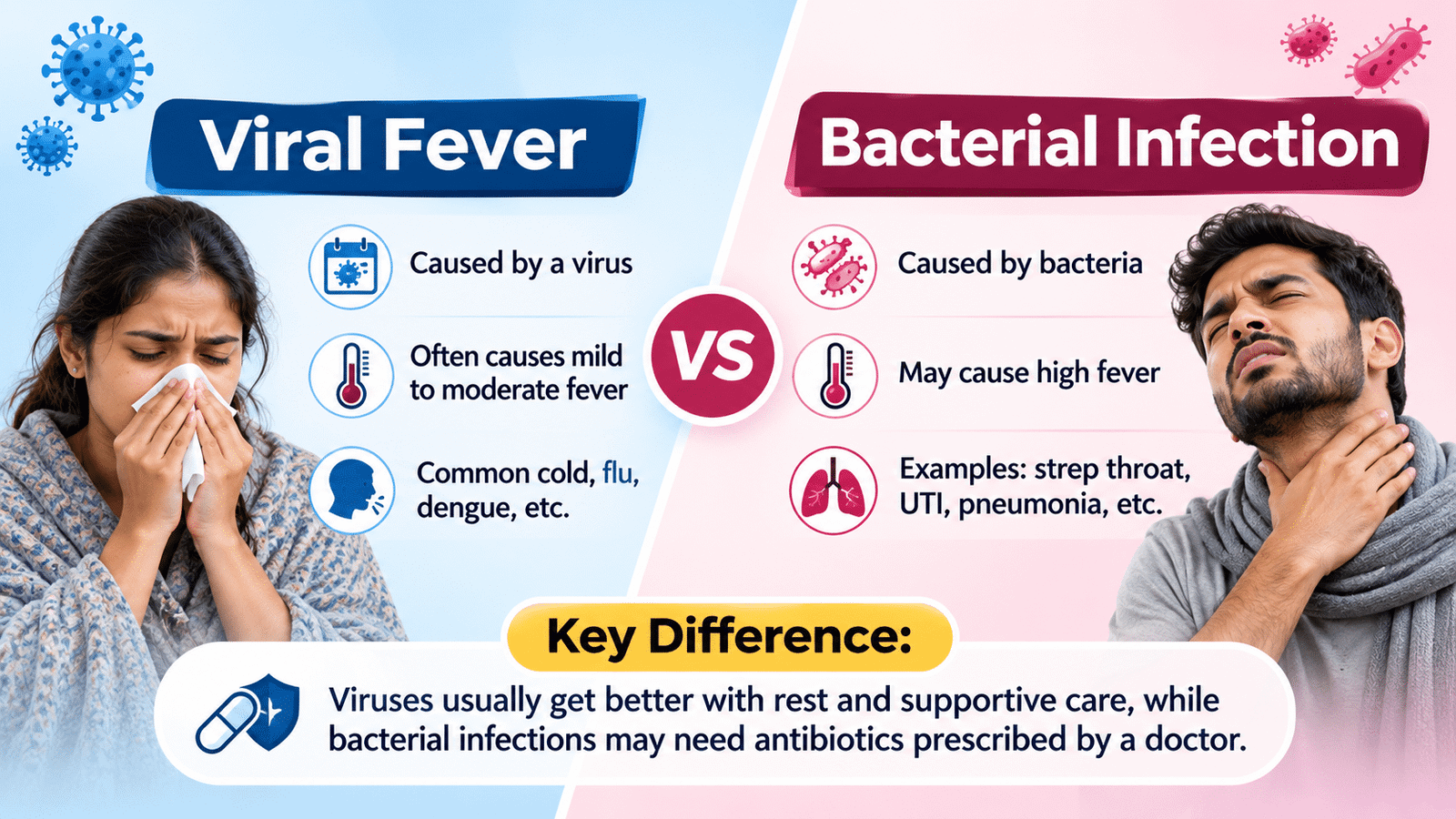
Viral Fever vs Bacterial Infection: What’s the Difference?
Fever, body pain, chills and tiredness can make you feel unwell within a short time. These symptoms often occur with viral infections, but bacterial infections can cause similar problems. So, how can you tell the difference between viral fever and a bacterial infection?
The important thing to understand is that fever is a symptom, not a disease by itself. A virus, a bacterium or another medical condition may be responsible. Your symptoms, physical examination and, when needed, laboratory tests help a doctor determine the likely cause and appropriate treatment.
What Is a Bacterial Infection?
A bacterial infection occurs when harmful bacteria enter the body, multiply or damage tissues. Not all bacteria cause disease. Many bacteria live naturally on the skin and inside the body, and some are beneficial.
Certain bacterial infections may improve without antibiotics. Others need antibiotic treatment to prevent complications or help the infection clear. The appropriate treatment depends on the type of infection, its severity and the patient’s health.
Common examples of bacterial infections
- Urinary tract infections: May cause burning during urination, frequent urination or lower abdominal discomfort.
- Strep throat: Can cause a sore throat, fever and pain when swallowing.
- Some skin infections: May cause redness, warmth, swelling, pain or pus.
- Bacterial pneumonia: Can cause cough, fever, breathing difficulties and chest discomfort.
- Some intestinal infections: May cause diarrhoea, abdominal cramps and fever.
These symptoms are clues, not proof of a bacterial infection. For example, pneumonia and diarrhoea can have viral or bacterial causes. A clinical assessment is needed to decide whether testing or treatment is appropriate.
Viral Fever vs Bacterial Infection: Key Differences
The main difference is the type of microorganism causing the illness. Other features, such as how quickly symptoms begin or how long they last, may offer clues but cannot reliably confirm the cause.
| Feature | Viral infection | Bacterial infection |
|---|---|---|
| Cause | Caused by a virus. | Caused by disease-causing bacteria. |
| Common symptoms | May include fever, body aches, cough, runny nose or tiredness. | May include fever, localised pain, swelling, urinary symptoms or cough. |
| Fever pattern | Can be mild or high and may begin suddenly or gradually. | Can also be mild or high and may begin suddenly or gradually. |
| Diagnosis | Clinical assessment and selected tests when needed. | Clinical assessment and selected tests, including cultures when appropriate. |
| Treatment | Supportive care for many infections; antivirals for certain illnesses. | Supportive care for some infections; antibiotics for infections that require them. |
| Do antibiotics work? | No. Antibiotics do not treat viruses. | They can treat susceptible bacteria when an antibiotic is indicated. |
How Do Viral and Bacterial Infection Symptoms Differ?
Symptoms can overlap, so look at the complete pattern rather than relying on one sign.
1. Fever, chills and body aches
Fever and body aches commonly occur with viral illnesses such as influenza. However, bacterial infections can also cause chills, muscle aches and fever. The temperature alone cannot tell you which type of infection is present.
2. Cough, sore throat and a runny nose
A runny nose, cough and sore throat often occur with viral respiratory infections. Some bacterial conditions, including strep throat and certain cases of pneumonia, can produce similar symptoms. A doctor may recommend a throat test or other investigation if the findings suggest it is necessary.
3. Burning during urination
Burning while passing urine, frequent urination or lower abdominal discomfort can suggest a urinary tract infection. A urine test may help establish the cause. Fever with pain in the back or side, chills or vomiting needs prompt medical assessment because a kidney infection is possible.
4. Redness, swelling or pus
An area of skin that becomes increasingly red, warm, swollen or painful may indicate an infection that needs medical evaluation. Pus can occur with certain bacterial infections, but the appearance of a skin lesion alone is not always enough to identify its cause.
5. Symptoms that improve and then worsen
If a cough or fever starts to improve and then returns or worsens, seek medical advice. This can happen for several reasons, including a complication or a secondary infection. It does not automatically mean antibiotics are needed.
How Do Doctors Diagnose Viral Fever or Bacterial Infection?
A doctor usually begins by asking about your symptoms, when they started, your recent illnesses, medical history and any medicines you take. A physical examination helps identify possible sources of infection.
Medical examination
Depending on your symptoms, the doctor may examine your throat, lungs, ears, abdomen, skin or urinary system. The findings help determine whether further testing is needed.
Blood tests
A complete blood count and other blood tests may be useful in selected cases. White blood cell counts and inflammatory markers can provide supporting information, but they cannot always distinguish a viral infection from a bacterial one on their own.
Urine tests and cultures
If a urinary infection is suspected, a urine test may be recommended. A culture can help identify certain bacteria and guide antibiotic selection when needed.
Swabs and specific infection tests
Depending on the illness, a doctor may recommend a throat swab, a respiratory virus test or another targeted investigation. Testing is chosen according to symptoms, exposure, examination findings and whether the result would change treatment.
Imaging
A chest X-ray or other imaging test may be needed when symptoms suggest pneumonia or another complication. Imaging is not routinely necessary for every fever.
For assessment of fever and other medical concerns, explore Internal Medicine services at Jeevika Hospital .
Treatment for Viral Fever vs Bacterial Infection
Treatment depends on the cause, severity of the illness, age and overall health of the patient. Taking medicine without identifying the likely cause may delay the right treatment.
Treatment for viral fever
Many common viral infections improve with time and supportive care. Depending on the illness, care may include:
- Drinking enough fluids to prevent dehydration.
- Getting adequate rest.
- Using suitable fever-relieving medicine when recommended.
- Monitoring symptoms for changes or warning signs.
- Taking specific antiviral medicine when prescribed for an illness that benefits from it.
Not every viral infection has a specific antiviral treatment. For some infections, including influenza or COVID-19 in eligible patients, antiviral treatment may be useful when started at the appropriate time. Seek medical advice promptly if you are at increased risk of complications.
Treatment for bacterial infection
Some bacterial infections require antibiotics, which work by killing bacteria or stopping them from multiplying. The medicine is selected according to the suspected infection, likely bacteria, test results when available, allergies and other individual factors.
Not every bacterial infection requires antibiotics. Some mild infections resolve without them, while serious infections may need prompt treatment. Follow your doctor’s instructions and do not share, save or reuse antibiotics.
Do You Need Antibiotics for Fever?
No. Fever by itself is not a reason to take antibiotics. Antibiotics are useful for certain bacterial infections, but they do not work against viruses.
Taking antibiotics unnecessarily can cause side effects such as diarrhoea, nausea, rashes and allergic reactions. It also contributes to antimicrobial resistance, in which bacteria become harder to treat with medicines that previously worked.
Do not start antibiotics based only on fever, body pain, the colour of mucus or advice from someone who had similar symptoms. A healthcare professional can assess whether antibiotics are likely to help.
Home Care Tips for Fever and Infections
If symptoms are mild and you have no warning signs, the following measures may help you feel more comfortable while you recover.
- Stay hydrated: Drink water and other suitable fluids regularly. If you have vomiting or diarrhoea, ask a healthcare professional whether oral rehydration solution is appropriate.
- Get enough rest: Avoid strenuous activity until you feel better.
- Eat as tolerated: Choose regular, nutritious meals and do not force yourself to eat if you feel nauseated.
- Use medicines safely: Ask a healthcare professional which fever medicine is suitable for your age and medical history.
- Prevent spread: Wash your hands, cover coughs and sneezes, and avoid close contact with others while unwell.
- Monitor changes: Watch for worsening symptoms, reduced urination, breathing problems or unusual drowsiness.
If dengue is possible, seek medical advice rather than self-medicating. Avoid aspirin and ibuprofen unless a clinician specifically advises otherwise, because these medicines can increase bleeding risk in dengue. Paracetamol may be used for fever when appropriate, following professional advice and correct dosing.
How can you help prevent infections?
- Wash your hands with soap and water regularly.
- Keep recommended vaccinations up to date.
- Follow safe food preparation and drinking-water practices.
- Clean frequently touched surfaces when appropriate.
- Reduce mosquito exposure by using suitable repellent and removing standing water around your home.
- Seek timely medical advice if symptoms persist or worsen.
When Should You See a Doctor for Fever?
Consult a doctor if fever persists for several days, repeatedly returns, or is accompanied by symptoms that concern you. Seek advice sooner if you have a weakened immune system, a significant chronic condition or another reason to be at increased risk.
Warning signs that need urgent medical attention
- Difficulty breathing or severe shortness of breath.
- Chest pain or persistent pressure in the chest.
- Confusion, seizures or difficulty waking.
- Severe headache with a stiff neck.
- Persistent vomiting or inability to keep fluids down.
- Very little urine or other signs of severe dehydration.
- Severe abdominal pain or unusual bleeding.
- A fever accompanied by rapidly worsening symptoms or severe weakness.
Frequently Asked Questions
1. How can I tell whether my fever is viral or bacterial?
You cannot reliably tell from fever alone. Viral and bacterial infections can cause similar symptoms. A doctor may use your medical history, examination and selected tests to identify the likely cause.
2. Does a high fever mean I have a bacterial infection?
No. Both viral and bacterial infections can cause high fever. The seriousness of an illness depends on the full clinical picture, not only the temperature.
3. Can a viral infection become a bacterial infection?
Yes. A viral respiratory illness can sometimes be followed by a secondary bacterial infection, such as bacterial pneumonia. If symptoms improve and then return or worsen, seek medical advice.
4. Will antibiotics help me recover faster from viral fever?
No. Antibiotics do not treat viruses. They should only be used when a healthcare professional determines that they are appropriate for a bacterial infection or another specific medical indication.
5. Which tests can identify a bacterial infection?
Depending on the symptoms, a doctor may recommend blood tests, urine tests, cultures, swabs or imaging. No single test is suitable for every infection, and results must be interpreted alongside the examination.
6. When should I worry about fever in a child?
Seek immediate medical advice for a baby younger than three months with a temperature of 38°C (100.4°F) or higher. For children of any age, breathing difficulty, unusual drowsiness, seizures, dehydration or other serious symptoms require urgent assessment.
7. Can I take paracetamol for fever?
Paracetamol may help reduce fever and discomfort when it is appropriate for the person. Follow age-appropriate dosing instructions and avoid taking multiple products containing paracetamol at the same time. Ask a healthcare professional if you have liver disease, are taking other medicines or are unsure about the correct dose.
8. When should I consult an internal medicine specialist?
Consider a consultation if fever persists, keeps returning, occurs with unexplained symptoms or affects someone with a chronic medical condition. Seek emergency care instead if serious warning signs develop.

