
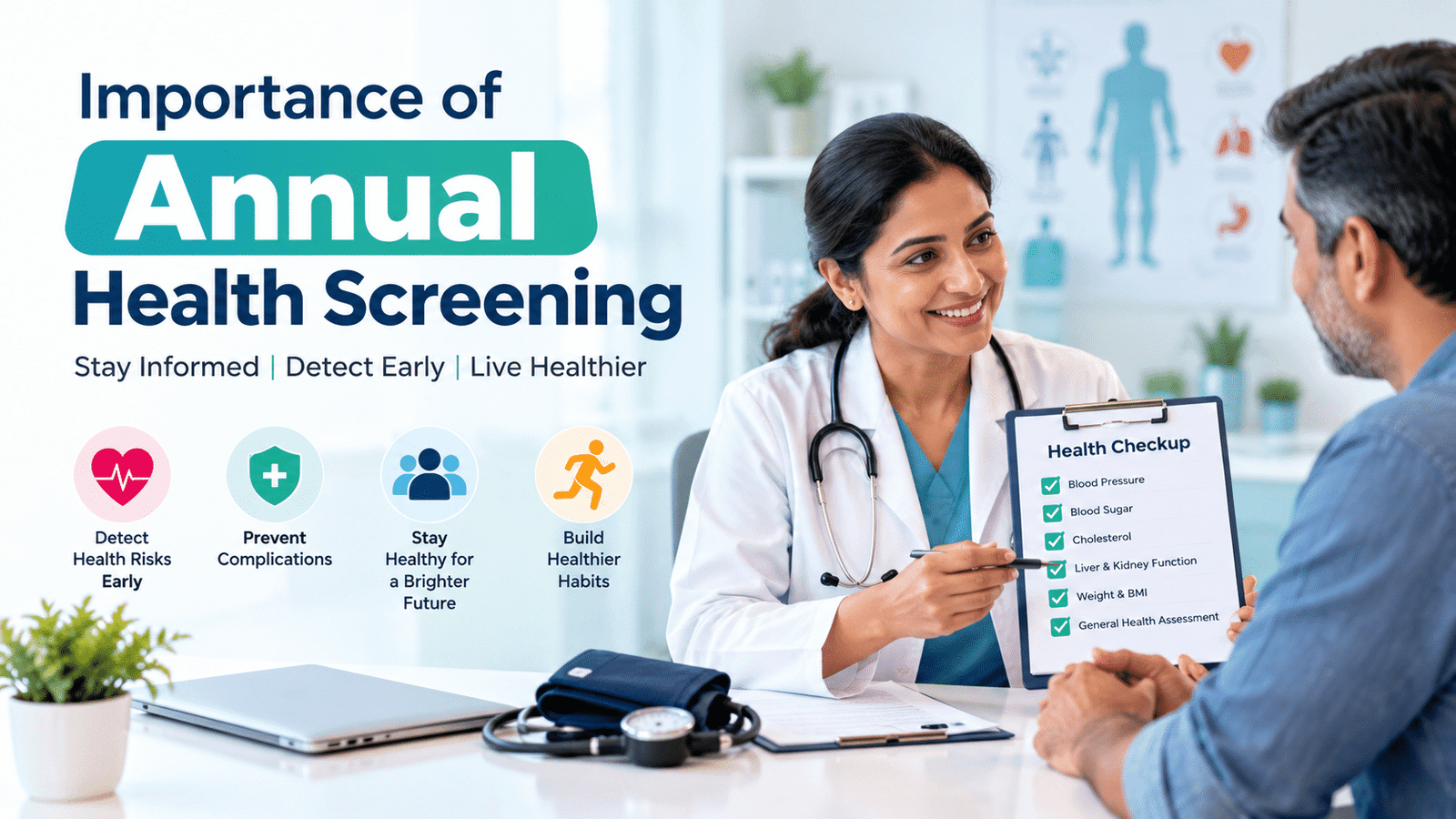
Importance of Annual Health Screening: Benefits, Tests and Prevention
Many people visit a doctor only when they feel unwell. However, some health problems can develop without obvious symptoms. High blood pressure, elevated blood sugar and high cholesterol may go unnoticed for a long time.
Annual health screening gives you an opportunity to review your health, understand your risk factors and discuss preventive care with a doctor. It can help identify certain health concerns early, when timely follow-up and appropriate treatment may make a difference.
A yearly checkup does not mean that everyone needs the same blood tests or scans every year. Your age, medical history, family history and lifestyle help determine which assessments are appropriate.
What Is Annual Health Screening?
Annual health screening is a preventive health assessment that helps you and your doctor review your current health and identify possible risks. Depending on your needs, it may include a physical assessment, a discussion about your lifestyle and selected medical tests.
A health screening appointment may include:
- Reviewing your medical history and family history.
- Measuring blood pressure, height, weight and body mass index (BMI).
- Checking blood sugar or cholesterol when appropriate.
- Reviewing diet, physical activity, sleep and tobacco use.
- Checking whether you need age-appropriate cancer screening.
- Reviewing medications and vaccination needs.
The exact assessment varies from person to person. Screening tests are intended to look for possible problems before symptoms appear. They do not always provide a definite diagnosis, and abnormal results may require further evaluation.
Why Is Annual Health Screening Important?
1. Helps Identify Certain Conditions Early
Some medical conditions develop slowly and may not cause noticeable symptoms in the beginning. High blood pressure is one example. A person may feel normal even when their blood pressure is consistently high.
Appropriate screening can help identify a potential problem so that your doctor can confirm the finding, explain the risks and recommend suitable next steps.
Early detection does not guarantee that complications will be avoided. However, for conditions where screening and treatment are effective, it can create an opportunity to manage the condition sooner.
2. Helps Assess Your Diabetes Risk
Type 2 diabetes can develop without obvious warning signs. Some people have elevated blood glucose for a long time before they notice increased thirst, frequent urination or unusual tiredness.
Depending on your risk factors, your doctor may recommend a fasting blood glucose test or an HbA1c test. HbA1c reflects your average blood glucose over approximately the previous two to three months.
If testing identifies prediabetes, lifestyle changes such as regular physical activity, a balanced diet and appropriate weight management may reduce the risk of progressing to type 2 diabetes.
3. Supports Better Heart Health
Heart health is affected by several factors, including blood pressure, cholesterol, blood sugar, smoking, physical activity and family history. Reviewing these factors can help your doctor estimate your risk of cardiovascular disease.
Your doctor may recommend practical changes, such as reducing excess salt, eating more nutritious foods, exercising regularly and stopping tobacco use. Medication may also be appropriate for some people.
An ECG, treadmill test or heart scan is not automatically necessary for every person without symptoms. These investigations should be considered according to your clinical history and medical advice.
4. Helps Monitor Kidney and Liver Health
Kidney and liver problems can sometimes develop without clear symptoms. People with diabetes, high blood pressure, certain medication exposures or other risk factors may need specific investigations.
Depending on your health, a doctor may recommend:
- Blood tests to assess kidney function.
- Urine tests to check for albumin or other abnormalities.
- Liver enzyme tests when clinically indicated.
- Additional tests if symptoms or initial results suggest a problem.
These tests are not compulsory every year for everyone. The decision should be based on your risk factors, previous results and clinical needs.
5. Encourages Healthier Daily Habits
A checkup is also a chance to discuss everyday habits that influence long-term health. You can ask your doctor about improving your diet, increasing physical activity, managing stress and getting adequate sleep.
If you smoke or regularly consume alcohol, your appointment is an opportunity to discuss practical ways to reduce health risks. Small changes that you can maintain are often more useful than short-term changes that are difficult to sustain.
6. Keeps Preventive Care on Track
Some preventive services are recommended at particular ages or intervals. Depending on your circumstances, these may include breast cancer screening, cervical cancer screening, colorectal cancer screening, vaccination or bone health assessment.
Your doctor can review which services are relevant to you. Screening recommendations may vary according to local guidance, family history and individual risk.
7. Helps Track Changes Over Time
Comparing current results with previous results may reveal a change that needs attention. For example, a gradual increase in blood pressure or blood sugar may lead your doctor to recommend closer monitoring or a review of your lifestyle and treatment plan.
Keep your previous reports and attend recommended follow-up visits. Remember that normal results from a previous year do not guarantee that a new health problem cannot develop.
Common Tests Included in a Health Screening
There is no single test package that is suitable for every adult. Your doctor may recommend some of the following assessments depending on your age, medical history and risk factors.
| Test or assessment | What it helps assess |
|---|---|
| Blood pressure measurement | Possible hypertension and cardiovascular risk. |
| Blood glucose or HbA1c | Diabetes or prediabetes, when testing is appropriate. |
| Lipid profile | Cholesterol levels and cardiovascular risk. |
| Complete blood count (CBC) | Blood cell levels and possible signs of conditions such as anaemia. |
| Kidney function tests | Selected indicators of kidney function. |
| Liver function tests | Selected indicators that may suggest liver injury or disease. |
| Urine tests | Possible urinary abnormalities or kidney-related concerns. |
| BMI and waist measurement | Weight-related health risks. |
| Age-appropriate cancer screening | Selected cancers, depending on age and individual risk. |
How Often Should You Get a Health Screening?
The appropriate frequency depends on the particular test and your individual health risks. An annual conversation with a healthcare professional may be useful, but not every blood test or investigation needs to be repeated yearly.
Young Adults
Young adults can use preventive appointments to discuss lifestyle, vaccination, family history and appropriate screening. The frequency of blood tests depends on risk factors and previous results.
Adults Aged 40 and Above
Regular assessment of blood pressure, diabetes risk, cholesterol and age-appropriate screening becomes increasingly important.
Local clinical guidance and your doctor’s assessment should determine the schedule appropriate for you.
People With Existing Medical Conditions
People with diabetes, hypertension, kidney disease or other chronic conditions may need more frequent tests. Their monitoring schedule should follow their treatment plan and the advice of their healthcare team.
People With a Family History of Disease
A strong family history of diabetes, heart disease or certain cancers may affect when screening should begin and how often it should be repeated. Tell your doctor about important illnesses in close relatives.
How to Prepare for Your Annual Health Screening
A little preparation can make your appointment more useful and help your doctor understand your health needs.
- Bring previous reports. Earlier results can help your doctor identify changes over time.
- List your medicines. Include prescription medicines, vitamins and supplements.
- Share your family history. Mention significant conditions among close relatives.
- Discuss any symptoms. Explain what you have noticed, when it started and whether it is getting worse.
- Ask about fasting. Some blood tests require fasting, while others do not. Follow the specific instructions provided by your doctor or laboratory.
- Ask questions about the results. Find out whether an abnormal result needs a repeat test, further investigation or treatment.
- Follow the advice you receive. Attend follow-up appointments and discuss any difficulty following your recommended plan.
Common Myths About Annual Health Screening
Myth 1: I Feel Healthy, So I Do Not Need Screening
Fact: Some conditions, including high blood pressure and early diabetes, may not cause obvious symptoms. Appropriate screening can identify certain problems or risk factors.
Myth 2: Everyone Needs a Full-Body Checkup Every Year
Fact: There is no universal set of tests that everyone needs annually. Tests should be selected according to your health history, risk factors and evidence-based recommendations.
Myth 3: Normal Results Mean I Cannot Develop a Disease
Fact: A screening result reflects your health at a particular time. Continue recommended preventive care and consult a doctor if new symptoms develop.
Myth 4: Screening Alone Prevents Disease
Fact: Screening can identify selected conditions and risks, but prevention and better outcomes may also require lifestyle changes, vaccination, treatment and follow-up care.
Frequently Asked Questions About Annual Health Screening
1. Is annual health screening necessary if I have no symptoms?
It may be useful depending on your age, family history and risk factors. Your doctor can help you choose appropriate preventive assessments. You may not need every test every year.
2. Which blood tests are commonly included in a health checkup?
Depending on your needs, your doctor may recommend blood glucose or HbA1c, a lipid profile, a complete blood count, kidney function tests or liver function tests. Not everyone requires all of them.
3. At what age should I start health screening?
Preventive care begins in adulthood, but the right tests and timing vary. Blood pressure assessment, for example, is recommended for adults, while other screening depends on age and individual risk. Ask your doctor for a suitable plan.
4. Can annual health screening detect cancer?
Specific cancer screening tests can detect certain cancers or precancerous changes in eligible people. A routine health checkup cannot detect every cancer, and the appropriate screening depends on factors such as age, family history and personal risk.
5. How long does a health screening take?
The duration depends on the assessments included, waiting times and whether a consultation or further investigation is required. Ask your healthcare provider about preparation and when to expect results.
6. What should I do if my test result is abnormal?
Discuss the result with your doctor. An abnormal screening result does not always mean that you have a disease. You may need a repeat test, further investigation or treatment, depending on the finding.
7. Should I stop my medicines before a health checkup?
Do not stop prescribed medicines unless your doctor specifically instructs you to do so. Ask your healthcare provider whether any medication adjustments or special preparation are required.
Make Preventive Healthcare Part of Your Routine
Annual health screening can help you take a more informed approach to your health. It gives you an opportunity to review risk factors, discuss concerns and identify which preventive services may be appropriate for you.
The aim is not to undergo every available test. It is to choose suitable assessments, understand your results and take action when needed.
If you are planning a health checkup, speak with a qualified medical professional about the tests that match your age, medical history and health goals.
Medical disclaimer: This article is for general educational purposes only. It does not replace professional medical advice, diagnosis or treatment. Screening recommendations vary according to individual circumstances. Consult a qualified healthcare professional before making decisions about medical tests or treatment.
