
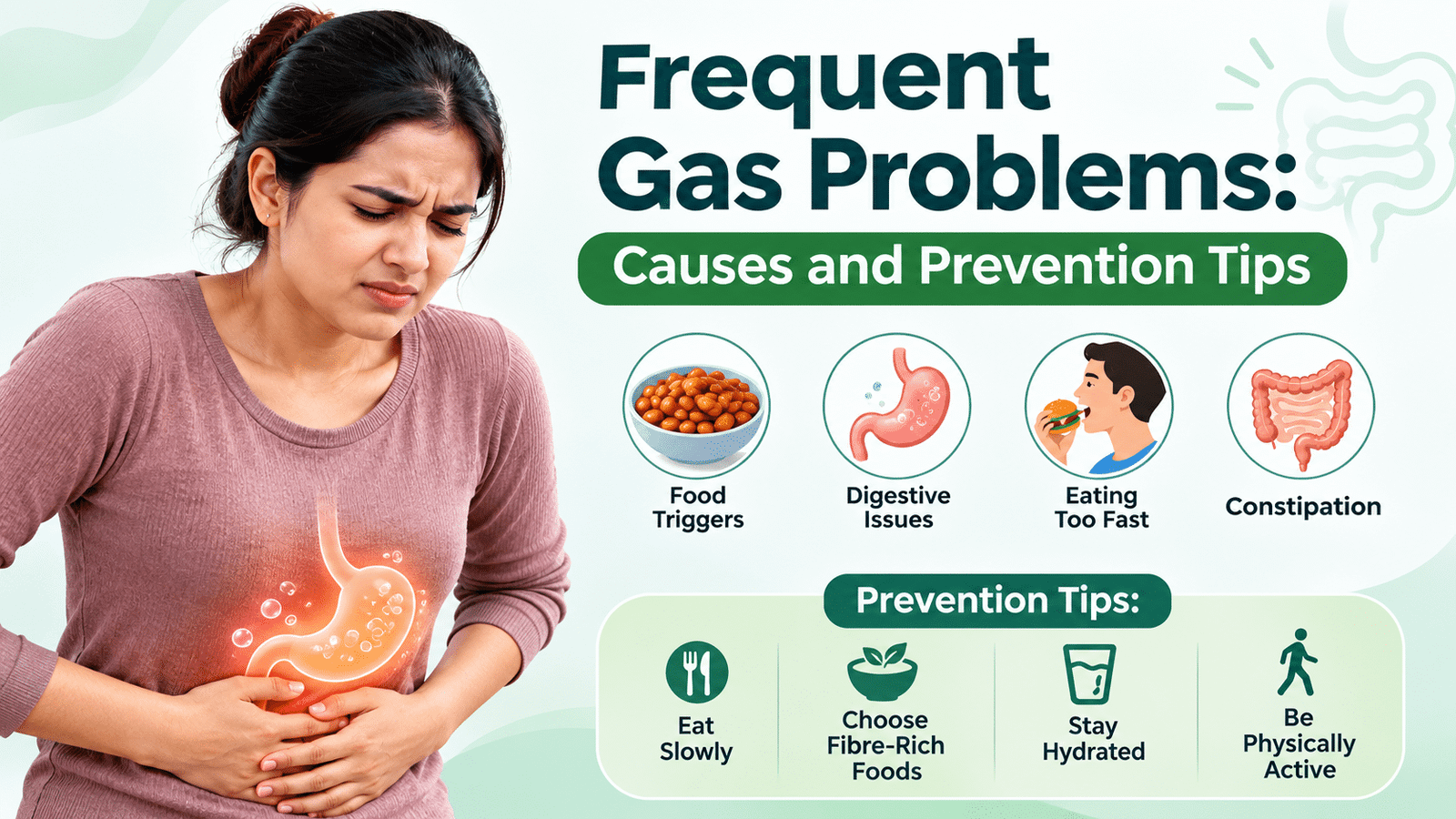
Frequent Gas Problems: Causes and Prevention Tips
Do you often experience stomach gas, bloating, burping or a feeling of fullness after eating? These problems are common and can affect your comfort throughout the day. Sometimes, even a normal meal can leave you feeling uncomfortable.
Gas is a natural part of digestion. However, frequent or excessive gas may be related to eating habits, food intolerance, constipation or certain digestive conditions.
Understand why frequent gas problems occur, recognise common symptoms, learn practical prevention tips and find out when you should consult a gastroenterologist.
What Is Intestinal Gas?
Intestinal gas is air and other gases present in your digestive system. It enters the digestive tract when you swallow air while eating or drinking. It is also produced when bacteria in the large intestine break down carbohydrates that are not completely digested in the small intestine.
Your body normally releases this gas through burping or passing wind. Both are normal digestive processes. However, excessive gas, repeated bloating or discomfort may need attention, especially when these symptoms interfere with daily activities.
Common Symptoms of Frequent Gas Problems
Gas problems can affect people differently. Some people mainly experience burping, while others feel abdominal pressure or frequent flatulence.
Common symptoms include:
- Frequent burping: Releasing air through the mouth, particularly after meals.
- Abdominal bloating: A feeling of fullness, tightness or swelling in the stomach.
- Excessive flatulence: Passing wind more frequently than usual.
- Abdominal discomfort: Mild cramps, pressure or pain caused by trapped gas.
- Stomach rumbling: Gurgling sounds caused by the movement of gas and fluid through the intestines.
- Feeling full: Experiencing uncomfortable fullness after eating.
These symptoms do not always indicate a disease. Their frequency, severity and association with other symptoms help doctors identify the possible cause.
What Causes Frequent Gas Problems?
Several everyday habits and digestive conditions can contribute to excessive gas. Understanding the cause is important because the right prevention method depends on what is triggering your symptoms.
1. Eating Too Quickly
Eating too fast can cause you to swallow more air than usual. This air may contribute to burping, bloating and abdominal discomfort. Talking while eating, chewing gum and drinking through a straw can also increase the amount of air you swallow.
Try eating slowly, chewing food properly and avoiding unnecessary distractions during meals.
2. Foods That Produce Gas
Some foods contain carbohydrates that are not fully digested in the small intestine. When these carbohydrates reach the large intestine, gut bacteria break them down and produce gas.
Common foods that may cause gas in some people include:
- Beans and chickpeas
- Lentils and certain pulses
- Cabbage, cauliflower and broccoli
- Onions and garlic
- Some fruits, including apples and pears
- Milk and dairy products in people with lactose intolerance
Not everyone reacts to these foods in the same way. You do not need to eliminate all of them from your diet. Instead, identify which foods trigger your symptoms.
3. Carbonated Drinks
Soft drinks, sparkling water and other fizzy beverages contain carbon dioxide. Drinking them may increase the amount of gas in your digestive tract and lead to burping or bloating.
Reducing carbonated drinks may help if you regularly experience these symptoms.
4. Lactose Intolerance
Lactose is a natural sugar found in milk and many dairy products. Some people do not produce enough lactase, the enzyme needed to digest lactose.
When lactose is not properly digested, it can cause:
- Excessive gas
- Abdominal bloating
- Stomach cramps
- Loose stools or diarrhoea
If these symptoms occur after consuming milk or dairy products, consult a healthcare professional. A doctor may recommend suitable tests and dietary changes.
5. Constipation
Constipation occurs when bowel movements become less frequent or stools become hard and difficult to pass. When stool remains in the intestines, some people experience increased bloating, abdominal pressure and gas-related discomfort.
Drinking enough water, staying physically active and eating an appropriate amount of fibre may help improve bowel regularity.
6. Irritable Bowel Syndrome (IBS)
Irritable bowel syndrome is a digestive condition that can affect how the intestines function. People with IBS may experience abdominal pain, bloating, constipation, diarrhoea or changes in bowel habits.
Some people with IBS notice that their symptoms become worse after particular foods or during periods of stress. Treatment depends on the individual’s symptoms and triggers.
7. Other Digestive Conditions
Persistent gas and bloating may sometimes be associated with other digestive problems, including:
- Gastroesophageal reflux disease (GERD)
- Coeliac disease
- Small intestinal bacterial overgrowth (SIBO)
- Functional indigestion
- Other conditions affecting digestion or nutrient absorption
These conditions cannot be diagnosed from gas symptoms alone. A medical assessment is needed when symptoms are persistent or accompanied by other concerns.
10 Practical Tips to Prevent Frequent Gas Problems
Simple changes to your daily routine may reduce gas and improve digestive comfort. Try the following measures and observe which ones help you.
1. Eat Slowly and Chew Properly
Take enough time to finish your meals. Chewing food properly and eating without rushing can reduce air swallowing.
2. Eat Smaller Meals
Very large meals may increase bloating and discomfort. Consider smaller, balanced meals if large portions trigger your symptoms.
3. Identify Your Food Triggers
Keep a food and symptom diary. Record what you eat, when symptoms occur and how long they last. This can help identify possible food triggers.
4. Reduce Fizzy Drinks
Limit carbonated beverages if they make you burp or feel bloated. Choose water or other non-carbonated drinks instead.
5. Stay Physically Active
Regular walking and other suitable physical activities can support bowel movements and digestive health. A gentle walk after meals may also help some people feel more comfortable.
6. Drink Enough Water
Staying hydrated supports normal digestion and helps prevent constipation. Your water requirements may vary depending on your health, activity and climate.
7. Manage Constipation
Eat a balanced diet with an appropriate amount of fibre and maintain regular bowel habits. Increase fibre gradually because sudden increases can temporarily worsen gas.
8. Limit Foods That Trigger Symptoms
If particular foods repeatedly cause gas, discuss suitable alternatives with a doctor or dietitian. Avoid unnecessarily restricting several food groups without professional guidance.
9. Avoid Excessive Chewing Gum
Frequent chewing gum and sucking hard sweets may increase swallowed air. Reducing these habits can help some people with excessive burping.
10. Maintain Regular Meal Habits
Eat balanced meals at regular times and avoid rushing through food. Notice whether certain meal patterns are associated with your symptoms.
When Should You Consult a Gastroenterologist?
Occasional gas is usually normal. However, frequent symptoms that continue despite simple dietary and lifestyle changes should not be ignored.
Consult a doctor if you experience:
- Persistent or recurring abdominal bloating
- Frequent gas with stomach pain
- Ongoing diarrhoea or constipation
- Unexplained weight loss
- Blood in your stool or black, tarry stools
- Repeated vomiting
- Changes in your usual bowel habits
- Loss of appetite or feeling full unusually quickly
How Are Frequent Gas Problems Diagnosed?
A gastroenterologist will first understand your symptoms, eating habits, medical history and bowel movements. The doctor may also perform a physical examination.
Depending on your symptoms, medical history and examination, further tests may be recommended. These can include:
- Blood tests: To investigate selected conditions, such as anaemia, inflammation or suspected coeliac disease.
- Stool tests: When infection, inflammation or other bowel problems are suspected.
- Hydrogen breath tests: To investigate conditions such as lactose intolerance or small intestinal bacterial overgrowth in appropriate cases.
- Ultrasound or other imaging: If the doctor suspects an abdominal condition that needs further evaluation.
- Endoscopy or colonoscopy: When symptoms and clinical findings indicate that these procedures are necessary.
Not everyone with gas requires medical tests. The doctor will decide whether investigations are needed based on the individual situation.
Frequently Asked Questions About Gas Problems
1. Why do I have gas every day?
Daily gas can be related to normal digestion, swallowed air, food choices or constipation. If it is excessive, uncomfortable or persistent, consult a doctor to identify the cause.
2. Can drinking water reduce gas problems?
Drinking enough water can help prevent constipation, which may contribute to bloating. However, water alone may not resolve gas caused by food intolerance or other digestive conditions.
3. Which foods commonly cause stomach gas?
Beans, lentils, cabbage, cauliflower, onions, certain fruits and dairy products in people with lactose intolerance may cause gas. Individual triggers can vary.
4. Is frequent burping a sign of a digestive problem?
Not necessarily. Burping is a normal way to release swallowed air. However, persistent or excessive burping with pain, heartburn, vomiting or other symptoms should be evaluated.
5. Can stress cause bloating and gas?
Stress can influence how the brain and digestive system interact. Some people with functional digestive conditions, including IBS, notice that symptoms become worse during stressful periods.
6. When should I see a gastroenterologist for gas?
Consult a gastroenterologist if gas and bloating occur frequently, affect your daily routine or are accompanied by abdominal pain, changes in bowel habits, unexplained weight loss or blood in your stool.
Medical Disclaimer
This article is intended for general health education. It does not replace professional medical advice, diagnosis or treatment. Symptoms and treatment needs vary from person to person. Consult a qualified healthcare professional for individual medical guidance.

