
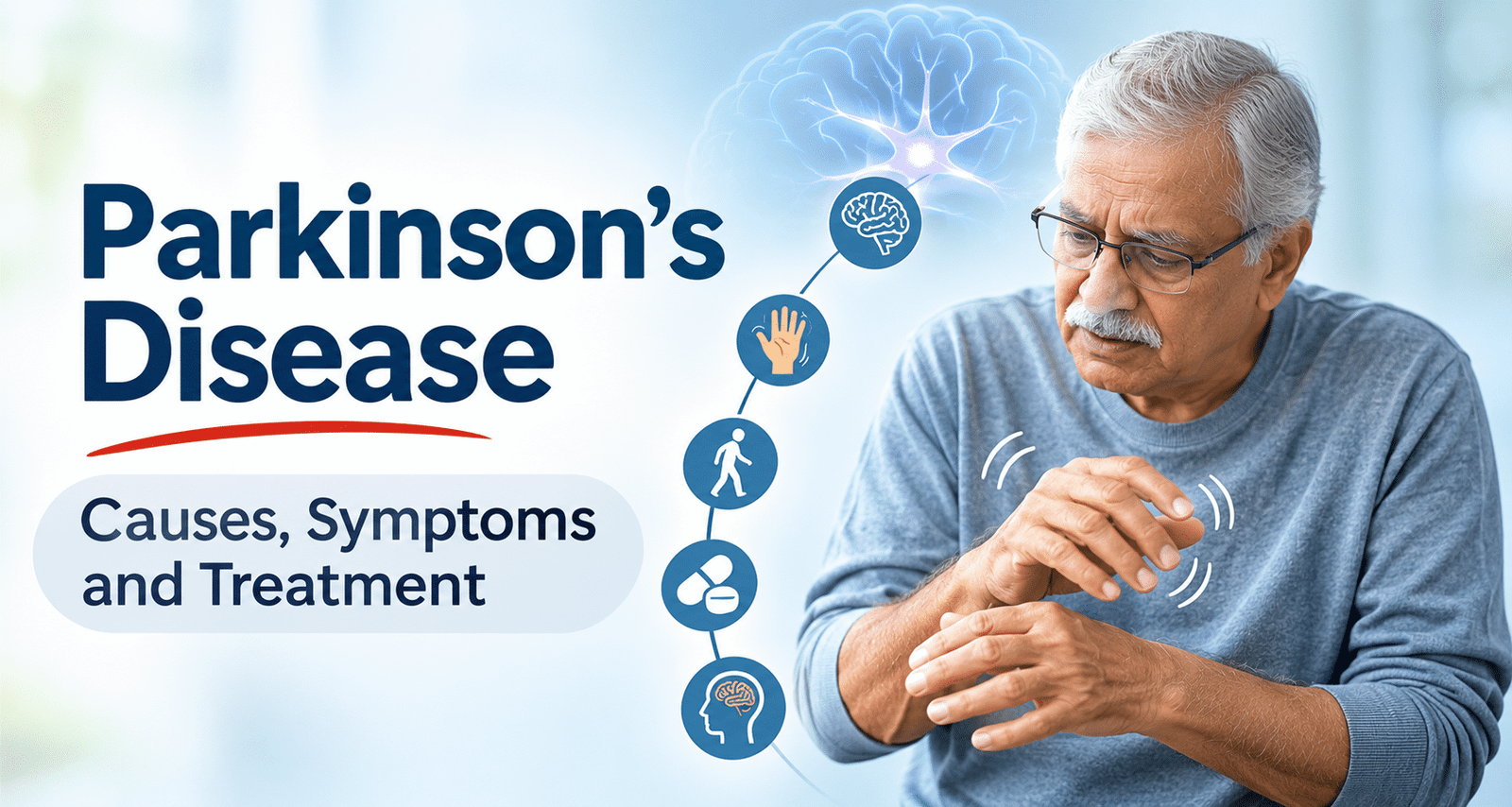
Parkinson’s Disease: Causes, Symptoms, and Treatment
Parkinson’s disease is a progressive neurological condition that affects movement and can also affect sleep, mood, balance, and thinking. Early symptoms may be mild, such as a slight hand tremor, slower movements, or muscle stiffness. Understanding the signs and available treatments can help people seek medical advice and plan for better long-term care.
Although there is currently no cure for Parkinson’s disease, treatment can help manage symptoms, maintain independence, and improve quality of life.
What Is Parkinson’s Disease?
Parkinson’s disease is a long-term condition that affects certain nerve cells in the brain. These cells help produce dopamine, a chemical messenger involved in controlling smooth and coordinated movement.
When dopamine-producing nerve cells become damaged or die, dopamine levels decrease. As a result, a person may develop shaking, stiffness, slower movements, and difficulty with balance.
Parkinson’s usually develops gradually. Symptoms and their rate of progression vary from person to person. It is more common in older adults, but younger people can also develop the condition.
What Causes Parkinson’s Disease?
The exact cause of Parkinson’s disease is not fully understood. Researchers believe that a combination of genetic, biological, and environmental factors may contribute to the condition.
1. Loss of dopamine-producing nerve cells
Parkinson’s disease is associated with the loss of nerve cells in a brain region called the substantia nigra. These cells produce dopamine, which helps regulate movement. Reduced dopamine activity contributes to the main movement symptoms of the disease.
2. Genetic factors
Certain genetic changes can increase the risk of developing Parkinson’s disease. Some cases run in families, but most people with Parkinson’s do not have a clearly inherited form of the condition. Having a family history does not mean a person will definitely develop the disease.
3. Environmental factors
Researchers are studying whether long-term exposure to certain pesticides, industrial chemicals, and other environmental factors may increase the risk. These associations are complex, and an environmental exposure does not automatically mean someone will develop Parkinson’s disease.
4. Age and other risk factors
Age is an important risk factor, and Parkinson’s is diagnosed more often in older adults. Some younger adults can also develop it. Men are affected somewhat more often than women.
Parkinson’s disease is not simply a normal part of ageing, and its development cannot usually be explained by one single cause.
What Are the Early Symptoms of Parkinson’s Disease?
Early symptoms may appear on one side of the body before affecting both sides. They can be subtle and may initially be mistaken for normal ageing or another condition.
1. Tremors or shaking
A tremor is an involuntary shaking movement. It may begin in one hand or finger and often occurs when the affected limb is resting. However, not everyone with Parkinson’s develops a noticeable tremor.
2. Slowness of movement
Known medically as bradykinesia, slowness of movement can make everyday tasks take longer. A person may notice difficulty buttoning a shirt, getting out of a chair, walking, or starting a movement.
3. Muscle stiffness
Stiff muscles can make movement uncomfortable and reduce the normal swing of an arm while walking. Some people experience muscle aches, cramps, or reduced flexibility.
4. Changes in walking and balance
Steps may become shorter, walking may become slower, and turning may be more difficult. Some people develop a stooped posture or experience freezing, when their feet briefly feel stuck to the floor.
5. Changes in handwriting and facial expression
Handwriting may become smaller than usual, a change known as micrographia. Facial expressions may also become less noticeable, making a person appear less expressive even when their feelings have not changed.
6. Other non-movement symptoms
Parkinson’s disease can affect more than movement. Other possible symptoms include:
- Reduced sense of smell.
- Constipation.
- Sleep disturbances.
- Depression or anxiety.
- Fatigue and pain.
- Low blood pressure when standing.
- Changes in memory, attention, or thinking.
- Speech or swallowing difficulties.
These symptoms can have many causes. Having one or more of them does not necessarily mean a person has Parkinson’s disease. A medical assessment is important when symptoms are persistent or becoming worse.
How Is Parkinson’s Disease Diagnosed?
There is no single routine blood test that confirms most cases of Parkinson’s disease. Diagnosis is mainly based on a person’s symptoms, medical history, and neurological examination.
A doctor may:
- Ask when symptoms started and how they have changed.
- Check walking, balance, muscle stiffness, and movement speed.
- Assess tremors, coordination, and other neurological signs.
- Review current medicines and other health conditions.
- Recommend selected tests or brain imaging when needed to investigate other causes.
A neurologist may be needed to confirm the diagnosis, especially when symptoms are unusual or the cause is uncertain. Some conditions and medicines can cause Parkinson-like symptoms, so an accurate assessment is important.
What Are the Treatment Options for Parkinson’s Disease?
Parkinson’s treatment is tailored to each person. The choice depends on symptoms, age, other medical conditions, daily activities, and how the condition changes over time. Treatment may combine medicines, rehabilitation, exercise, and selected procedures.
1. Medications
Medicines can improve movement symptoms and help people manage everyday activities. A neurologist chooses the medicine and dose based on individual needs.
Levodopa: Levodopa is converted into dopamine in the brain and is one of the most effective medicines for improving Parkinson’s movement symptoms. It is commonly prescribed with carbidopa or another suitable medicine to improve its effect and reduce certain side effects.
Dopamine agonists: These medicines act on dopamine receptors and imitate some of dopamine’s effects. They may help selected patients but can cause side effects such as sleepiness, dizziness, hallucinations, or impulse control problems.
MAO-B inhibitors and other medicines: Depending on symptoms, doctors may prescribe medicines that help dopamine remain active for longer or improve control between doses. Other medicines may be used for specific movement complications.
Parkinson’s medicines can have side effects and may need adjustment over time. Do not start, stop, or change a prescribed medicine without medical advice.
2. Physiotherapy and regular exercise
Physiotherapy can help improve flexibility, strength, walking, posture, and balance. An exercise plan may include walking, strength training, stretching, balance exercises, or other suitable activities.
Exercise should match the person’s abilities and fall risk. A physiotherapist can recommend safe movements and ways to remain active as symptoms change.
3. Occupational therapy
Occupational therapists help people manage daily activities such as dressing, bathing, cooking, and writing. They may suggest practical changes at home, assistive devices, and techniques that make everyday tasks safer and easier.
4. Speech and swallowing therapy
Some people develop a softer voice, unclear speech, or difficulty swallowing. Speech and language therapists can provide exercises and strategies to improve communication and, when appropriate, swallowing safety.
5. Deep brain stimulation
Deep brain stimulation (DBS) is a surgical option for selected people whose movement symptoms are not adequately controlled by medicines or who experience significant medication-related fluctuations. Electrodes deliver electrical signals to specific brain areas involved in movement.
DBS can improve certain symptoms, including tremor, stiffness, and slowness, in suitable candidates. It does not cure Parkinson’s disease and may not improve symptoms such as balance, speech, or thinking difficulties. A specialist team must assess whether it is appropriate.
6. Supportive care and mental health support
Managing Parkinson’s also includes addressing sleep problems, constipation, pain, anxiety, depression, and other non-movement symptoms. Depending on individual needs, care may involve a dietitian, psychologist, social worker, or other healthcare professionals.
Can Parkinson’s Disease Be Prevented?
There is currently no proven way to prevent Parkinson’s disease. Researchers continue to study genetic and environmental factors that may affect risk.
Regular physical activity, a balanced diet, sufficient sleep, and avoiding unnecessary exposure to harmful chemicals support general health. However, these steps cannot guarantee that Parkinson’s disease will be prevented.
Tips for Living Well With Parkinson’s Disease
A practical daily routine can help people maintain independence and manage symptoms. Consider these steps with guidance from the healthcare team:
- Take prescribed medicines at the recommended times.
- Keep regular follow-up appointments.
- Stay physically active within your abilities.
- Choose a balanced diet with adequate fibre and fluids, unless your doctor advises otherwise.
- Make the home safer by reducing clutter and improving lighting.
- Use walking aids if recommended by a healthcare professional.
- Discuss sleep, mood, swallowing, and memory changes with your doctor.
- Seek support from family, caregivers, and patient support groups.
Caregivers also need rest and support. Discussing changing needs early can help families plan for safer, more comfortable long-term care.
When Should You See a Doctor?
Arrange a medical appointment if you notice persistent shaking at rest, slower movements, muscle stiffness, changes in walking, or other symptoms that are getting worse. Early assessment can help identify the cause and guide appropriate treatment.
Seek emergency medical attention for sudden weakness, facial drooping, sudden speech difficulty, or a sudden loss of balance. These may be signs of a stroke rather than typical gradual Parkinson’s symptoms.
Frequently Asked Questions
1. What is the first sign of Parkinson’s disease?
Early signs vary. They may include a tremor at rest, slower movements, stiffness, smaller handwriting, reduced arm swing, or a reduced sense of smell. Some people develop non-movement symptoms before noticeable movement changes.
2. Can Parkinson’s disease be cured?
There is currently no cure. However, medicines, exercise, rehabilitation, and selected surgical procedures can help manage symptoms and improve quality of life.
3. At what age does Parkinson’s disease usually begin?
It is more common in older adults, particularly after age 60, but it can also affect younger adults. Age alone cannot confirm or rule out the condition.
4. Is Parkinson’s disease hereditary?
Most cases are not clearly inherited. Certain gene changes can increase risk, and family history may be relevant in some cases. Genetic counselling may be useful for selected families.
5. Does everyone with Parkinson’s have hand tremors?
No. Tremor is common but not present in every person with Parkinson’s disease. Slowness of movement and stiffness are also important symptoms.
6. Which doctor treats Parkinson’s disease?
A neurologist diagnoses and manages Parkinson’s disease. A movement disorders specialist may be particularly helpful when symptoms are complex or advanced treatments are being considered.
7. Can exercise help people with Parkinson’s disease?
Yes. Appropriate exercise can support mobility, balance, strength, flexibility, and general well-being. The type and intensity should be adapted to the person’s symptoms and safety needs.
Conclusion
Parkinson’s disease is a progressive neurological condition that affects movement and may also influence sleep, mood, balance, and thinking. Recognizing the symptoms and obtaining an accurate diagnosis can help people access appropriate care.
Although there is no cure at present, individualized treatment, regular physical activity, rehabilitation, and ongoing medical support can help many people manage symptoms and maintain their quality of life.
If you or a family member has symptoms that may suggest Parkinson’s disease, consult a qualified healthcare professional for an assessment.
Disclaimer
This article is for general educational purposes only. It is not a substitute for professional medical advice, diagnosis, or treatment. Always consult a qualified healthcare professional regarding symptoms, medicines, or treatment decisions.
