
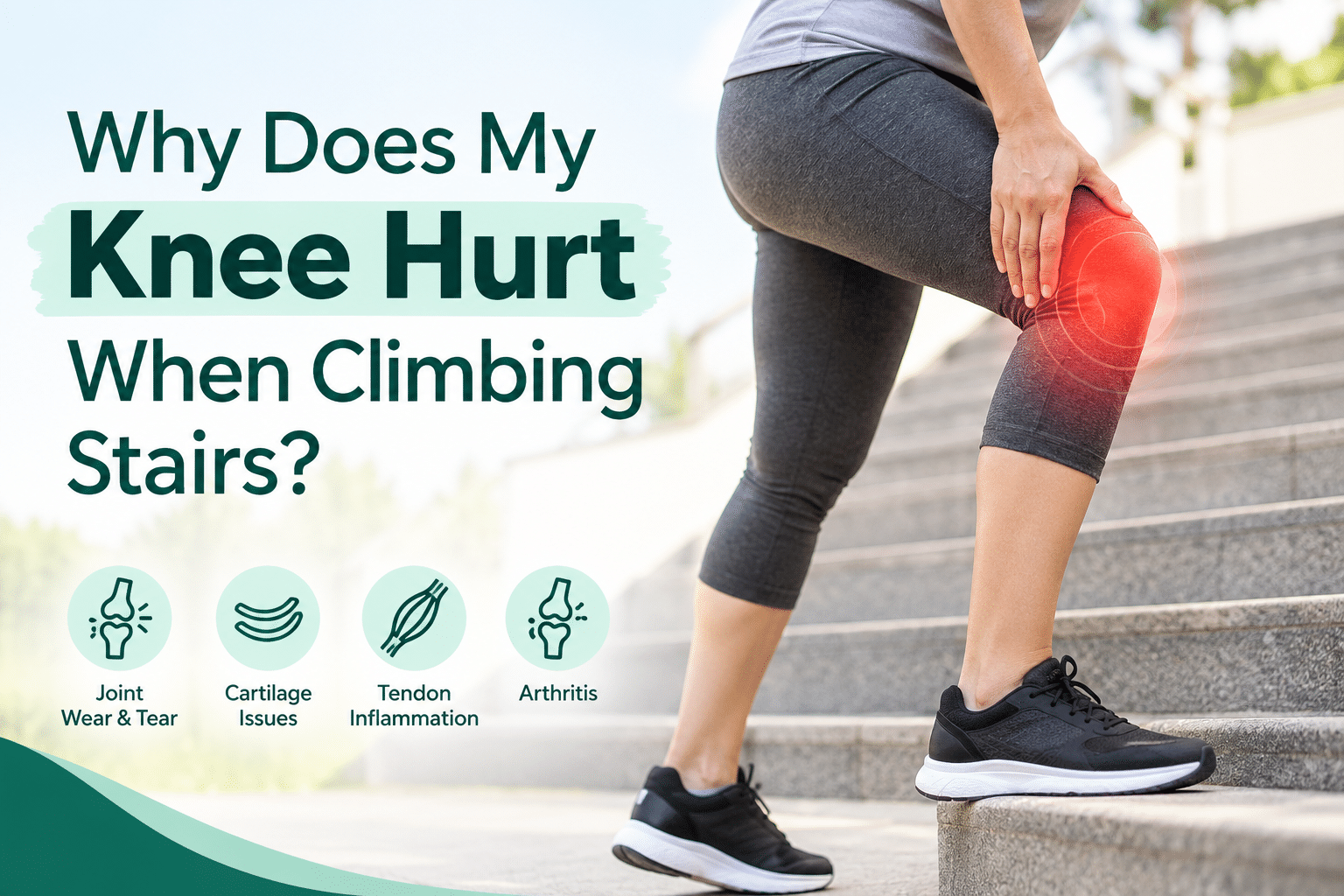
Why Does My Knee Hurt When Climbing Stairs?
Do you feel pain in your knee every time you climb stairs? You may notice it while walking upstairs, coming downstairs, or getting up from a chair. This discomfort can make simple daily activities difficult.
Knee pain on stairs can happen for several reasons, including irritation around the kneecap, overuse, muscle weakness or arthritis. The location of the pain and other symptoms can help a doctor identify the possible cause.
Here is what you should know about the common causes of knee pain when climbing stairs, ways to manage mild discomfort, and when to seek medical attention.
Why Do Stairs Make Knee Pain Worse?
Your knees help support your body weight when you bend, walk, stand and climb. Going up or down stairs requires your knee to bend while the muscles around it control your movement. This can increase the load on the knee joint and the tissues around the kneecap.
If these tissues are irritated, your knee may hurt more on stairs than it does while walking on level ground. The pain may be felt at the front of the knee, around the kneecap, or deeper inside the joint.
Common Causes of Knee Pain When Climbing Stairs
1. Patellofemoral Pain Syndrome
Patellofemoral pain syndrome causes pain around or behind the kneecap. It is sometimes called runner’s knee, although it can affect people who do not run.
The discomfort often becomes noticeable during stair climbing, squatting, running or standing up after sitting for a long time. Changes in exercise intensity and weakness in the muscles supporting the knee may contribute.
2. Knee Osteoarthritis
Osteoarthritis develops when the tissues and cartilage in a joint change over time. It can cause knee pain, stiffness and swelling, especially during movement.
You may find stairs difficult if your knee feels stiff after resting or hurts during everyday activities. Osteoarthritis becomes more common with age, but age alone does not explain every case of knee pain.
3. Muscle Weakness or Overuse
The muscles around your hips and thighs help control knee movement. If they are weak, or if you suddenly increase your walking, running or workout routine, the knee may become irritated.
Repeated stair climbing and exercise without enough recovery can also contribute to discomfort.
4. Tendon Irritation
Tendons connect muscles to bones. Repeated jumping, running or other strenuous activities can irritate the tendons around the kneecap.
Tendon-related pain may be felt at the front of the knee, particularly near the lower edge of the kneecap.
5. Meniscus or Ligament Injury
A sudden twist, fall or sports injury can damage structures inside the knee, including the meniscus or ligaments. Pain may occur with swelling, difficulty bending the knee, locking or a feeling that the knee is giving way.
If knee pain began after an injury, get it assessed rather than assuming it is ordinary muscle strain.
Why Does My Knee Hurt More When Going Downstairs?
Some people experience more pain while going downstairs than while climbing up. This is because the muscles around the knee must control the body’s downward movement while the knee remains bent.
This movement can increase stress around the kneecap. Patellofemoral pain is one possible explanation, but arthritis and other knee conditions can also cause similar symptoms.
Pay attention to whether the pain occurs in one knee or both, whether it starts suddenly or gradually, and whether swelling or stiffness is present. These details can help your doctor assess the problem.
How Can You Relieve Knee Pain at Home?
Mild knee discomfort may improve with simple changes, depending on its cause. These steps can help you avoid unnecessary strain while you monitor your symptoms.
- Reduce painful activities: Temporarily limit repeated stair climbing, deep squats and high-impact exercise if they make the pain worse.
- Apply a cold pack: For pain or swelling, use an ice pack wrapped in a towel for up to 20 minutes at a time.
- Use a handrail: Hold the railing while using stairs to improve stability and reduce the risk of falling.
- Return to activity gradually: Avoid suddenly increasing exercise intensity. Resume activities according to your symptoms and clinical advice.
- Ask about suitable exercises: A doctor or physiotherapist can recommend exercises to improve strength, flexibility and knee control.
Do not force movements that cause significant pain. Speak to a healthcare professional if you are unsure which exercises or pain-relief medicines are suitable for you.
When Should You See an Orthopedic Doctor?
Occasional mild discomfort may settle with rest and changes to your activity. However, persistent or worsening pain should not be ignored.
Arrange a medical assessment if:
- Your knee pain continues for several days or keeps returning.
- Pain interferes with walking, climbing stairs or sleeping.
- Your knee becomes swollen or stiff.
- Your knee locks, gives way or is difficult to straighten.
- You have pain following a fall, twist or sports injury.
How Is Knee Pain Diagnosed?
Your doctor will ask when the pain started, where it occurs, what makes it worse and whether you have had an injury. They may examine your knee, movement, strength and stability.
Not everyone needs a scan. Depending on your symptoms and examination, your doctor may recommend an X-ray, MRI or another investigation to look for a particular problem.
The aim is to identify the likely cause and choose treatment that fits your condition rather than treating every type of knee pain in the same way.
What Treatment May Help Knee Pain?
Treatment depends on the diagnosis, severity of symptoms and your daily activities. Options may include activity modification, physiotherapy, appropriate pain-relief medicines or other treatments recommended by your doctor.
Surgery is not necessary for most cases of knee pain. However, certain injuries or advanced joint conditions may require a surgical opinion when non-surgical treatments are not enough.
If you want to understand treatment options for advanced knee arthritis, read more about total knee replacement surgery at Jeevika Hospital . Knee replacement is appropriate only for selected patients after an individual assessment.
How Can You Help Prevent Knee Pain?
- Build exercise intensity gradually.
- Include suitable strength and mobility exercises.
- Warm up before strenuous physical activity.
- Allow time for rest and recovery after demanding workouts.
- Use supportive footwear appropriate for your activities.
- Seek advice early if pain repeatedly returns.
These habits may help support knee function, but they cannot prevent every injury or joint condition. Choose activities that suit your health and current level of fitness.
Frequently Asked Questions
1. Why does my knee hurt when climbing stairs but not walking?
Stair climbing places different demands on the knee than walking on level ground. Pain around the kneecap, muscle weakness, tendon irritation and arthritis are possible causes. A clinical assessment can help identify the reason.
2. Is knee pain on stairs always a sign of arthritis?
No. Knee pain on stairs can result from several conditions, including patellofemoral pain, overuse, tendon irritation or an injury. Arthritis is only one possible cause.
3. Why does my knee hurt when going downstairs?
Going downstairs requires the muscles around the knee to control your downward movement. This may aggravate pain around the kneecap or from another knee condition.
4. Should I stop walking if my knee hurts?
Reduce activities that clearly worsen your pain, but avoid making long-term exercise changes without advice. If walking is difficult or pain persists, consult a healthcare professional.
5. Can physiotherapy help knee pain?
Physiotherapy can help some causes of knee pain by improving muscle strength, flexibility and movement control. The exercises should be selected according to the underlying condition and your ability.
6. When is knee pain an emergency?
Seek urgent care if you cannot put weight on the leg, have severe swelling or a visible change in knee shape, or have a hot, red knee with fever. Serious injury also needs prompt assessment.

