
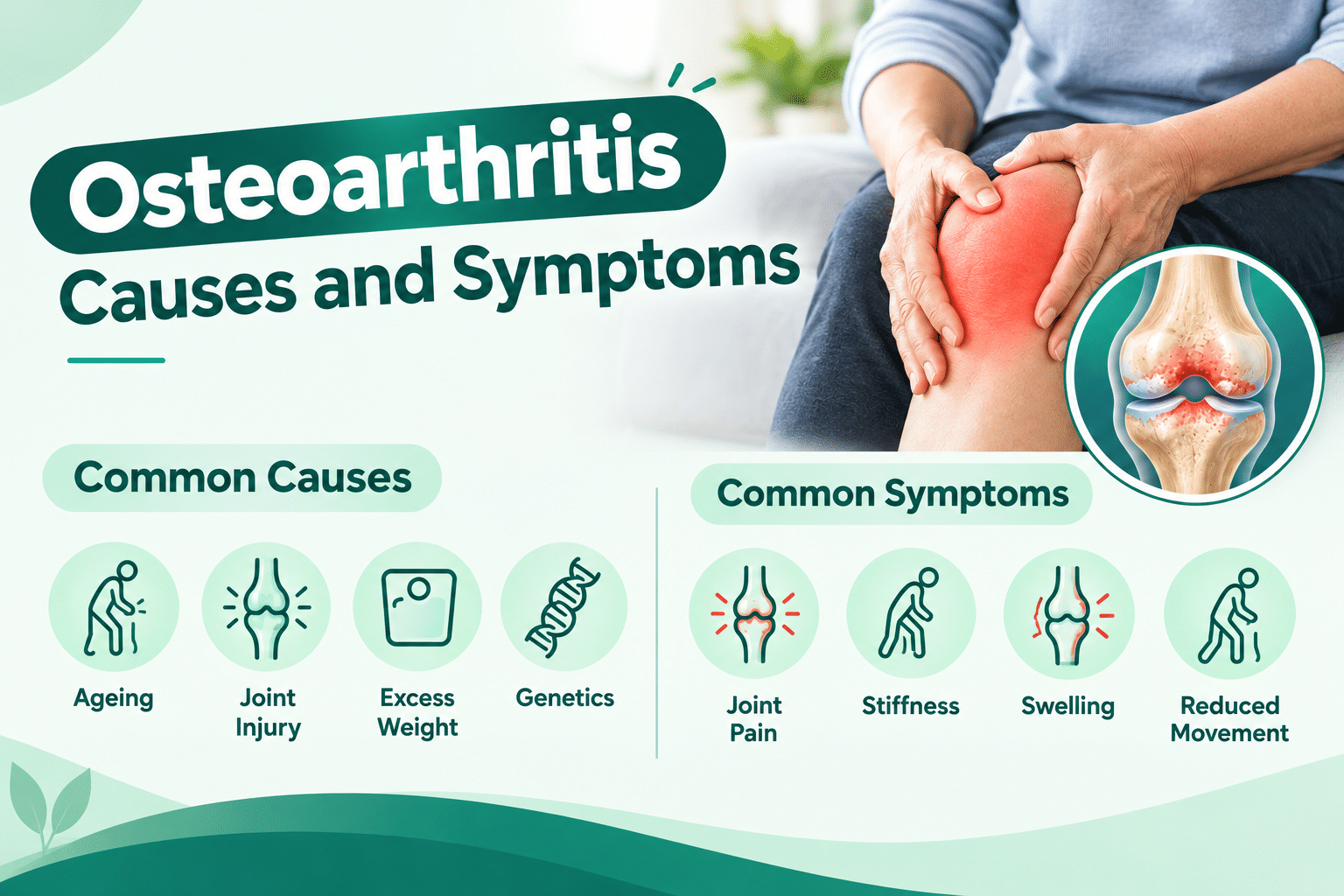
What Is Osteoarthritis? Symptoms, Causes and Treatment
Do your knees hurt when you climb stairs? Do your fingers feel stiff in the morning, or does your hip ache after a walk? These problems can have several causes, and osteoarthritis is one possibility. Understanding the condition can help you make informed decisions about your joint health.
Osteoarthritis is a common condition that affects the joints. It develops when the tissues within a joint change and become damaged over time. It most often affects the knees, hips, hands and spine.
Although osteoarthritis becomes more common with age, it is not simply an unavoidable part of getting older. Previous joint injuries, family history, body weight and joint structure can also play a role. Treatment can help many people manage pain, stay active and continue with everyday activities.
What Is Osteoarthritis?
A healthy joint allows two bones to move smoothly against each other. A layer of firm, flexible tissue called cartilage covers the ends of the bones. Other parts of the joint, including the joint lining, ligaments, tendons and underlying bone, help it move and remain stable.
In osteoarthritis, these tissues undergo changes. Cartilage may become thinner or damaged, the bone beneath it can change, and the joint lining and surrounding tissues may also be affected. These changes can lead to pain, stiffness and reduced movement.
Osteoarthritis is sometimes described as a wear-and-tear condition, but that description does not tell the whole story. It involves changes throughout the joint, not just the cartilage.
The condition can be mild in one person and more limiting in another. Some people have changes on an X-ray without much pain, while others experience symptoms that interfere with walking, work or sleep.
What Are the Symptoms of Osteoarthritis?
Symptoms often develop gradually. They may come and go, and they can become more noticeable after certain activities. Common signs include the following.
1. Joint pain
The affected joint may hurt during walking, climbing stairs, gripping objects or other movements. Pain may ease with rest, although persistent pain can occur in more advanced cases.
2. Stiffness after rest
A joint may feel stiff when you wake up or after sitting for a long time. Osteoarthritis-related morning stiffness usually lasts 30 minutes or less.
3. Swelling or tenderness
The joint may feel tender or look slightly swollen, particularly after activity. Sudden, severe swelling needs prompt medical assessment rather than being assumed to be arthritis.
4. Reduced movement
Bending the knee, rotating the hip or fully closing the fingers may become harder. Some people notice that everyday tasks take more effort than before.
5. Clicking or grinding
You may hear or feel a clicking, crackling or grinding sensation when moving a joint. This symptom alone does not confirm osteoarthritis.
6. Changes in joint stability
Weakness around a joint can make movement feel less secure. Some people experience difficulty standing up from a chair or walking longer distances.
Symptoms vary from person to person. Having one or more of these signs does not automatically mean you have osteoarthritis. A healthcare professional can assess your symptoms and consider other possible causes.
What Causes Osteoarthritis?
There is no single cause of osteoarthritis. It develops through a combination of changes within the joint and factors that affect how the joint handles everyday movement and load.
Ageing
The likelihood of developing osteoarthritis increases with age because joint tissues change over time. However, not everyone develops painful arthritis as they get older.
Previous joint injuries
A fracture, ligament injury or other significant joint injury can increase the chance of developing osteoarthritis later. Symptoms may appear long after the original injury has healed.
Family history and joint structure
Genetics can influence a person’s risk. Some people are also born with, or develop, differences in joint alignment or structure that place additional stress on certain joints.
Excess body weight
Carrying excess weight can increase the load on weight-bearing joints, particularly the knees and hips. Body fat may also contribute to inflammation in the body. If weight management is appropriate for you, even a modest reduction may help improve pain and function.
Repeated joint stress
Certain jobs, sports or repetitive movements may place repeated stress on particular joints. The risk depends on the type and amount of loading, past injuries and other individual factors.
Which Joints Are Commonly Affected?
Knee osteoarthritis
Knee osteoarthritis can make walking, climbing stairs, getting up from a chair or standing for long periods uncomfortable. Some people notice stiffness after sitting with their knees bent.
Hip osteoarthritis
Hip arthritis may cause pain in the groin, outer hip, thigh or buttock. Putting on shoes, getting into a vehicle or walking for long distances may become more difficult.
Hand osteoarthritis
When the hands are affected, finger joints or the base of the thumb may become painful and stiff. Opening jars, turning keys or holding small objects may be harder.
Spinal osteoarthritis
Changes in the joints of the neck or lower back can cause pain and stiffness. If nerves are affected, additional symptoms such as tingling, numbness or weakness may occur and require assessment.
How Is Osteoarthritis Diagnosed?
Diagnosis usually begins with a conversation about your symptoms and a physical examination. Your doctor may ask when the pain started, which movements make it worse, whether you have had an injury and how the problem affects your daily activities.
Physical examination
The doctor may assess joint tenderness, swelling, movement, stability, walking pattern and the muscles around the affected joint. Your medical history also helps guide the assessment.
Are X-rays or MRI scans always needed?
No. In many typical cases, osteoarthritis can be diagnosed clinically without imaging. An X-ray may be useful when the diagnosis is uncertain, symptoms are unusual or another problem needs to be considered. MRI scans are reserved for selected situations rather than being required for everyone.
Blood tests do not diagnose osteoarthritis itself, but a clinician may request tests to investigate other causes of joint symptoms. For example, some inflammatory conditions can cause symptoms that resemble osteoarthritis.
What Are the Treatment Options for Osteoarthritis?
Treatment depends on the joint affected, how severe the symptoms are and how much they interfere with everyday life. The main goals are to reduce pain, improve movement and help you stay active. Treatment often combines more than one approach.
1. Exercise and physiotherapy
Regular, appropriately chosen exercise is one of the most important treatments for osteoarthritis. It helps strengthen the muscles that support the joints, maintain flexibility and improve general fitness.
A physiotherapist can help you choose exercises that suit your symptoms and abilities. Depending on your needs, these may include muscle-strengthening movements, range-of-motion exercises, walking, cycling or water-based exercise.
Mild discomfort can occur when you start a new exercise programme. Begin gradually and build up over time. If pain becomes severe, swelling increases or symptoms remain worse after activity, ask your healthcare professional to review the plan.
Explore physiotherapy services at Jeevika Hospital to learn more about rehabilitation support.
2. Weight management, when appropriate
If you are living with excess weight, a manageable weight-loss plan may reduce stress on the knees and hips and improve physical function. Focus on sustainable changes to food habits and activity rather than crash diets or unrealistic targets.
3. Medicines for pain relief
Medicines may help you stay active while you work on exercise and other treatments. The choice depends on your age, medical history, other medicines and the joint involved.
A clinician may recommend a topical anti-inflammatory medicine, such as a gel, for suitable patients with knee osteoarthritis. Other medicines may be considered if topical treatment is not appropriate or does not provide enough relief.
Anti-inflammatory tablets can cause stomach, kidney and cardiovascular problems in some people. Do not start them regularly without professional advice, particularly if you have other medical conditions or take other medicines.
Painkillers do not suit everyone, and some provide limited benefit for osteoarthritis. Avoid self-prescribing opioids, combining pain medicines without advice or assuming that a supplement will repair damaged cartilage.
4. Supportive devices and activity changes
Walking aids or selected supports may help some people move more comfortably. Their usefulness depends on the affected joint and the person’s individual needs. A clinician or physiotherapist can advise whether a device is appropriate.
You may also find it helpful to pace demanding activities, take short breaks and alternate heavier tasks with lighter ones. The aim is to keep moving without repeatedly overloading a painful joint.
5. Injections
In selected cases, a doctor may consider a corticosteroid injection into the joint when other treatments are unsuitable or have not helped enough. Relief is generally temporary, often lasting a few weeks.
Injections are not appropriate for every patient, and evidence for different injection treatments varies. Discuss the likely benefits, risks and alternatives with your treating clinician.
6. Joint replacement surgery
Surgery may be considered when osteoarthritis causes substantial pain or disability and non-surgical treatments have not helped enough, or are unsuitable. Knee and hip replacement are common options for advanced disease affecting these joints.
The decision depends on your symptoms, daily function, overall health, goals and the expected benefits and risks. Age alone should not determine whether someone is considered for surgery.
Find out more about orthopaedic surgery services at Jeevika Hospital . Your orthopaedic specialist can explain which options may be suitable for your condition.
How Can You Manage Osteoarthritis at Home?
Small, consistent changes can make everyday activities easier. Your plan should fit your symptoms and any other health conditions you may have.
- Keep moving: Choose activities you can manage comfortably and increase activity gradually.
- Follow your exercise plan: Regular strengthening and mobility exercises can help maintain function.
- Use sensible pacing: Break demanding tasks into smaller steps and take rests when needed.
- Consider supportive footwear: Comfortable, well-fitting shoes may make walking easier for some people.
- Follow medicine instructions: Use prescribed or recommended treatments as directed and report side effects.
- Track your symptoms: Note which activities help or worsen pain so you can discuss patterns at your appointment.
There is no need to stop all physical activity because you have osteoarthritis. The goal is to find an appropriate level of movement and adjust it with professional guidance when needed.
When Should You See a Doctor?
Arrange a medical assessment if joint pain or stiffness keeps returning, affects your sleep, limits walking or interferes with your usual activities. Early assessment can help identify the cause and guide a suitable management plan.
New weakness, significant numbness or difficulty bearing weight after an injury also needs prompt medical assessment.
Frequently Asked Questions About Osteoarthritis
1. Can osteoarthritis be cured?
There is currently no established cure that restores a joint completely to its previous state. However, exercise, lifestyle changes, pain management and selected procedures can help reduce symptoms and improve daily function.
2. Is osteoarthritis the same as rheumatoid arthritis?
No. Osteoarthritis involves changes and damage within the joint. Rheumatoid arthritis is an autoimmune inflammatory disease. Their symptoms can overlap, so a medical assessment is important when the cause of joint pain is unclear.
3. Does walking make osteoarthritis worse?
Not necessarily. Suitable regular movement often helps people with osteoarthritis. Start at a manageable level, build up gradually and seek advice if activity causes severe or persistent worsening of symptoms.
4. Does everyone with osteoarthritis need an X-ray?
No. A clinician can often diagnose typical osteoarthritis from symptoms and examination. Imaging is used when it is likely to clarify the diagnosis or investigate another problem.
5. Can young adults develop osteoarthritis?
Yes. Although it is more common as people age, younger adults can develop it, particularly after joint injuries or because of certain joint-structure or inherited factors.
6. When is knee or hip replacement considered?
Joint replacement may be considered when pain, stiffness or reduced movement seriously affects quality of life and other suitable treatments have not helped enough. The decision is made through an individual clinical assessment.
7. Which doctor treats osteoarthritis?
Depending on the symptoms, you may consult a general physician, orthopaedic specialist, rheumatologist or physiotherapist. An orthopaedic specialist can assess joint problems and discuss both non-surgical and surgical options when needed.
Living With Joint Pain?
Persistent knee, hip or hand pain deserves proper assessment. Speak with a healthcare professional to understand the cause of your symptoms and discuss treatment options suited to you.
Jeevika Hospital
Karthik Nagar, Marathahalli, Bangalore – 560037
Medical disclaimer: This article is for general educational purposes and is not a substitute for individual medical advice, diagnosis or treatment. Treatment choices should be discussed with a qualified healthcare professional.

