
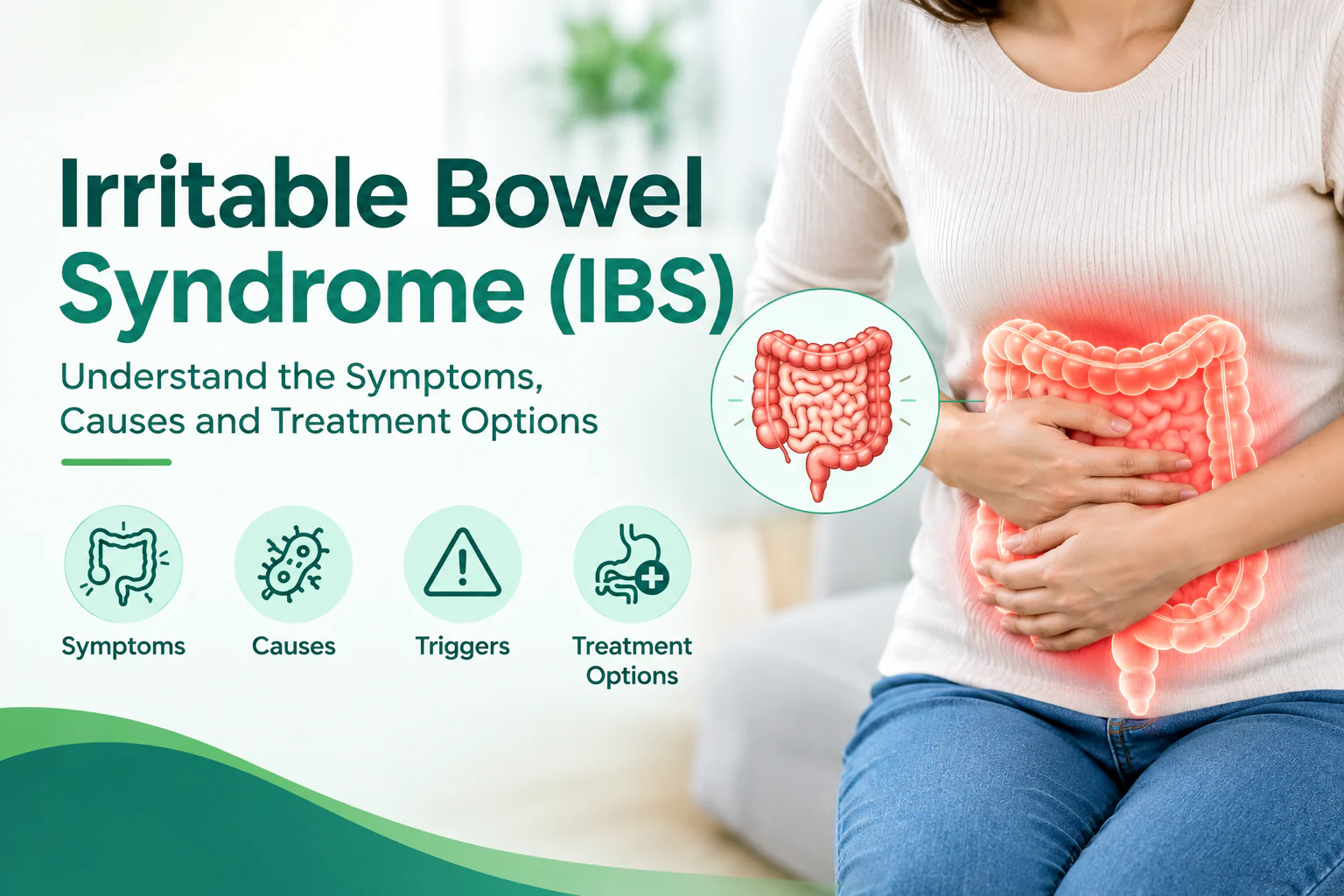
Irritable Bowel Syndrome (IBS): Symptoms and Management
Irritable Bowel Syndrome (IBS) is a common digestive disorder that can cause abdominal pain, bloating and changes in bowel habits. Some people mainly experience constipation, while others have frequent loose stools. Some people alternate between constipation and diarrhoea.
IBS can be frustrating because symptoms may come and go and can be different from one person to another. The good news is that IBS can often be managed with the right combination of diet, lifestyle changes, symptom-specific treatment and professional medical guidance.
What Is Irritable Bowel Syndrome?
Irritable Bowel Syndrome, commonly called IBS, is a disorder that affects how the digestive system functions. It is often described as a disorder of gut-brain interaction because communication between the digestive tract and nervous system can influence bowel function and how digestive sensations are experienced.
People with IBS may have abdominal pain together with changes in stool frequency or stool consistency. Symptoms can include constipation, diarrhoea, bloating, urgency or a feeling that a bowel movement was not complete.
IBS is different from inflammatory bowel diseases such as Crohn’s disease and ulcerative colitis. IBS does not normally cause visible damage or inflammation in the digestive tract.
However, recurring symptoms should not automatically be assumed to be IBS. Other digestive conditions can cause similar symptoms, which is why proper medical assessment is important when symptoms are persistent or concerning.
Common Symptoms of IBS
IBS symptoms can vary considerably. One person may mainly experience constipation, while another may have frequent diarrhoea. Some people have symptoms that change over time.
1. Abdominal Pain or Cramping
Abdominal pain is one of the main symptoms associated with IBS. The pain may be related to bowel movements and can sometimes improve after passing stool.
2. Bloating
Bloating may make the abdomen feel full, tight or uncomfortable. It can become more noticeable after certain meals or during periods when other IBS symptoms are active.
3. Constipation
Some people with IBS have hard or difficult-to-pass stools, straining, fewer bowel movements or a feeling that the bowel has not emptied fully.
4. Diarrhoea
IBS can also cause loose or watery stools, urgency and more frequent trips to the toilet.
5. Alternating Constipation and Diarrhoea
Some people experience both constipation and diarrhoea. The predominant bowel pattern may change from one period to another.
6. Feeling of Incomplete Evacuation
You may feel that you still need to pass stool even after having a bowel movement.
7. Mucus in the Stool
Some people with IBS notice whitish mucus in their stool. However, blood in the stool should not simply be attributed to IBS and requires medical assessment.
Types of IBS
Doctors may classify IBS according to the bowel pattern that occurs most often. This classification can help guide treatment.
| Type | What It Means |
|---|---|
| IBS-C | IBS with constipation as the predominant bowel pattern. |
| IBS-D | IBS with diarrhoea as the predominant bowel pattern. |
| IBS-M | IBS with both constipation and diarrhoea. |
| IBS-U | IBS symptoms that do not consistently fit the other bowel-pattern categories. |
What Causes IBS?
There is no single cause of IBS. Researchers believe that several factors may contribute to the condition.
- Changes in communication between the brain and digestive tract.
- Increased sensitivity of the intestine.
- Changes in bowel movement patterns.
- Changes in the gut microbiome.
- A previous gastrointestinal infection in some people.
- Food-related triggers.
- Stress and psychological factors that may worsen symptoms.
Stress is an important point to understand. IBS is not simply “caused by stress.” It is a genuine medical condition, but stress can worsen symptoms in some people because of the close communication between the brain and digestive system.
Common IBS Triggers
IBS triggers are highly individual. A food that causes symptoms for one person may not cause problems for someone else.
Common triggers may include:
- Large or irregular meals
- Very fatty foods
- Some dairy products
- Some high-FODMAP foods
- Carbonated drinks
- Excess caffeine
- Alcohol
- Sudden changes in fibre intake
- Stress and poor sleep
How Is IBS Diagnosed?
There is no single blood test or scan that confirms IBS in every patient. Doctors usually look at the pattern of symptoms, medical history and physical examination while considering other possible causes.
Established diagnostic criteria describe IBS as recurrent abdominal pain associated with changes in bowel frequency or stool form and/or a relationship with bowel movements.
Depending on your symptoms, age, medical history and examination, your doctor may recommend selected tests to rule out other conditions.
Tests May Be Considered When Appropriate
- Blood tests
- Tests for coeliac disease in appropriate patients
- Inflammatory markers when inflammatory bowel disease is suspected
- Stool tests when clinically indicated
- Endoscopy or colonoscopy when there is a reason to investigate further
Not everyone with suspected IBS needs extensive testing. The appropriate evaluation depends on the individual patient’s symptoms and risk factors.
How Is IBS Treated?
IBS treatment is usually personalised. The goal is to reduce troublesome symptoms and improve quality of life. There is no single treatment that works for everyone.
1. Dietary Changes
Your doctor or dietitian may recommend changes based on your symptoms and usual diet. Some people benefit from reducing specific trigger foods, adjusting fibre intake or trying a limited low-FODMAP diet under suitable professional guidance.
2. Soluble Fibre
Soluble fibre, such as psyllium, may help some people with IBS, especially when constipation is present. Fibre should generally be increased gradually because a sudden increase may worsen gas or bloating.
3. Treatment for Constipation
When constipation is a major symptom, doctors may recommend dietary changes, fibre, adequate fluids and appropriate laxatives or prescription medicines when needed.
4. Treatment for Diarrhoea
For diarrhoea-predominant IBS, treatment may include dietary adjustments and medicines that reduce diarrhoea when appropriate. Medication should be selected according to the person’s symptoms and medical history.
5. Medicines for Abdominal Pain and Spasm
Depending on the symptoms, doctors may consider medicines such as antispasmodics or other treatments designed to reduce abdominal pain and bowel-related symptoms.
6. Gut-Directed Psychological Therapies
Because the brain and gut communicate closely, psychological and behavioural therapies can be useful for some people with persistent IBS symptoms. Options may include cognitive behavioural therapy and other gut-directed approaches.
7. Prescription Treatment
Some people with moderate or severe IBS may need prescription treatment. The medicine depends on whether constipation, diarrhoea, abdominal pain or another symptom is dominant.
Diet and IBS: What Should You Eat?
There is no universal IBS diet. The best approach is usually one that controls symptoms while still providing enough nutrition.
Practical Eating Habits
- Eat meals at regular times.
- Avoid regularly skipping meals.
- Eat slowly and give yourself enough time to finish meals.
- Drink enough fluids throughout the day.
- Limit foods that you have identified as personal triggers.
- Increase fibre gradually rather than suddenly.
- Discuss major dietary restrictions with a dietitian.
What Is a Low-FODMAP Diet?
FODMAPs are a group of carbohydrates that can be difficult for some people to digest or absorb. A low-FODMAP diet can reduce IBS symptoms in some people, particularly bloating, abdominal pain and changes in bowel habits.
However, a low-FODMAP diet can be restrictive. It is better used as a structured, time-limited dietary approach with guidance from a qualified healthcare professional or dietitian rather than as a permanent diet for everyone.
The goal should be to identify individual food triggers and maintain the widest nutritionally appropriate diet possible.
Lifestyle Changes That May Help IBS
Managing IBS is not only about food. Daily habits can also influence symptoms.
Stay Physically Active
Regular physical activity may support bowel function and can also help reduce stress.
Prioritise Sleep
Poor sleep can make it harder to cope with digestive symptoms. Try to keep a consistent sleep schedule and aim for adequate rest.
Manage Stress
Stress does not mean your symptoms are imaginary. IBS involves communication between the brain and digestive tract, so stress management can be one part of a complete treatment plan.
Simple techniques such as slow breathing, mindfulness, yoga, relaxation exercises or counselling may help some people.
Track Your Symptoms
A simple symptom diary can help you identify patterns. Track meals, bowel movements, abdominal pain, bloating, sleep, stress and other changes.
When Can a Gastroenterologist Help?
If abdominal pain, bloating, constipation or diarrhoea keeps returning, getting a proper medical assessment can help determine whether IBS is the likely cause or whether another condition needs to be investigated.
A gastroenterologist specialises in conditions affecting the digestive system, including the stomach, intestines, liver, gallbladder and pancreas.
You can learn more about Gastroenterology Care at Jeevika Hospital and the digestive health services available in Marathahalli, Bangalore.
When Should You See a Doctor?
Persistent digestive symptoms should be assessed rather than automatically labelled as IBS.
- Blood in the stool or rectal bleeding
- Unexplained weight loss
- Persistent vomiting
- Severe or worsening abdominal pain
- Symptoms that repeatedly wake you from sleep
- Persistent fever
- New bowel symptoms later in life
- A strong family history of bowel cancer, inflammatory bowel disease or other significant digestive disease
- Symptoms that are persistent or significantly affecting your daily life
These symptoms do not automatically mean that you have a serious disease. They simply mean that further medical assessment may be appropriate.
Can You Live a Normal Life With IBS?
Yes. IBS can be a long-term condition, but many people learn to control their symptoms and continue their normal work, family and social activities.
The key is to understand your individual triggers rather than following every diet rule you see online. A structured approach involving your doctor, dietitian and other healthcare professionals can make symptom management easier.
Treatment may also need to change over time. What works during one period may not be enough during a flare-up, so regular communication with your healthcare professional can be useful.
Frequently Asked Questions About IBS
1. What are the most common symptoms of IBS?
Common IBS symptoms include abdominal pain, bloating, constipation, diarrhoea, changes in bowel habits, urgency and a feeling of incomplete bowel evacuation.
2. Is IBS a serious disease?
IBS can significantly affect quality of life, but it does not usually damage the digestive tract. However, symptoms such as bleeding, unexplained weight loss or persistent vomiting need medical assessment because they are not typical symptoms to simply attribute to IBS.
3. Can stress make IBS worse?
Yes. Stress can worsen IBS symptoms in some people because the brain and digestive system communicate closely. Stress is not the only cause of IBS, and IBS symptoms are real and medically recognised.
4. Is there a permanent cure for IBS?
There is no single treatment that permanently cures IBS for everyone. Management focuses on controlling symptoms, identifying triggers and improving quality of life. Many people experience periods when symptoms are mild or absent.
5. Is a low-FODMAP diet good for IBS?
A low-FODMAP diet can improve symptoms for some people. Because it can be restrictive, it is best undertaken with guidance from a qualified healthcare professional or dietitian.
6. Should I stop eating gluten if I have IBS?
Not necessarily. Some people report fewer symptoms after reducing gluten-containing foods, but other conditions, including coeliac disease, should be considered when appropriate. Speak with a doctor before making major dietary restrictions.
7. Does IBS cause cancer?
IBS itself is not considered a cause of bowel cancer. However, symptoms that are new, unusual or accompanied by warning signs should be properly evaluated rather than automatically attributed to IBS.
8. When should I see a gastroenterologist for IBS symptoms?
Consider a gastroenterology consultation when digestive symptoms are persistent, recurrent, severe, unexplained or interfering with your daily life, particularly when you have warning signs.
Have Persistent Digestive Symptoms?
Recurring abdominal pain, bloating, constipation or diarrhoea should not always be self-diagnosed as IBS. A gastroenterology consultation can help assess your symptoms and determine whether further evaluation is needed.
Jeevika Hospital provides gastroenterology care for digestive conditions in Marathahalli, Bangalore.
Explore Gastroenterology Care
Jeevika Hospital
95/3, Marathahalli Outer Ring Road,
Karthik Nagar, Marathahalli,
Bengaluru, Karnataka 560037
OPD: +91 89047 39711
Key Takeaways
- IBS commonly causes abdominal pain and changes in bowel habits.
- IBS can involve constipation, diarrhoea or both.
- Symptoms and triggers are different for each person.
- Diet, physical activity, sleep and stress management can support symptom control.
- Soluble fibre may help some people, particularly when constipation is present.
- A supervised low-FODMAP approach may help selected patients.
- Medicines are chosen according to the person’s predominant symptoms.
- Blood in the stool, unexplained weight loss and persistent vomiting require medical assessment.
- Persistent or unexplained digestive symptoms should be evaluated by a healthcare professional.

