
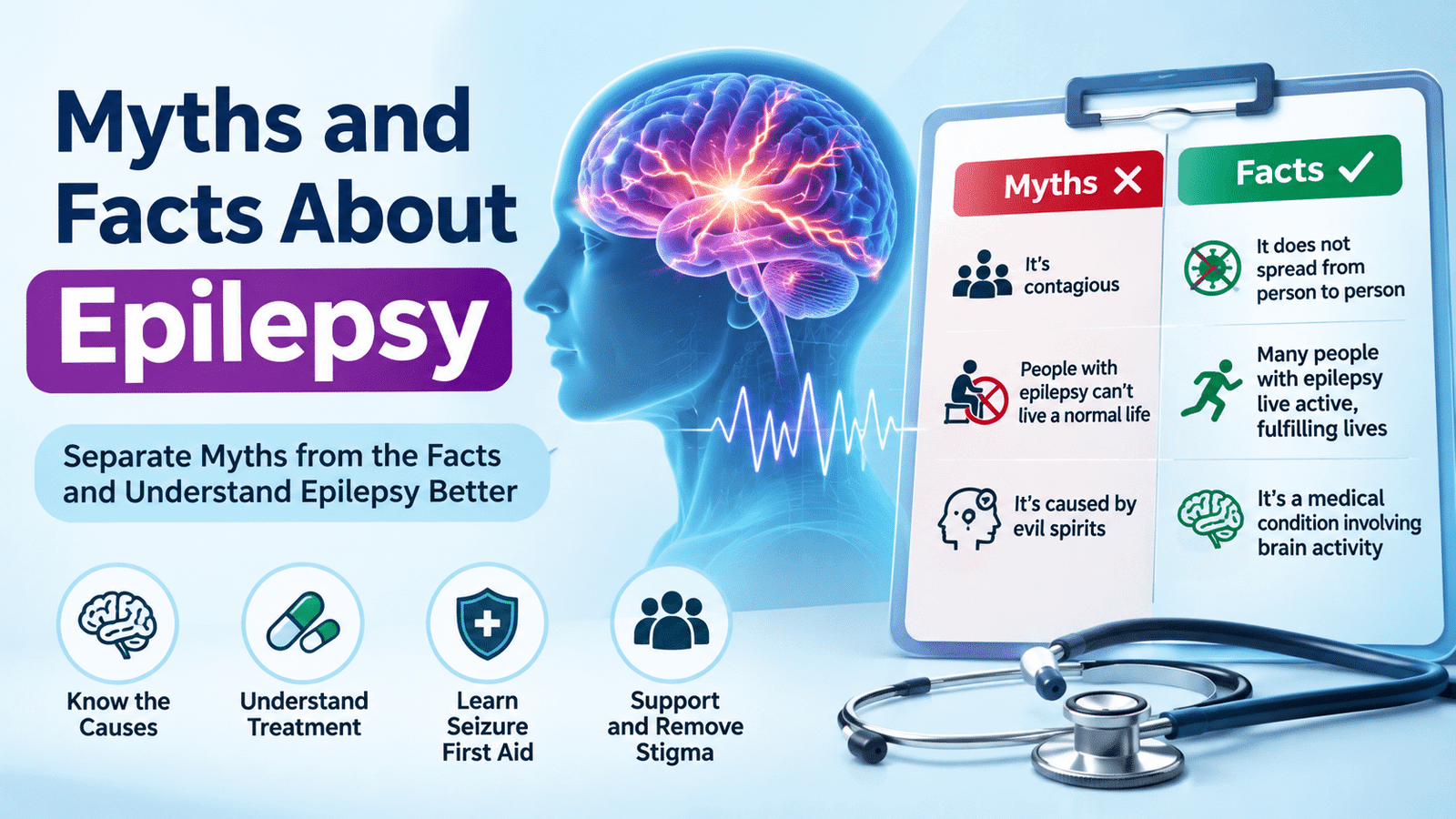
Myths and Facts About Epilepsy: Understanding the Truth Behind Seizures
Imagine someone suddenly falling to the ground, losing awareness and experiencing uncontrollable body movements. People nearby may become frightened and unsure about what to do. Some might even believe that the person is possessed or that epilepsy can spread through physical contact.
Unfortunately, these misunderstandings are still common. They can make life more difficult for people living with epilepsy and their families.
Epilepsy is a neurological condition that affects the brain. With the right diagnosis, treatment and support, many people with epilepsy can manage their seizures and lead active, fulfilling lives.
- What epilepsy is and why seizures happen.
- Common myths and facts about epilepsy.
- Whether epilepsy is curable or contagious.
- How epilepsy is diagnosed and treated.
- What to do when someone experiences a seizure.
- When to seek medical attention.
What Is Epilepsy?
Epilepsy is a chronic neurological disorder in which a person has a tendency to experience recurrent, unprovoked seizures. A seizure occurs when there is a sudden disturbance in the normal electrical activity of the brain.
These seizures can affect different parts of the brain. Some people experience changes in awareness, while others may have unusual movements, muscle stiffness, jerking or temporary confusion.
Not every seizure means a person has epilepsy. Seizures can sometimes occur due to temporary medical problems, such as low blood sugar, certain infections or other acute conditions. A doctor needs to evaluate the cause before making a diagnosis.
According to the World Health Organization (WHO), approximately 50 million people worldwide live with epilepsy. It is one of the most common neurological conditions.
10 Common Myths and Facts About Epilepsy
Let’s look at some common misconceptions about epilepsy and understand what medical evidence actually tells us.
Myth 1: Epilepsy is a contagious disease
Myth: Epilepsy can spread through touching, sharing food or sitting next to someone who has seizures.
Fact: Epilepsy is not contagious.
Epilepsy is a neurological condition, not an infectious disease. You cannot catch it by hugging someone, shaking hands, sharing meals or having close contact.
People with epilepsy deserve the same friendship, respect and social support as everyone else.
Myth 2: Every seizure causes a person to fall and shake
Myth: A person must fall to the ground and experience severe body movements to have a seizure.
Fact: Seizures can happen in different ways.
Not all seizures involve falling or shaking. Some people may suddenly stare into space, stop responding, experience unusual sensations or make repetitive movements.
For example, an absence seizure may cause a person to briefly lose awareness and appear to be daydreaming. Other seizures can involve changes in sensation, emotions or behaviour.
The symptoms depend on which part of the brain is affected.
Myth 3: Epilepsy is caused by evil spirits or supernatural powers
Myth: Seizures happen because of spiritual possession, black magic or supernatural forces.
Fact: Epilepsy is a medical condition involving abnormal electrical activity in the brain.
There are several possible causes of epilepsy. These include genetic factors, brain injuries, infections affecting the brain, stroke and certain structural or developmental conditions.
In some people, the exact cause cannot be identified.
Traditional beliefs should never prevent someone from receiving proper medical evaluation and treatment.
Myth 4: People with epilepsy cannot lead a normal life
Myth: A person with epilepsy cannot study, work, travel or enjoy everyday activities.
Fact: Many people with epilepsy live active and independent lives.
With appropriate treatment and safety precautions, many people can continue their education, build careers, maintain relationships and participate in social activities.
Some individuals may need additional support depending on their seizure type, frequency and response to treatment. However, epilepsy should not automatically limit someone’s opportunities.
Myth 5: Epilepsy always causes intellectual disability
Myth: Everyone with epilepsy has learning difficulties or reduced intelligence.
Fact: Epilepsy does not automatically affect a person’s intelligence.
Many people with epilepsy have normal intellectual abilities and perform well academically and professionally.
Some individuals may experience memory, concentration or learning difficulties. These can be related to the underlying brain condition, seizure activity, sleep problems or medication side effects.
Appropriate assessment and support can help address these difficulties.
Myth 6: You should put a spoon or cloth inside someone’s mouth during a seizure
Myth: Putting an object inside the mouth prevents a person from swallowing their tongue.
Fact: Never put anything inside the mouth of someone having a seizure.
A person cannot swallow their tongue. Trying to insert a spoon, cloth, fingers or any other object can cause serious injuries to the teeth, gums and jaw.
The safest approach is to protect the person from nearby hazards and allow the seizure to pass without restraining them.
Myth 7: Epilepsy cannot be treated
Myth: Once someone develops epilepsy, seizures can never be controlled.
Fact: Epilepsy can often be managed successfully with treatment.
Anti-seizure medications are the main treatment for many people with epilepsy. The choice of medicine depends on the seizure type, age, medical history and other individual factors.
According to WHO, up to 70% of people with epilepsy could become seizure-free with appropriate diagnosis and treatment.
Some people who do not respond adequately to medication may benefit from other specialist treatments, including epilepsy surgery or selected device-based therapies.
Myth 8: People with epilepsy cannot get married or have children
Myth: Epilepsy prevents people from getting married, having relationships or becoming parents.
Fact: People with epilepsy can have relationships, marry and become parents.
However, pregnancy planning is important for women taking anti-seizure medication. Some medicines can affect an unborn baby’s development, while uncontrolled seizures can also create risks during pregnancy.
Women should consult their neurologist and obstetrician before planning a pregnancy. Medication should never be stopped suddenly without medical advice.
Myth 9: Everyone with epilepsy must avoid sports and exercise
Myth: Physical activity is dangerous for everyone with epilepsy.
Fact: Most people with epilepsy can participate in suitable physical activities.
Walking, cycling in appropriate safe environments, yoga and other forms of exercise may be suitable depending on the person’s condition.
Activities involving water, heights or heavy machinery need additional safety precautions. Swimming should be supervised by someone who understands seizure first aid.
It is best to discuss individual activity restrictions with a treating doctor.
Myth 10: Epilepsy medication can be stopped once seizures disappear
Myth: If someone has not experienced a seizure for a few months, they no longer need medication.
Fact: Stopping medication without medical guidance can increase the risk of seizures returning.
Some people may be able to reduce or discontinue their medication after a sustained period without seizures. However, this decision depends on the type of epilepsy, medical history, test results and risk of recurrence.
Only a qualified specialist should guide any changes to epilepsy medication.
What Are the Common Causes of Epilepsy?
Epilepsy can develop for different reasons. Sometimes the cause is clear, while in other cases doctors may not identify a specific reason.
Some recognised causes and contributing conditions include:
- Genetic factors: Certain inherited or genetic changes can increase the likelihood of developing epilepsy.
- Head injuries: Serious injuries affecting the brain can sometimes lead to seizures.
- Brain infections: Conditions such as meningitis and encephalitis can increase the risk of epilepsy.
- Stroke: Damage to brain tissue following a stroke may lead to seizures.
- Brain tumours: Some tumours can affect normal brain activity.
- Developmental conditions: Certain abnormalities in brain development may be associated with epilepsy.
- Unknown causes: In many people, the exact cause remains unidentified.
Identifying the possible cause helps doctors select an appropriate treatment plan.
What Are the Warning Signs and Symptoms of Epilepsy?
Epilepsy symptoms vary from person to person. The type of seizure and the area of the brain involved determine what someone experiences.
Common signs may include:
- Sudden loss of awareness or consciousness.
- Uncontrolled jerking movements of the arms or legs.
- Staring into space without responding.
- Temporary confusion or unusual behaviour.
- Sudden muscle stiffness.
- Unusual sensations, smells or tastes.
- Repeated lip-smacking or hand movements.
- Temporary difficulty speaking or understanding others.
- Feeling tired or confused after a seizure.
These symptoms can also occur in other medical conditions. Anyone experiencing suspected seizures should undergo medical evaluation.
How Is Epilepsy Diagnosed?
Diagnosing epilepsy involves understanding the patient’s medical history, seizure symptoms and possible underlying causes.
A neurologist may recommend the following assessments:
1. Medical history and physical examination
The doctor asks about the symptoms, how long the episode lasted, previous episodes, family history, medications and other relevant medical conditions. Information from someone who witnessed the seizure can also be helpful.
2. Electroencephalogram (EEG)
An EEG records the electrical activity of the brain using small electrodes attached to the scalp. It can help identify electrical patterns associated with epilepsy. A normal EEG does not always rule out epilepsy.
3. MRI or CT scan
Brain imaging may be recommended to look for structural abnormalities, previous injuries, tumours or other possible causes.
4. Blood tests
Blood tests may help identify metabolic problems, infections or other conditions that could contribute to seizures.
The doctor decides which investigations are necessary based on the individual’s symptoms and examination.
What Are the Treatment Options for Epilepsy?
Epilepsy treatment aims to control seizures, reduce complications and improve quality of life.
Anti-seizure medications
Medication is the most common treatment. Doctors select medicines according to the type of seizure and the patient’s individual needs. Taking medication regularly as prescribed is important for seizure control.
Epilepsy surgery
For selected people whose seizures do not respond to suitable medications, surgery may be considered after specialist evaluation. It may help control seizures when the area responsible for them can be safely identified and treated.
Device-based treatments
Some patients may benefit from treatments such as vagus nerve stimulation or other specialist neuromodulation techniques.
Every patient’s treatment needs are different. Regular follow-up helps doctors monitor progress and adjust treatment when necessary.
Seizure First Aid: What Should You Do If Someone Has a Seizure?
Knowing how to respond during a seizure can prevent injuries and may save a life. Staying calm and protecting the person is more important than trying to stop the seizure.
What you should do
- Stay calm: Do not panic. Stay with the person until they recover.
- Protect from injuries: Move nearby furniture, sharp objects and other dangerous items away.
- Protect the head: Place something soft and flat, such as a folded jacket, under their head.
- Loosen tight clothing: Loosen tight clothing around the neck if possible.
- Turn them onto their side: When it is safe to do so, gently place the person on their side to help keep the airway clear, particularly after the convulsive movements stop.
- Time the seizure: Note when the seizure starts and how long it lasts.
- Stay until recovery: Reassure the person when they become alert and give them time to recover.
What you should NOT do
- Do not put a spoon, cloth, fingers or any object inside the mouth.
- Do not try to hold the person down or stop their movements.
- Do not give water, food or medication by mouth during the seizure.
- Do not try to force the person to stand up immediately.
- Do not leave them alone until they have recovered.
When is a seizure a medical emergency?
Seek emergency medical help if:
- The seizure lasts five minutes or longer.
- Another seizure begins before the person has recovered.
- The person has difficulty breathing or waking up after the seizure.
- The person is injured during the seizure.
- The seizure happens in water.
- The person is pregnant or has diabetes with loss of consciousness.
- The person is experiencing a seizure for the first time.
Important: Do not wait for a prolonged seizure to end before seeking emergency assistance when the five-minute threshold is reached. Follow any emergency seizure plan prescribed for the individual.
Can People With Epilepsy Live a Healthy Life?
Yes. Epilepsy does not mean that someone must give up their ambitions or stop enjoying everyday activities.
People living with epilepsy can take several practical steps to support their health:
- Take prescribed medication on time.
- Get sufficient sleep and maintain a regular sleep schedule.
- Avoid missing medication doses.
- Identify and manage personal seizure triggers.
- Attend regular medical appointments.
- Inform close family members about seizure first aid.
- Follow safety precautions while swimming, cooking or travelling.
- Avoid excessive alcohol consumption.
- Maintain a healthy and balanced lifestyle.
With appropriate treatment and support, many individuals can manage epilepsy and continue their daily routines.
When Should You Consult a Neurologist?
Do not ignore unexplained episodes of loss of awareness, repeated unusual movements or suspected seizures.
Consider consulting a neurologist if you or a family member experiences:
- A first-time seizure.
- Repeated episodes of unexplained staring or unresponsiveness.
- Sudden involuntary movements.
- Temporary loss of awareness.
- Seizures that continue despite taking prescribed medication.
- New or changing seizure symptoms.
- Unusual confusion or memory problems associated with suspected seizure episodes.
Early medical evaluation can help identify the cause and guide appropriate treatment. A first seizure requires prompt medical assessment, even if the person feels normal afterwards.
Frequently Asked Questions About Epilepsy
1. Is epilepsy a lifelong disease?
Epilepsy can be a long-term condition, but its course varies. Some people achieve lasting seizure control, and some may eventually be able to stop medication under specialist supervision.
2. Can epilepsy be completely cured?
Some people achieve long-term remission, while others need ongoing treatment. The outcome depends on the type and cause of epilepsy and the response to treatment. Many people can become seizure-free with appropriate care.
3. Can stress cause epileptic seizures?
Stress may act as a seizure trigger for some people who already have epilepsy. However, stress alone does not mean someone has epilepsy. Identifying individual triggers can help with seizure management.
4. Is epilepsy hereditary?
Some forms of epilepsy have genetic links, but not all epilepsy is inherited. Having a family member with epilepsy does not mean that every family member will develop the condition.
5. Can children develop epilepsy?
Yes. Epilepsy can affect people of any age, including infants and children. Early diagnosis and appropriate treatment can help children manage their condition and participate in school and everyday activities.
6. Can a person with epilepsy get married?
Yes. People with epilepsy can marry, maintain relationships and have families. Pregnancy planning and medication review are important for anyone taking anti-seizure medicines who is planning to have a baby.
7. Does every seizure require hospital admission?
Not every seizure requires hospital admission. However, a first seizure, a seizure lasting five minutes or longer, repeated seizures without recovery, breathing difficulties or serious injury require urgent medical attention.
8. Can epilepsy affect memory?
Some people with epilepsy experience memory or concentration difficulties. These may be related to seizure activity, the underlying condition, sleep disturbances or medication effects. Discuss persistent problems with your neurologist.
Final Thoughts: Understanding Epilepsy Can Change Lives
Epilepsy is a medical condition, not a reason for fear, shame or discrimination. Many misconceptions surrounding epilepsy can be corrected through awareness and accurate medical information.
People with epilepsy deserve understanding, respect and access to appropriate healthcare. Recognising seizure symptoms, knowing basic first aid and seeking timely medical advice can make a meaningful difference.
If you or someone in your family experiences repeated seizures or unexplained episodes of loss of awareness, consult a qualified neurologist for proper evaluation and treatment.

