
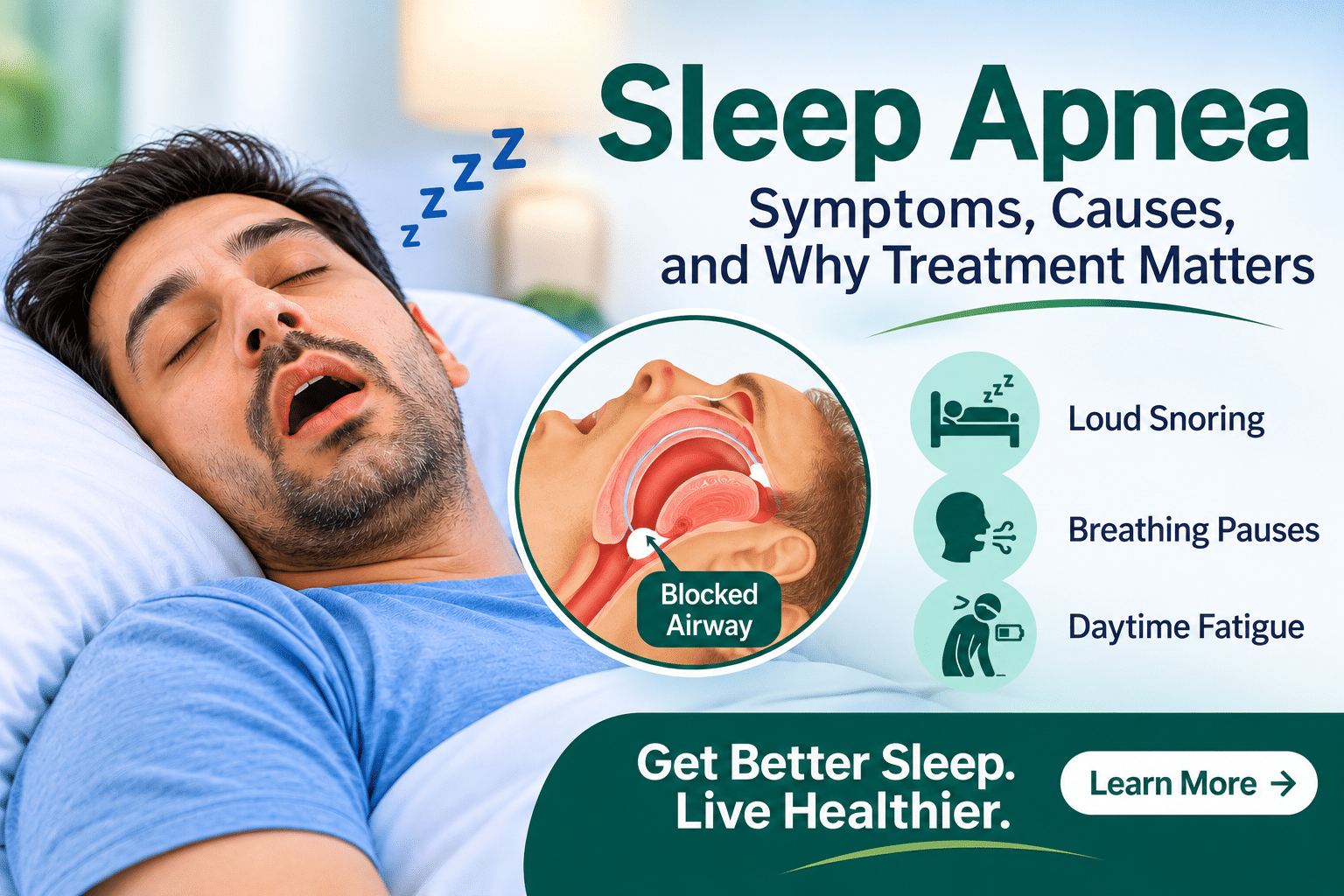
Sleep Apnea: Symptoms, Causes, and Why Treatment Matters
Getting a full night’s sleep should leave you feeling fresh and active the next morning. But what if you sleep for seven or eight hours and still wake up feeling tired? What if your family notices that you snore loudly, suddenly stop breathing, or gasp for air while sleeping?
These signs should not be ignored. They may indicate a condition called sleep apnea, a sleep-related breathing disorder that affects the quality of your sleep and overall health.
Sleep apnea causes breathing to stop and start repeatedly during sleep. Some people may experience these interruptions many times throughout the night without knowing it. Over time, poor sleep can affect concentration, mood, energy levels, and general well-being.
- What sleep apnea is and how it affects breathing.
- Common symptoms that you should recognise.
- Different types and causes of sleep apnea.
- How doctors diagnose the condition.
- Available sleep apnea treatment options.
- Why early diagnosis and treatment matter.
What Is Sleep Apnea?
Sleep apnea is a condition in which breathing repeatedly becomes shallow or stops temporarily while a person is asleep. These interruptions can lower oxygen levels and disturb the normal sleep cycle.
When breathing stops, the brain may briefly wake the person to restart normal breathing. These awakenings are often so short that the person does not remember them the next morning.
As a result, even someone who spends enough time in bed may not get the restful sleep their body needs.
Sleep apnea can affect adults and children. However, it is more commonly recognised in adults, especially those who experience persistent snoring and daytime tiredness.
Types of Sleep Apnea
There are three main types of sleep apnea. Understanding the difference helps doctors identify the cause and recommend suitable treatment.
1. Obstructive Sleep Apnea (OSA)
Obstructive sleep apnea is the most common type. It happens when the muscles at the back of the throat relax too much during sleep. This can narrow or completely block the upper airway.
When airflow is restricted, breathing may stop temporarily. The brain then triggers a brief awakening to help reopen the airway.
Common signs include loud snoring, choking or gasping during sleep, and excessive daytime sleepiness.
2. Central Sleep Apnea (CSA)
Central sleep apnea occurs when the brain does not send the correct signals to the muscles responsible for breathing during sleep.
Unlike obstructive sleep apnea, the main problem is not a physical blockage in the throat. It is related to how the brain controls breathing.
Certain heart conditions, neurological conditions, and opioid medicines can be associated with central sleep apnea.
3. Complex Sleep Apnea
Complex sleep apnea, also known as treatment-emergent central sleep apnea, occurs when central breathing pauses appear or persist after positive airway pressure treatment has been started for obstructive sleep apnea.
It requires proper medical assessment because the treatment approach may need to be adjusted.
Common Symptoms of Sleep Apnea
Sleep apnea symptoms are not always easy to recognise. Many people do not realise they have a breathing problem until a family member notices unusual breathing patterns during sleep.
Some symptoms occur at night, while others become noticeable during the day.
Night-time Symptoms
- Loud and frequent snoring: Regular loud snoring can be a warning sign, particularly when accompanied by other symptoms.
- Pauses in breathing: A partner or family member may notice that breathing stops briefly and starts again.
- Gasping or choking: Some people suddenly gasp for air while sleeping.
- Restless sleep: Repeated awakenings and frequent changes in sleeping position may occur.
- Frequent urination at night: Some people wake up several times to use the bathroom.
- Dry mouth: Waking up with a dry mouth or sore throat may also occur.
Daytime Symptoms
- Feeling tired even after a full night’s sleep.
- Difficulty concentrating at work or while studying.
- Morning headaches.
- Feeling sleepy during the day.
- Irritability and mood changes.
- Difficulty remembering things.
- Reduced productivity and low energy.
What Causes Sleep Apnea?
The causes of sleep apnea depend on the type of condition. Obstructive sleep apnea is generally related to narrowing or blockage of the upper airway, while central sleep apnea involves problems with the brain’s control of breathing.
Several factors can increase the chances of developing sleep apnea.
1. Excess Body Weight
Excess fatty tissue around the neck and upper airway can make the breathing passage narrower. This may increase the likelihood of airway blockage during sleep.
2. Narrow Airway Structure
Some people naturally have smaller airways, enlarged tonsils, a large tongue, or certain jaw and facial structures that make airway obstruction more likely.
3. Age
Sleep apnea can develop at any age, but the risk of obstructive sleep apnea generally increases as people get older.
4. Family History
Genetics can influence airway structure, body fat distribution, and other characteristics associated with sleep apnea. Having family members with the condition may increase your risk.
5. Alcohol and Smoking
Alcohol can relax the muscles in the throat and make airway obstruction more likely. Smoking can contribute to inflammation and swelling in the upper airway.
6. Medical Conditions
Certain health conditions, including heart disorders, neurological conditions, and hormonal disorders, may increase the risk of particular types of sleep apnea.
It is important to remember that sleep apnea can affect people who are not overweight too. A person’s body weight alone cannot determine whether they have the condition.
Who Is at Higher Risk of Sleep Apnea?
Although anyone can develop sleep apnea, certain people may have a higher risk.
- People who are overweight or have obesity.
- Adults above 40 years of age.
- People with a family history of sleep apnea.
- Individuals with a thick neck or narrow airway.
- People who consume alcohol regularly.
- Smokers.
- People with certain heart or neurological conditions.
- Individuals with persistent nasal or upper airway problems.
Having one or more risk factors does not confirm that you have sleep apnea. A proper medical evaluation is needed.
Why Does Sleep Apnea Treatment Matter?
Sleep apnea is more than a snoring problem. When breathing is repeatedly interrupted during sleep, the body experiences disturbed sleep and may receive less oxygen than it needs.
If the condition remains untreated, it can affect several aspects of physical and mental health.
1. Increased Risk of High Blood Pressure
Repeated breathing interruptions can place stress on the cardiovascular system. Obstructive sleep apnea is associated with high blood pressure and may make blood pressure harder to control.
2. Heart and Cardiovascular Problems
Untreated sleep apnea is associated with an increased risk of cardiovascular problems, including heart disease and abnormal heart rhythms. It is also linked to a higher risk of stroke.
3. Daytime Fatigue and Poor Concentration
Repeated sleep disturbances can leave you feeling exhausted during the day. You may find it difficult to concentrate, remember information, or complete everyday tasks.
4. Increased Risk of Road Accidents
Excessive daytime sleepiness can slow reaction time and affect alertness. This may increase the risk of accidents, particularly while driving or operating machinery.
5. Effects on Mental Well-being
Poor-quality sleep can affect mood and emotional health. Some people experience irritability, anxiety, low mood, or difficulty managing everyday stress.
6. Metabolic Health Concerns
Obstructive sleep apnea is associated with insulin resistance and type 2 diabetes. Its relationship with metabolic health is complex and can involve several overlapping risk factors.
How Is Sleep Apnea Diagnosed?
Sleep apnea cannot be confirmed simply by observing snoring or feeling tired during the day. A doctor needs to evaluate the symptoms, medical history, and risk factors before recommending appropriate tests.
The following steps may be involved in diagnosis.
1. Medical Consultation
The doctor will ask about your sleeping habits, snoring, breathing interruptions, daytime tiredness, existing health conditions, and medicines you take.
2. Physical Examination
A physical examination may include checking your nose, mouth, throat, neck, and other features that could contribute to airway narrowing.
3. Sleep Study (Polysomnography)
A sleep study is one of the main tests used to diagnose sleep apnea. It records different body functions while you sleep, such as:
- Breathing patterns.
- Blood oxygen levels.
- Heart rate.
- Brain activity.
- Body movements during sleep.
Depending on your symptoms and medical history, your doctor may recommend an overnight sleep study at a sleep centre or a suitable home sleep apnea test.
4. Understanding the Test Results
Doctors may use the Apnea-Hypopnea Index (AHI) to assess the number of breathing interruptions per hour of sleep. For adults, the commonly used categories are:
- Mild: 5 to fewer than 15 events per hour.
- Moderate: 15 to 30 events per hour.
- Severe: More than 30 events per hour.
The results are considered alongside symptoms and other clinical findings to determine the most appropriate treatment.
What Are the Treatment Options for Sleep Apnea?
Sleep apnea treatment depends on its type, severity, underlying cause, and the patient’s overall health. There is no single treatment that works for everyone.
After reviewing the test results, your doctor may recommend one or more of the following options.
1. CPAP Therapy
Continuous Positive Airway Pressure (CPAP) therapy is a commonly used and effective treatment for obstructive sleep apnea.
A CPAP machine delivers a controlled flow of pressurised air through a mask worn during sleep. This helps keep the upper airway open and reduces breathing interruptions.
Patients should use the device as prescribed and attend follow-up appointments to check whether the treatment is working effectively.
2. Lifestyle Changes
Certain lifestyle changes can support sleep apnea management, especially in people with obstructive sleep apnea.
- Maintain a healthy body weight.
- Exercise regularly, as advised by your doctor.
- Avoid alcohol close to bedtime.
- Quit smoking.
- Maintain a regular sleep schedule.
- Sleep on your side if your doctor recommends positional therapy.
Lifestyle changes can help, but they should not replace prescribed treatment when sleep apnea is present.
3. Oral Appliances
Some patients may benefit from a custom-made oral appliance. These devices are worn during sleep and help keep the airway open by repositioning the lower jaw or tongue.
They may be considered for selected patients, particularly those with mild to moderate obstructive sleep apnea or those who cannot tolerate CPAP. A qualified dental professional should assess and fit the device.
4. Surgical Treatment
Surgery may be considered in selected cases when anatomical problems contribute to airway obstruction or when other treatments are unsuitable or unsuccessful.
Depending on the cause, surgical options may include procedures involving the tonsils, soft tissues of the throat, or jaw. The suitability of surgery requires specialist evaluation.
5. Treatment for Central Sleep Apnea
Central sleep apnea requires a different approach because it involves the brain’s control of breathing. Treatment may include managing an underlying medical condition, reviewing medicines that affect breathing, or using specialised breathing support.
The appropriate treatment depends on the underlying cause and individual medical assessment.
Can Sleep Apnea Be Prevented?
Not every case of sleep apnea can be prevented, especially when airway anatomy, age, or certain medical conditions are involved. However, healthy habits may help reduce the risk or improve symptom management.
- Maintain a healthy weight.
- Stay physically active.
- Avoid smoking.
- Limit alcohol consumption.
- Maintain consistent sleeping hours.
- Discuss persistent snoring and breathing difficulties with a doctor.
If you already have sleep apnea, follow your prescribed treatment plan rather than relying only on lifestyle changes.
When Should You Consult a Doctor?
Many people ignore sleep-related problems because they assume snoring and tiredness are normal. However, certain symptoms deserve medical attention.
Consider consulting a doctor if you or your family notice:
- Frequent and loud snoring.
- Repeated pauses in breathing during sleep.
- Waking up suddenly while gasping or choking.
- Excessive daytime sleepiness.
- Persistent morning headaches.
- Difficulty concentrating due to poor sleep.
- High blood pressure along with symptoms of sleep apnea.
If you feel sleepy while driving, stop driving and arrange a safe alternative. Do not wait for symptoms to become severe before seeking medical advice.
Frequently Asked Questions About Sleep Apnea
1. Is sleep apnea a serious condition?
Yes. Sleep apnea can affect breathing, sleep quality, and oxygen levels during sleep. Untreated obstructive sleep apnea is associated with high blood pressure, cardiovascular problems, stroke, and daytime sleepiness. Early diagnosis and appropriate treatment are important.
2. Can sleep apnea occur without snoring?
Yes. Although loud snoring is a common symptom of obstructive sleep apnea, not everyone with the condition snores. Some people mainly experience daytime tiredness, morning headaches, or disturbed sleep.
3. Can sleep apnea be cured permanently?
It depends on the underlying cause. Some people experience significant improvement after weight loss or treatment of an anatomical problem. Others need long-term management with CPAP or other treatments. Regular medical follow-up is important.
4. Is CPAP therapy necessary for everyone?
No. CPAP is a common treatment for obstructive sleep apnea, but it is not suitable or necessary for every patient. Treatment depends on the type and severity of sleep apnea and individual medical needs.
5. Can overweight people have a higher risk of sleep apnea?
Yes. Excess fatty tissue around the neck and upper airway can increase the risk of obstructive sleep apnea. However, people who are not overweight can also develop this condition.
6. Does sleep apnea affect the heart?
Untreated obstructive sleep apnea is associated with high blood pressure, heart rhythm problems, heart disease, and stroke. Appropriate treatment can help manage the condition and its associated health risks.
7. How is sleep apnea confirmed?
Sleep apnea is diagnosed through a medical evaluation and an appropriate sleep test. Depending on the patient’s condition, a doctor may recommend polysomnography or a home sleep apnea test.
8. Can children develop sleep apnea?
Yes. Children can develop sleep apnea, often due to enlarged tonsils or adenoids. Symptoms may include snoring, restless sleep, mouth breathing, and behavioural or attention difficulties. A paediatric evaluation is recommended if these signs are present.
Conclusion
Sleep apnea is a common but often overlooked sleep-related breathing disorder. Persistent snoring, breathing pauses, gasping during sleep, and daytime tiredness should not be dismissed as ordinary sleeping problems.
The good news is that effective treatment options are available. From CPAP therapy and oral appliances to lifestyle changes and selected surgical procedures, the right treatment can improve sleep quality and help manage the health risks associated with sleep apnea.
If you notice these symptoms in yourself or someone in your family, consider seeking medical advice. Getting the right diagnosis is the first step towards healthier sleep and better overall well-being.
Concerned About Your Sleep Health?
Do not ignore persistent snoring, breathing difficulties, or daytime tiredness. Speak with a healthcare professional to understand your symptoms and explore suitable treatment options.
Book an Appointment Call: 8904739711

How To Prevent Hypertension Through Lifestyle Changes |
November 18, 2026[…] gasping or feel excessively sleepy during the day, speak with a doctor. These symptoms may indicate sleep apnoea, which is associated with high blood […]