
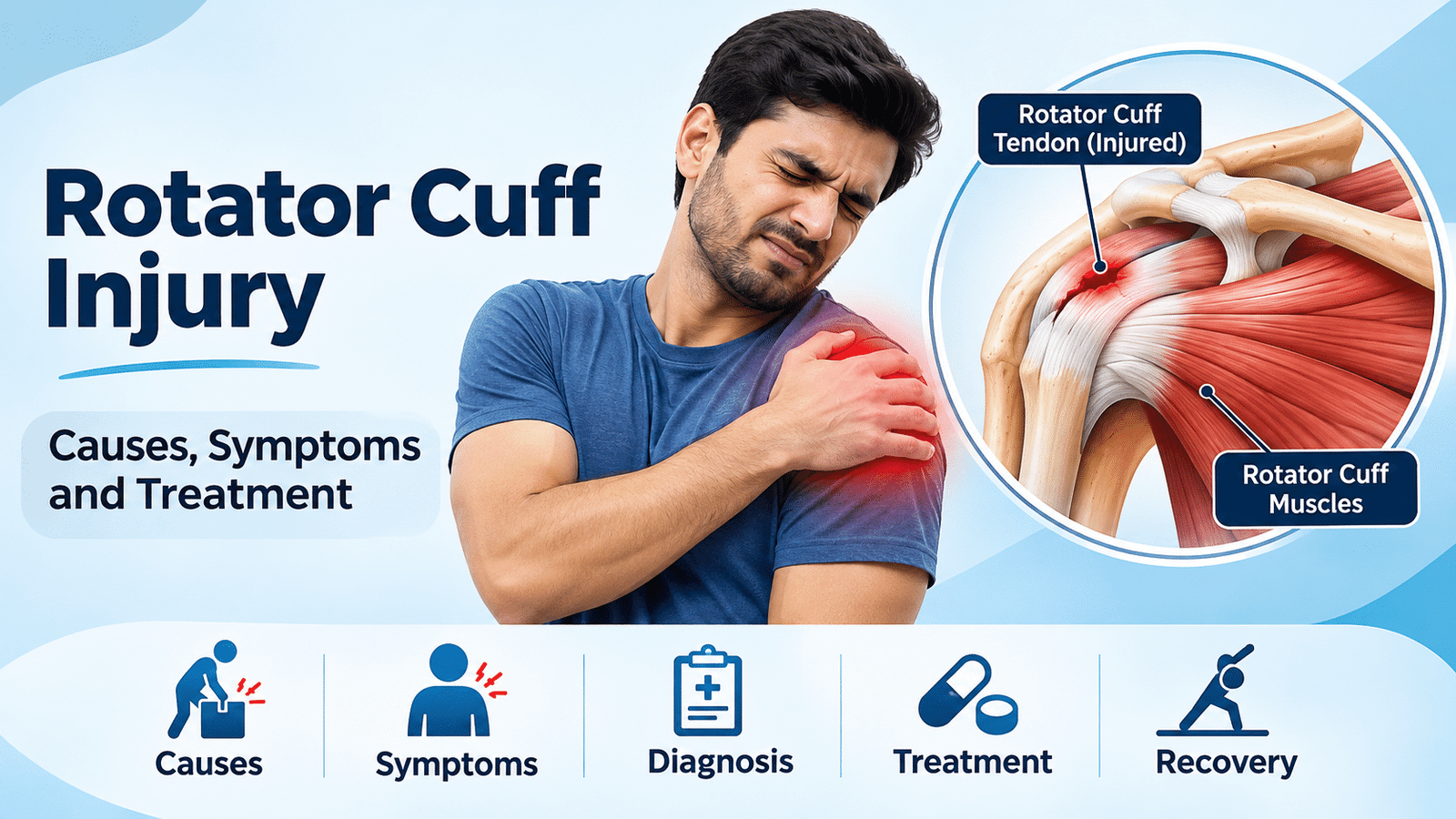
Rotator Cuff Injury: Causes, Symptoms and Treatment
Have you ever experienced shoulder pain while lifting your arm, reaching for something on a shelf or trying to sleep on one side? These problems may sometimes be related to a rotator cuff injury.
The rotator cuff is an important group of muscles and tendons that helps you move and stabilise your shoulder. When these tendons become irritated, damaged or torn, everyday activities can become uncomfortable.
A rotator cuff injury can affect people of different ages. It may develop gradually because of repeated shoulder movements or happen suddenly after a fall or accident. Some injuries improve with appropriate treatment and physiotherapy, while others may require surgery.
In this guide, we explain the common causes, warning signs, diagnosis and treatment options for rotator cuff injuries. You will also learn when to consult an orthopedic specialist.
Table of Contents
- What Is a Rotator Cuff Injury?
- Types of Rotator Cuff Injuries
- What Causes a Rotator Cuff Injury?
- Common Symptoms of a Rotator Cuff Injury
- Who Is at Risk?
- How Is a Rotator Cuff Injury Diagnosed?
- Rotator Cuff Injury Treatment Options
- When Is Rotator Cuff Surgery Needed?
- Recovery and Rehabilitation
- How to Prevent Rotator Cuff Injuries
- When Should You See an Orthopedic Doctor?
- Frequently Asked Questions
1. What Is a Rotator Cuff Injury?
The rotator cuff is a group of four muscles and their tendons surrounding the shoulder joint. These structures connect the shoulder blade to the upper arm bone and help keep the joint stable.
The four muscles that form the rotator cuff are:
- Supraspinatus: Helps lift your arm away from your body.
- Infraspinatus: Helps rotate your arm outward.
- Teres minor: Supports outward rotation of the shoulder.
- Subscapularis: Helps rotate your arm inward.
These muscles work together whenever you lift, rotate or move your arm. They are particularly important for activities such as dressing, combing your hair, swimming, playing sports and reaching overhead.
A rotator cuff injury occurs when one or more of these tendons becomes irritated, inflamed or damaged. In some cases, the tendon may develop a partial or complete tear.
2. Types of Rotator Cuff Injuries
Rotator cuff problems can develop in different ways. Understanding the type of injury helps doctors decide which treatment may be suitable.
A. Rotator Cuff Tendinitis
Tendinitis refers to irritation or inflammation of a tendon. It may develop due to repeated shoulder movements, overuse or sudden increases in physical activity.
People with this condition may experience shoulder pain while lifting their arms, reaching overhead or performing repetitive activities.
B. Rotator Cuff Tendinopathy
Tendinopathy describes a problem involving the structure and function of a tendon. It may develop because of repeated loading and age-related changes. Pain and weakness can affect normal shoulder movements.
C. Partial Rotator Cuff Tear
A partial tear occurs when a tendon is damaged but is not completely separated. The extent of damage can vary. Some people experience mild discomfort, while others have significant pain and weakness.
D. Complete Rotator Cuff Tear
A complete or full-thickness tear occurs when the tendon is torn through its full thickness. Sometimes the tendon becomes detached from the upper arm bone.
A complete tear may cause noticeable weakness and difficulty lifting the arm. Some tears develop slowly, while others happen after a sudden injury.
3. What Causes a Rotator Cuff Injury?
Rotator cuff injuries can happen because of sudden trauma or gradual wear and tear. The following are some common causes.
1. Repetitive Shoulder Movements
Repeatedly raising your arms above your head can put stress on the rotator cuff tendons. Activities such as painting, construction work, lifting objects, swimming and certain sports may increase the risk.
2. Age-Related Changes
As people grow older, tendons may gradually lose some of their strength and ability to tolerate repeated stress. This can increase the likelihood of tendon damage.
3. Sports Injuries
Sports that involve throwing, swimming, tennis and weightlifting can place repeated demands on the shoulder. Incorrect techniques, overtraining or inadequate recovery may contribute to injury.
4. Sudden Falls or Accidents
A fall onto an outstretched arm or a direct injury to the shoulder can damage the rotator cuff. Lifting a heavy object suddenly with an awkward movement may also cause an injury.
5. Poor Shoulder Mechanics
Repeatedly performing activities with poor posture or incorrect movement patterns may increase stress on the shoulder. This does not mean posture alone causes every rotator cuff injury, but movement habits can contribute to symptoms.
6. Repeated Overuse Without Adequate Rest
When the shoulder is exposed to repeated physical stress without sufficient recovery, the tendons may become irritated. Increasing exercise intensity too quickly can also contribute to shoulder problems.
4. Common Symptoms of a Rotator Cuff Injury
Symptoms depend on the type and severity of the injury. Some people notice discomfort only during certain movements, while others experience persistent pain and weakness.
Common rotator cuff injury symptoms include:
- Shoulder pain: Pain may occur at the front or side of the shoulder.
- Pain while lifting the arm: Raising your hand above your head may become uncomfortable.
- Night pain: Discomfort may increase when lying on the affected shoulder.
- Arm weakness: You may find it difficult to lift or carry objects.
- Limited movement: Reaching behind your back or dressing may become difficult.
- Pain during daily activities: Tasks such as combing your hair or reaching for household items may cause discomfort.
- Clicking or crackling sensations: Some people notice unusual sensations while moving their shoulder.
5. Who Is at Risk of Rotator Cuff Injuries?
Anyone can develop a rotator cuff problem. However, certain factors may increase the likelihood of injury.
- People above 40 years of age, as tendon degeneration becomes more common with age.
- People who regularly perform overhead work.
- Athletes involved in swimming, tennis and throwing sports.
- People who frequently lift heavy objects.
- Individuals with a previous shoulder injury.
- People who perform repetitive shoulder movements.
Having one or more risk factors does not mean you will definitely develop a rotator cuff injury. Appropriate exercise, safe movement techniques and early attention to symptoms can help protect shoulder function.
6. How Is a Rotator Cuff Injury Diagnosed?
An orthopedic doctor usually begins with a discussion about your symptoms, medical history and daily activities. They will examine your shoulder to understand the location of the pain and identify movement or strength limitations.
Depending on your symptoms, the doctor may recommend the following tests.
1. Physical Examination
The doctor may assess your shoulder movement, muscle strength and tenderness. Specific examination tests can help identify possible rotator cuff problems and distinguish them from other shoulder conditions.
2. X-Ray
An X-ray helps examine the bones and shoulder joint. It does not directly show a rotator cuff tendon tear, but it can help identify arthritis, fractures or other bone-related problems.
3. Ultrasound Scan
An ultrasound scan can examine the rotator cuff tendons and may identify tendon inflammation or tears. Its accuracy depends partly on the experience of the person performing and interpreting the scan.
4. MRI Scan
An MRI provides detailed images of the shoulder’s soft tissues. It can help identify the location and extent of a tear and assess the surrounding muscles and tendons.
Your doctor will decide whether imaging is necessary based on your symptoms and examination findings.
7. Rotator Cuff Injury Treatment Options
The right treatment depends on the type of injury, the size of the tear, pain severity, muscle strength, age and activity requirements.
Not every rotator cuff injury requires surgery. Many patients can improve with appropriate non-surgical treatment and a supervised rehabilitation programme.
A. Rest and Activity Modification
Reducing activities that increase shoulder pain can help manage symptoms. Your doctor may recommend temporarily avoiding heavy lifting, repetitive overhead movements and strenuous shoulder exercises.
However, prolonged complete immobilisation is generally not recommended unless specifically advised by your doctor. Maintaining safe shoulder movement is important.
B. Medication for Pain Relief
Depending on your medical history, a doctor may recommend pain-relieving or anti-inflammatory medicines. These can help reduce discomfort and make daily activities easier.
Do not take painkillers or anti-inflammatory medicines for long periods without medical advice. Some medicines can cause stomach, kidney or cardiovascular side effects.
C. Physiotherapy
Physiotherapy is an important part of rotator cuff injury treatment. A physiotherapist creates a programme based on your condition, movement limitations and recovery goals.
A rehabilitation programme may include:
- Gentle shoulder mobility exercises.
- Stretching to improve flexibility.
- Rotator cuff strengthening exercises.
- Shoulder blade stabilisation exercises.
- Gradual strengthening of surrounding muscles.
- Movement training to improve shoulder function.
Exercises should be selected according to the injury. Performing the wrong exercise or pushing through significant pain may worsen symptoms.
D. Corticosteroid Injections
In selected cases, a doctor may recommend a corticosteroid injection to provide short-term pain relief and help the patient participate in rehabilitation.
These injections are not suitable for everyone. Repeated injections may have potential adverse effects on tendon health, so the benefits and risks should be discussed with the treating specialist.
E. Surgical Treatment
Surgery may be considered when a significant tear causes persistent pain or weakness, when an acute injury causes a major loss of function, or when appropriate non-surgical treatment does not provide sufficient improvement.
The decision depends on the patient’s condition, tendon quality, tear size, activity level and overall health.
8. When Is Rotator Cuff Surgery Needed?
Not all rotator cuff tears require an operation. However, surgery may be recommended in certain situations.
- A significant tear following a sudden injury.
- Persistent shoulder pain despite an appropriate course of conservative treatment.
- Ongoing weakness that affects everyday activities.
- Difficulty returning to work or sports because of shoulder dysfunction.
- A tear where the specialist believes surgical repair offers a meaningful benefit.
Arthroscopic Rotator Cuff Repair
Arthroscopic surgery is a minimally invasive procedure used to repair suitable rotator cuff tears.
During the procedure, the surgeon makes small incisions around the shoulder and inserts a camera called an arthroscope. Specialised instruments are used to examine the joint and repair the damaged tendon when appropriate.
The procedure may involve attaching the torn tendon back to the upper arm bone using specialised surgical anchors and sutures.
The exact surgical approach depends on the nature of the injury. Not every patient is suitable for arthroscopic repair.
9. How Long Does It Take to Recover from a Rotator Cuff Injury?
Recovery time varies depending on the severity of the injury and the treatment method.
People with mild tendon irritation may improve over several weeks with appropriate care. More significant tendon injuries may require several months of rehabilitation.
Recovery after rotator cuff surgery generally takes longer. The tendon needs time to heal, and rehabilitation is usually carried out in stages.
What Happens During Recovery?
- Initial phase: Pain management and protection of the injured shoulder.
- Movement phase: Gradual restoration of safe shoulder movement.
- Strengthening phase: Exercises to improve shoulder and surrounding muscle strength.
- Functional phase: Gradual return to daily activities, work and sports.
After surgery, a sling may be required for a period recommended by the surgeon. The timing of exercises and strengthening depends on the repair and the individual’s healing progress.
Follow-up appointments and physiotherapy are important for monitoring recovery. Returning to heavy lifting or sports too early may place excessive stress on the healing tendon.
10. How to Prevent Rotator Cuff Injuries
Although not every rotator cuff injury can be prevented, healthy movement habits can help reduce unnecessary stress on your shoulders.
1. Warm Up Before Exercise
Prepare your shoulders before playing sports or performing strength-training exercises. Gentle warm-up movements help prepare the muscles for activity.
2. Strengthen Shoulder Muscles
Appropriate exercises for the rotator cuff and shoulder blade muscles can help improve shoulder stability and function.
3. Avoid Sudden Heavy Lifting
Use safe lifting techniques. Avoid sudden jerking movements and do not lift weights beyond your ability.
4. Take Breaks During Repetitive Activities
If your job involves repeated overhead movements, take suitable breaks and vary your activities when possible.
5. Maintain Proper Exercise Technique
Incorrect exercise techniques may place unnecessary stress on the shoulder. Seek guidance from a qualified trainer or physiotherapist when learning new exercises.
6. Do Not Ignore Persistent Shoulder Pain
Shoulder pain that continues or repeatedly returns should be evaluated. Early assessment can help identify the cause and guide appropriate treatment.
11. When Should You See an Orthopedic Doctor?
Occasional shoulder discomfort may improve with rest and activity modification. However, persistent or worsening symptoms should not be ignored.
Consider consulting an orthopedic specialist if you experience:
- Shoulder pain lasting more than a few days without improvement.
- Difficulty lifting or rotating your arm.
- Persistent pain that interrupts your sleep.
- Weakness while carrying everyday objects.
- Shoulder pain following a fall or accident.
- Reduced shoulder movement that affects daily activities.
Seek urgent medical attention if you have severe pain following an injury, a visible deformity, sudden inability to move your arm, or a cold, pale or numb arm. Chest pain, breathlessness or sweating associated with shoulder pain also requires emergency assessment.
12. Why Is Early Treatment Important?
Ignoring shoulder pain can affect your ability to work, exercise and perform routine activities.
Early assessment helps identify whether the problem involves the rotator cuff or another shoulder structure. It also allows your doctor to recommend an appropriate treatment plan.
Some rotator cuff tears can increase in size over time. However, the progression varies between individuals. Timely evaluation is particularly important when pain is accompanied by worsening weakness or reduced shoulder movement.
With the right treatment and rehabilitation, many people can improve their shoulder function and return to their usual activities.
13. Frequently Asked Questions About Rotator Cuff Injuries
1. Can a rotator cuff injury heal without surgery?
Yes. Many people experience improvement in pain and shoulder function with activity modification, medication when appropriate and physiotherapy. However, a torn tendon may not fully heal or reattach on its own. Treatment depends on the type and severity of the tear.
2. What are the first signs of a rotator cuff tear?
Common early signs include pain when lifting the arm, shoulder weakness, discomfort while sleeping on the affected side and difficulty reaching overhead. Sudden tears may cause immediate pain and weakness after an injury.
3. Is a rotator cuff injury serious?
The severity varies. Mild tendon irritation may improve with conservative treatment, while larger tears can cause significant weakness and movement difficulties. An orthopedic assessment helps determine the seriousness of the injury.
4. Can I exercise with a rotator cuff injury?
Some gentle exercises may be beneficial, but the right exercises depend on the injury. Avoid painful movements, heavy lifting and unsupervised strengthening exercises until a doctor or physiotherapist advises you.
5. Does every rotator cuff tear require an MRI?
No. An MRI is not necessary for every patient. Doctors may diagnose the problem through a clinical examination and recommend ultrasound or MRI when additional information is needed.
6. How long does rotator cuff treatment take?
Recovery depends on the type of injury and treatment. Mild conditions may improve over several weeks, while significant tears and post-surgical rehabilitation can take several months or longer.
7. Can sleeping on one side cause a rotator cuff injury?
Sleeping on the same side may increase pressure on an already painful shoulder and worsen symptoms. However, sleeping position alone is not usually considered the main cause of a rotator cuff tear.
8. What is the difference between a frozen shoulder and a rotator cuff injury?
A frozen shoulder usually causes progressive stiffness and restriction of both active and passive shoulder movement. A rotator cuff problem commonly causes pain and weakness, particularly during certain arm movements. A clinical examination helps distinguish between them.
9. Can a rotator cuff tear become bigger?
Some rotator cuff tears can increase in size over time. The likelihood varies according to the tear, tendon condition and other factors. New weakness or worsening pain should be assessed by an orthopedic specialist.
10. Which doctor should I consult for a rotator cuff injury?
An orthopedic doctor, particularly one experienced in shoulder conditions, can assess the injury and recommend suitable treatment. A physiotherapist may also be involved in your rehabilitation.
Conclusion
A rotator cuff injury can affect simple activities such as lifting your arm, getting dressed, carrying objects and sleeping comfortably. It may develop gradually due to tendon wear or occur suddenly following an injury.
The good news is that many patients improve with appropriate non-surgical treatment, including physiotherapy and activity modification. More serious tears may require surgical repair.
The most important step is to understand the cause of your shoulder pain rather than ignoring the symptoms. An orthopedic specialist can assess your shoulder and recommend a treatment plan based on your individual needs.
Medical Disclaimer: This article is intended for general educational purposes only. It does not replace professional medical advice, diagnosis or treatment. Always consult a qualified healthcare professional for an individual assessment.

