
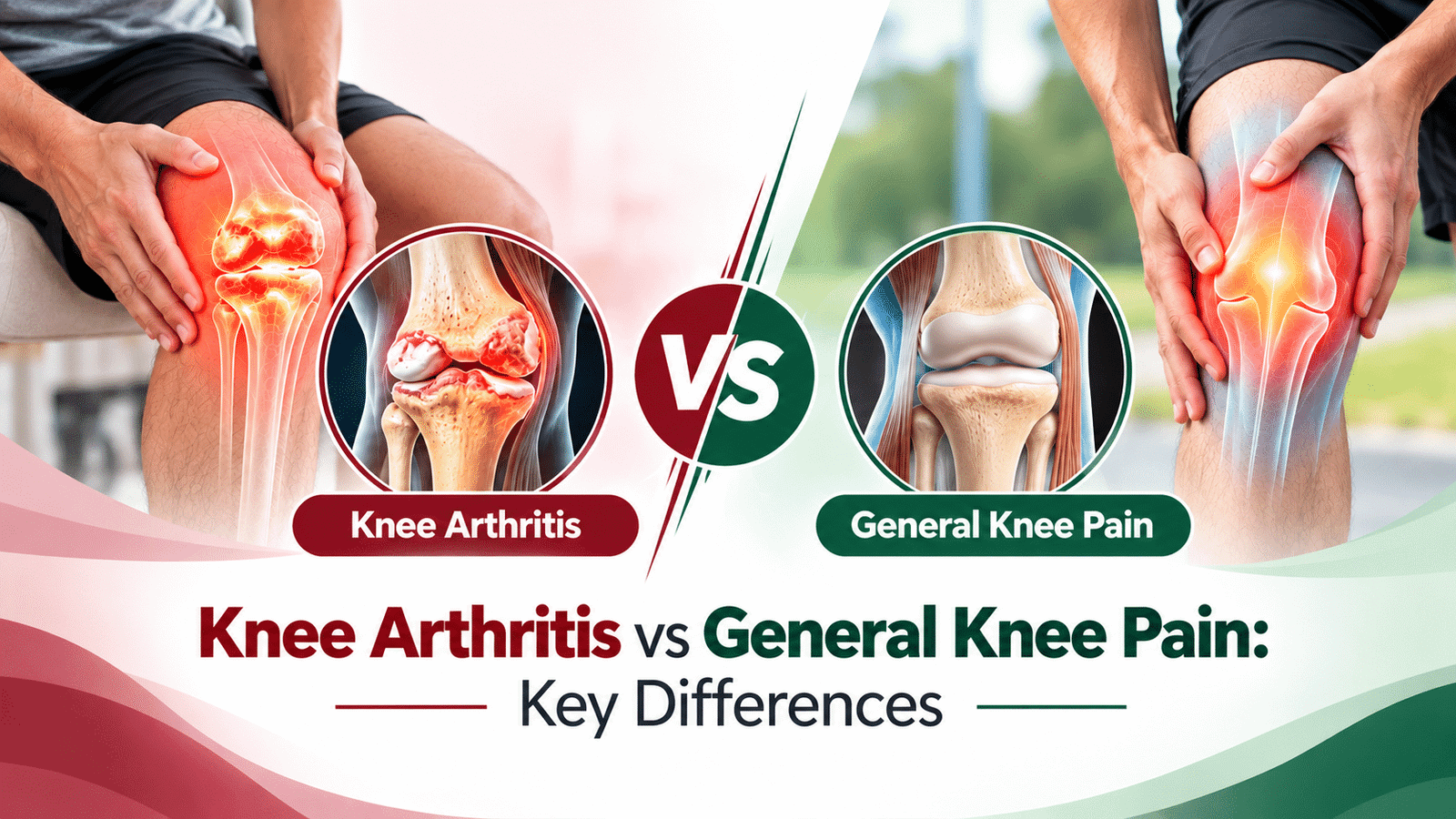
Difference Between Knee Arthritis and General Knee Pain
Knee pain can make everyday activities such as walking, climbing stairs, standing up from a chair and getting out of bed more difficult. Sometimes the discomfort follows exercise or a minor injury. In other cases, it develops gradually and may be related to arthritis.
Although knee arthritis causes knee pain, not all knee pain is caused by arthritis. Injuries involving ligaments, tendons or cartilage, as well as other medical conditions, can also affect the knee.
Understanding the difference between knee arthritis and general knee pain can help you recognise when to seek medical advice and what to expect during an assessment.
What Is Knee Arthritis?
Knee arthritis is a condition that affects the knee joint and causes symptoms such as pain, stiffness, swelling and difficulty moving. There are several types of arthritis, and they do not all develop in the same way.
Osteoarthritis
Osteoarthritis is a common form of arthritis. It affects the tissues within the joint, including the protective cartilage covering the ends of the bones. As the joint changes over time, movement can become painful and stiffness may develop.
Symptoms often appear gradually. Pain may be more noticeable while walking, climbing stairs or standing for a long time. Stiffness can occur after sitting or resting.
Rheumatoid arthritis and other types
Rheumatoid arthritis is an inflammatory autoimmune condition in which the immune system mistakenly attacks joint tissues. It may affect both knees and other joints and can cause prolonged morning stiffness, swelling and warmth.
Gout and other inflammatory conditions can also affect the knee. They may cause sudden episodes of significant pain and swelling. A hot, swollen knee can sometimes indicate an infection and needs urgent medical assessment.
What Is General Knee Pain?
General knee pain is a symptom rather than a specific diagnosis. It describes discomfort in or around the knee, regardless of what is causing it.
It can begin suddenly after an injury or develop gradually because of repeated movements, changes in activity or an underlying medical condition.
Common causes include:
- Muscle strain: Overstretching or overloading muscles around the knee can cause pain.
- Ligament injury: A sprain or tear can occur after twisting the knee, changing direction suddenly or experiencing a sports injury.
- Meniscus injury: Damage to the cartilage cushions inside the knee may cause pain, swelling or catching during movement.
- Tendon problems: Repeated running, jumping or other activities can irritate the tendons around the knee.
- Bursitis: Inflammation of a small, fluid-filled sac near the joint can cause pain and swelling.
- Other joint conditions: Gout, infection and arthritis can also cause knee pain.
Some mild knee problems improve with appropriate rest and adjustments to activity. Others require physiotherapy, medication, further investigation or specialist treatment. The right approach depends on the underlying cause.
Knee Arthritis vs General Knee Pain: Key Differences
The symptoms of arthritis and other knee problems can overlap. However, the pattern of pain, how it starts and the symptoms that accompany it may provide useful clues.
| Feature | Knee arthritis | Other causes of knee pain |
|---|---|---|
| Onset | Often gradual, particularly with osteoarthritis. | May begin suddenly after an injury or gradually with overuse. |
| Pain pattern | May worsen with activity and sometimes occur at rest in more advanced disease. | Depends on the cause, movement or affected tissue. |
| Stiffness | May occur after rest or in the morning. | Can occur after an injury, swelling or prolonged inactivity. |
| Swelling | May develop around the joint. | Can follow an injury, inflammation or infection. |
| Movement | Movement may gradually become more restricted. | Movement may be limited by pain, injury or swelling. |
| Recovery | Usually requires ongoing management. | Some minor injuries improve with time and appropriate care; others need treatment. |
| Diagnosis | Based on symptoms, examination and investigations when needed. | Depends on the suspected cause and clinical findings. |
Symptoms of Knee Arthritis and Other Knee Problems
Symptoms commonly associated with knee arthritis
- Pain during or after walking and other activities.
- Stiffness after waking up or sitting for a long time.
- Swelling or tenderness around the knee.
- Difficulty bending or fully straightening the knee.
- A grating or grinding sensation during movement.
- Difficulty climbing stairs or standing up from a chair.
Symptoms that may suggest an injury or another cause
- Pain beginning immediately after a fall or twisting movement.
- A popping sensation at the time of an injury.
- Bruising or swelling that develops after trauma.
- A feeling that the knee is unstable or gives way.
- Catching or locking during movement.
- Pain that becomes worse during a particular activity.
None of these symptoms confirms a particular condition. For example, swelling may occur with arthritis, a ligament injury, gout or an infection. The timing and severity of symptoms help a doctor decide what needs to be investigated.
What Causes Knee Arthritis and General Knee Pain?
Factors associated with knee arthritis
The likelihood of developing knee osteoarthritis can increase with age, previous joint injuries, family history, excess body weight and certain joint alignment or structural differences. Repeated high loads on the knee may also contribute.
Other forms of arthritis have different causes. Rheumatoid arthritis is an autoimmune disease, while gout is associated with urate crystal deposits in a joint.
Factors that can cause other knee pain
Knee pain may follow sports injuries, a sudden twist, a fall, repetitive movements or an increase in exercise intensity. Pain can also arise from tissues around the joint or from conditions affecting other parts of the leg.
Identifying the cause matters because treatments for an injury, osteoarthritis, inflammatory arthritis and joint infection are different.
How Do Doctors Diagnose Knee Arthritis?
A diagnosis usually begins with a conversation about your symptoms and a physical examination. Your doctor may ask when the pain started, whether an injury occurred, what makes it worse and how it affects your daily activities.
The assessment may include:
- Medical history: Reviewing symptoms, previous injuries, other medical conditions and medicines.
- Physical examination: Checking tenderness, swelling, warmth, movement, stability and strength.
- X-rays: May help identify joint-space narrowing, bone changes or other structural findings.
- MRI: May be recommended when more detailed information about ligaments, menisci or other soft tissues is needed.
- Blood tests or joint-fluid analysis: May be appropriate when inflammatory arthritis, gout or infection is suspected.
Not everyone needs every test. Osteoarthritis can sometimes be diagnosed from the history and examination alone. The doctor will recommend investigations based on the clinical findings.
Treatment Options for Knee Arthritis and General Knee Pain
Treatment depends on the cause of the pain, its severity, your general health and how much the symptoms affect your daily life. There is no single treatment that is suitable for every knee problem.
Managing knee arthritis
- Exercise and physiotherapy: A suitable programme can improve muscle strength, flexibility and joint function.
- Weight management: If appropriate, reducing excess body weight can lower the load on the knee.
- Activity adjustments: Low-impact activities may be more comfortable than activities that place repeated high loads on the joint.
- Medication: A clinician may recommend suitable pain-relieving medicines after considering your health, other medicines and potential side effects.
- Other treatments: Braces, injections or other interventions may be considered in selected cases.
- Surgery: Joint replacement may be discussed when symptoms are severe, daily activities are significantly affected and appropriate non-surgical treatments have not provided enough relief.
Managing other causes of knee pain
Mild strains may improve with temporary activity modification and an appropriate recovery plan. Some injuries benefit from physiotherapy or a brace. More serious ligament, tendon or meniscus injuries may require specialist treatment or surgery.
If a joint infection is suspected, urgent medical treatment is necessary. Inflammatory arthritis and gout require condition-specific management.
How Can You Help Protect Your Knee Health?
Not every knee problem can be prevented, but several habits may help maintain strength, mobility and general joint health.
- Stay physically active within your comfort and ability.
- Build leg strength gradually with appropriate exercises.
- Warm up before sports and increase training loads slowly.
- Use suitable footwear for your activities.
- Allow time to recover after strenuous activity or injury.
- Maintain a healthy weight where appropriate for you.
- Seek advice when pain persists instead of repeatedly pushing through it.
If you already have arthritis or a previous knee injury, a doctor or physiotherapist can help you choose appropriate activities and modify movements that cause discomfort.
When Should You See an Orthopedic Doctor for Knee Pain?
Arrange a medical assessment if your knee pain keeps returning, does not improve, becomes progressively worse or interferes with walking, sleep, work or other everyday activities. Persistent symptoms should not automatically be attributed to age or arthritis.
Seek urgent medical care if you experience any of the following:
- Severe pain after a significant injury.
- Sudden or substantial swelling.
- Inability to bear weight or move the knee normally.
- A visibly deformed knee after an injury.
- A hot, red and swollen knee accompanied by fever or feeling unwell.
A hot, swollen joint with fever may indicate an infection, which needs prompt assessment. Do not wait for a routine appointment if these warning signs occur.
Frequently Asked Questions
1. How can I tell if my knee pain is arthritis?
Gradual pain, stiffness after rest, swelling and difficulty moving the knee can occur with arthritis. However, these symptoms also occur in other conditions. A clinical assessment is the best way to identify the likely cause.
2. Can knee pain occur without arthritis?
Yes. Muscle strains, ligament injuries, meniscus problems, tendon irritation, bursitis and other conditions can cause knee pain without osteoarthritis.
3. Does knee arthritis always get worse over time?
No. Symptoms can fluctuate. Some people have mild symptoms for long periods, while others experience increasing pain and difficulty with daily activities. The course varies from person to person.
4. Can knee arthritis be treated without surgery?
Many people manage knee osteoarthritis without surgery through appropriate exercise, physiotherapy, activity adjustments, weight management when needed and clinician-guided medication. Surgery may be considered when symptoms remain severe despite suitable non-surgical care.
5. Is knee pain after walking always a sign of arthritis?
No. Pain after walking can have several causes, including arthritis, tendon problems, overuse and injuries. The location, timing and associated symptoms help guide the assessment.
6. Which doctor should I consult for persistent knee pain?
An orthopedic doctor can assess knee pain caused by suspected joint, bone, ligament, tendon or meniscus problems. Depending on the findings, you may also need a rheumatologist or another specialist.
7. Do I need an X-ray to diagnose knee arthritis?
Not always. A doctor may diagnose typical osteoarthritis based on symptoms and examination. X-rays or other tests may be recommended if the diagnosis is uncertain, symptoms are unusual or another condition is suspected.
Conclusion
Knee arthritis is one possible cause of knee pain, but it is not the only one. Arthritis often involves recurring pain, stiffness and changes in joint movement. Other knee problems may follow an injury or result from overuse and can have different symptoms and treatment needs.
Paying attention to how your symptoms begin, what makes them worse and whether swelling or stiffness occurs can help your doctor investigate the problem. If the pain persists or affects daily activities, arrange a medical assessment rather than relying on symptoms alone.
