
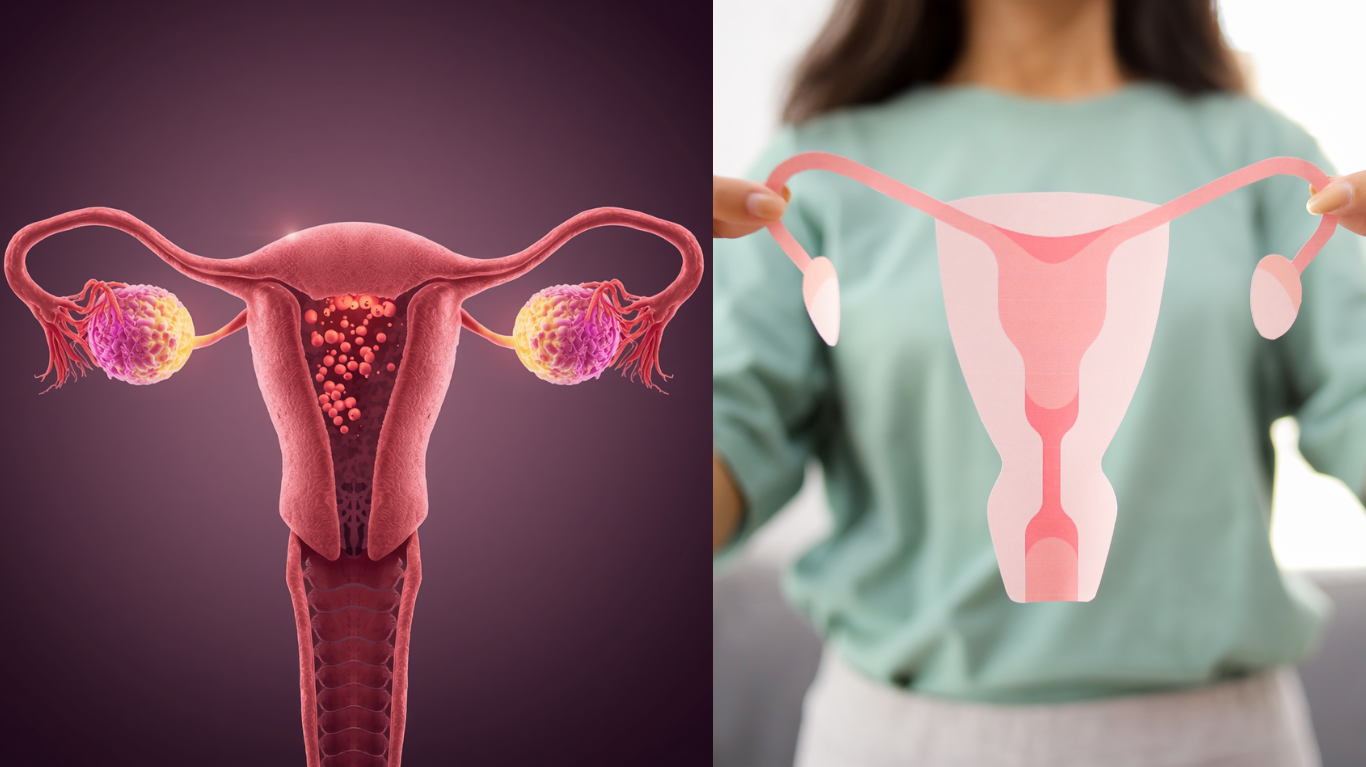
Many women today hear the words PCOD and PCOS and don’t know what they mean right away. They sound the same, have some of the same symptoms, and both have to do with the ovaries, but they are not the same. This guide makes it easy to understand the difference between PCOD and PCOS if you’ve ever wondered what the difference is.
Let’s learn about both conditions, what causes them, what symptoms they have, and how they are treated. Then we can see how they affect your body in different ways.
What Is PCOD?
Polycystic Ovarian Disease is what “PCOD” stands for. In this case, a woman’s ovaries release a lot of immature or partially mature eggs every month. These eggs can build up and create small cysts, which are fluid-filled sacs, inside the ovaries.
Due to this imbalance, the ovaries begin to generate a marginally increased amount of androgens (male hormones) compared to usual. The extra hormones mess up the normal menstrual cycle and cause obvious problems like acne, hair growth, or periods that aren’t regular.
How often does PCOD happen?
A lot of people have PCOD. It could happen to one in three to four women of childbearing age at some point. The good news is that PCOD is not dangerous and can often be fixed by making small changes to your life.
Common Signs of PCOD
- Menstrual cycles that aren’t regular
- Acne or skin that is too oily
- A little bit of weight gain or trouble losing weight
- Thinning hair or light hair growth on the face
- Swelling or pain in the stomach
What causes PCOD most often?
- Stress and not getting enough sleep
- A diet that isn’t healthy and a life that isn’t active
- Changes in hormones
- Genetics (sometimes runs in families).
How to treat PCOD
Most women with PCOD can handle it naturally by making changes to their lives:
- Eating a healthy diet with low sugar, high protein, and high fiber
- Yoga and exercise on a regular basis
- How to deal with stress
- Keeping a healthy weight
Your doctor may suggest mild medication to help balance hormones and regulate periods if necessary.
Important Fact: PCOD is common and can usually be reversed by making changes to your lifestyle. People don’t think it’s a serious problem.
What Is PCOS?
Polycystic Ovary Syndrome (PCOS) is what PCOD stands for. The word “syndrome” tells you that it is worse than PCOD. PCOS is a hormonal and metabolic disorder that affects the whole body, including hormones, metabolism, fertility, and even heart health.
The ovaries make a lot of male hormones (androgens) in PCOS, and the body often becomes resistant to insulin. This means that the cells don’t react to insulin correctly, which leads to too much insulin in the blood. High insulin and high androgens together stop ovulation and can cause long-term health problems.
Typical Signs of PCOS:
- Periods that are late or missed for months
- A lot of bleeding during periods
- Too much hair growth on the face, chest, or stomach
- Hair loss or male-pattern baldness
- Dark skin patches (on the neck or armpits) and acne
- Trouble getting pregnant
What Causes PCOS Most Often :
- Genetic predisposition: it runs in families.
- Insulin resistance: makes it easier for the body to store fat and gain weight.
- Hormonal imbalance: more LH and androgens in the body
- Lifestyle factors: a bad diet, not enough exercise, and long-term stress
How to treat PCOS :
PCOS usually needs a mix of the following:
- Hormonal therapy or insulin-sensitizing drugs are examples of medical treatments.
- A strict diet and working out on a regular basis
- Less stress and better sleep
- Managing your weight
- Regular checkups with a gynecologist or endocrinologist
Important Fact: If PCOS is not treated, it can raise the risk of type 2 diabetes, heart disease, and not being able to get pregnant. But the right care can help keep symptoms under control.
The Main Differences Between PCOD and PCOS
| Aspect | PCOD (Polycystic Ovarian Disease) | PCOS (Polycystic Ovary Syndrome) |
| Environment | Hormonal imbalance causing cysts in ovaries | Metabolic and hormonal disorder affecting the whole body |
| Hormonal Imbalance | Slight increase in androgens | High levels of androgens |
| Ovulation | Usually happens, though irregular | Often absent or delayed |
| Fertility Impact | Can conceive with lifestyle management | May need medical help to conceive |
| Treatment | Lifestyle correction | Medical treatment + lifestyle modification |
In PCOD, the ovaries look a little bigger and have more immature eggs. In PCOS, there are fewer ovulations and more signs of hormonal imbalance.
Management and Treatment
The goal of treating PCOD and PCOS is to balance hormones and improve lifestyle.
1. Changes to your way of life
- Keep your weight in a healthy range.
- Work out every day for 30 to 45 minutes.
- Eat more whole grains, lean proteins, and vegetables.
- Stay away from fried foods and sugars that have been processed.
- Get 7 to 8 hours of sleep every night.
2. Medical care
Doctors may tell you to take the following:
- Hormonal pills to help with periods
- Drugs that make insulin work better (like metformin) for PCOS
- Drugs that help you get pregnant
- Medicines for acne or hair growth control
3. Home Remedies
- Meditation and yoga can help balance hormones that cause stress.
- Some herbal teas, like spearmint, may help lower androgen levels.
- Don’t go on crash diets or fast for long periods of time.
Keep in mind that both PCOD and PCOS can be managed; the most important thing is to get help early.
PCOD and PCOS during pregnancy
One of the most common worries for women with PCOD or PCOS is getting pregnant.
PCOD: Ovulation still occurs, making pregnancy feasible with limited medical intervention.
PCOS: Ovulation doesn’t happen very often, but hormonal therapy or assisted reproductive techniques can still help a woman get pregnant.
Fact: After procedure and lifestyle changes, many females with PCOD or PCOS are able to get pregnant.
PCOD or PCOS: Which Is More Dangerous?
PCOS is worse than the other one. PCOD mostly affects the ovaries, but PCOS affects the whole endocrine system, including hormones, metabolism, and fertility.
Not treating PCOS can make the following more likely:
- High cholesterol and type 2 diabetes
- Being overweight and having high blood pressure
- Sleep apnea
- Worry and sadness
- Cancer of the endometrium
PCOD, on the other hand, doesn’t usually cause these kinds of problems and can often be fixed by making changes to your lifestyle.
Diet and lifestyle tips for dealing with PCOD and PCOSDoctors and nutritionists often tell people to do this:
What to Eat
- Vegetables with lots of colors and leafy greens
- Berries, apples, and pears are fruits with a low glycemic index.
- Eggs, tofu, pulses, and paneer are all ex, of lean proteins.
- Good fats include nuts, seeds, olive oil, and avocados.
- Brown rice, millets, and oats are all whole grains.
Foods You Shouldn’t Eat
- Pastries, white bread, and sugary drinks
- Snacks that are fried and processed
- Meat and dairy with a lot of fat
- Too much alcohol and caffeine
Daily Routines
- Take a 10-minute walk after every meal.
- Drink 8 to 10 glasses of water a day.
- Don’t skip meals or go on crash diets.
- Put your mental health and getting enough sleep first.
Important Things to Remember
- PCOD is a hormonal condition that can be fixed by changing your lifestyle.
- PCOS is a metabolic disorder that needs both healthcare and lifestyle changes.
- Both can cause problems with periods, acne, and getting pregnant, but getting help early can fix things.
- Make sure you eat well, move around, and see the doctor on a regular basis.
Final Thoughts
PCOD and PCOS may sound the same, but they are not the same. They have different levels of severity, causes, and long-term effects. You can manage PCOD with changes to your lifestyle, but you need to see a doctor for PCOS to avoid problems in the future.
The most important thing is to pay attention to your body, see a gynecologist early, and live a life that helps keep your hormones in balance. You can live a healthy and confident life with the right care for both PCOD and PCOS.

