
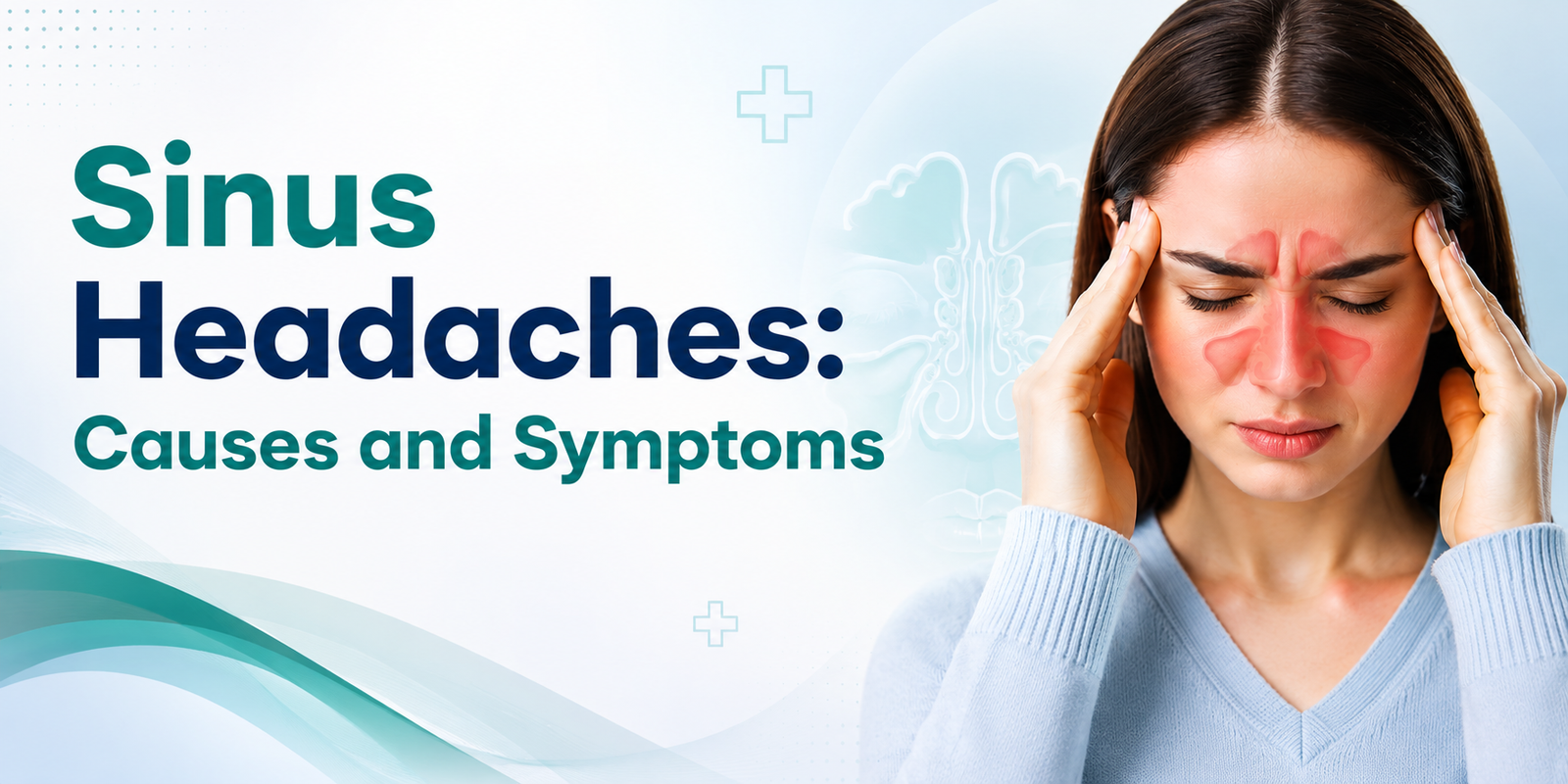
Sinus Headaches: Causes and Symptoms
What They Are, What Causes Them, What the Symptoms Are, and When Your Head Feels Like a Balloon Ever had that dull, throbbing pressure behind your eyes that makes every sound echo and every light sting? If you nodded yes, you may have tangled with a sinus headache.
In this post, we’ll unpack what a sinus headache really is, spot its tell-tale signs, dig into why it shows up, and share a few simple tips for relief—all in plain, everyday English.
What Exactly Is Happening Inside Your Head?
The Sinus Set-Up
Your sinuses are small, air-filled pockets around the nose, cheeks, and forehead. When everything is clear, you barely notice them. But if those spaces get blocked or inflamed, pressure builds, and a sinus headache can kick in.
- Frontal sinuses: above your eyes
- Maxillary sinuses: in your cheeks
- Ethmoid and sphenoid sinuses: deeper behind the nose
Spotting the Symptoms Before They Snowball
Classic Warning Signs
- Steady, throbbing pain in the forehead, cheeks, or around the eyes
- Pain that gets worse when you bend forward or lie down
- Stuffy nose with thick, yellow or green mucus
- Fullness or popping in the ears
- Tiredness and a low-grade fever
If your headache improves after a hot shower or gets worse in cold, damp weather, it’s likely linked to your sinuses.
Digging Into the Causes: Why Do Sinus Headaches Strike?
Common Culprits
- Colds and viral infections:
Swollen lining of sinuses trap mucus and air. - Seasonal allergies:
Pollen, dust and pet dander cause inflammation. - Structural issues:
A deviated septum or nasal polyps block drainage pathways. - Rapid pressure changes:
Diving or flying with a stuffy nose can trigger pain.
Sometimes people confuse migraine pain with sinus headaches; up to half of “sinus” complaints in clinics turn out to be migraines. If nausea, light sensitivity, or pulsing pain on one side rules the day, consider asking your doctor about migraine instead.
Simple, Everyday Relief Tips
What You Can Try at Home
- Steam inhalation: Lean over a bowl of hot water with a towel over your head for 5–10 minutes.
- Warm compress: Place a warm washcloth across your nose and cheeks.
- Saline nasal spray: Helps rinse out thick mucus.
- Stay hydrated. Drinking lots of water helps to thin the mucus so it drains easily.
- OTC (over-the-counter) pain medications. Ibuprofen or acetaminophen may relieve pain.
When to Seek Medical Help
- Pain lasts longer than a week
- High fever or swelling around the eyes
- Repeated bouts several times a year
Conclusion:
Sinus Headaches: Symptoms and Causes may seem straightforward, but determining whether that squeezing pain is truly sinus-related can be tricky. Pay attention to where your pain is located, any nasal congestion, and how your body responds to movement or weather changes. If home remedies don’t bring relief, don’t hesitate to chat with a healthcare professional. After all, a clear head—and clear sinuses—makes every day a little brighter.

