
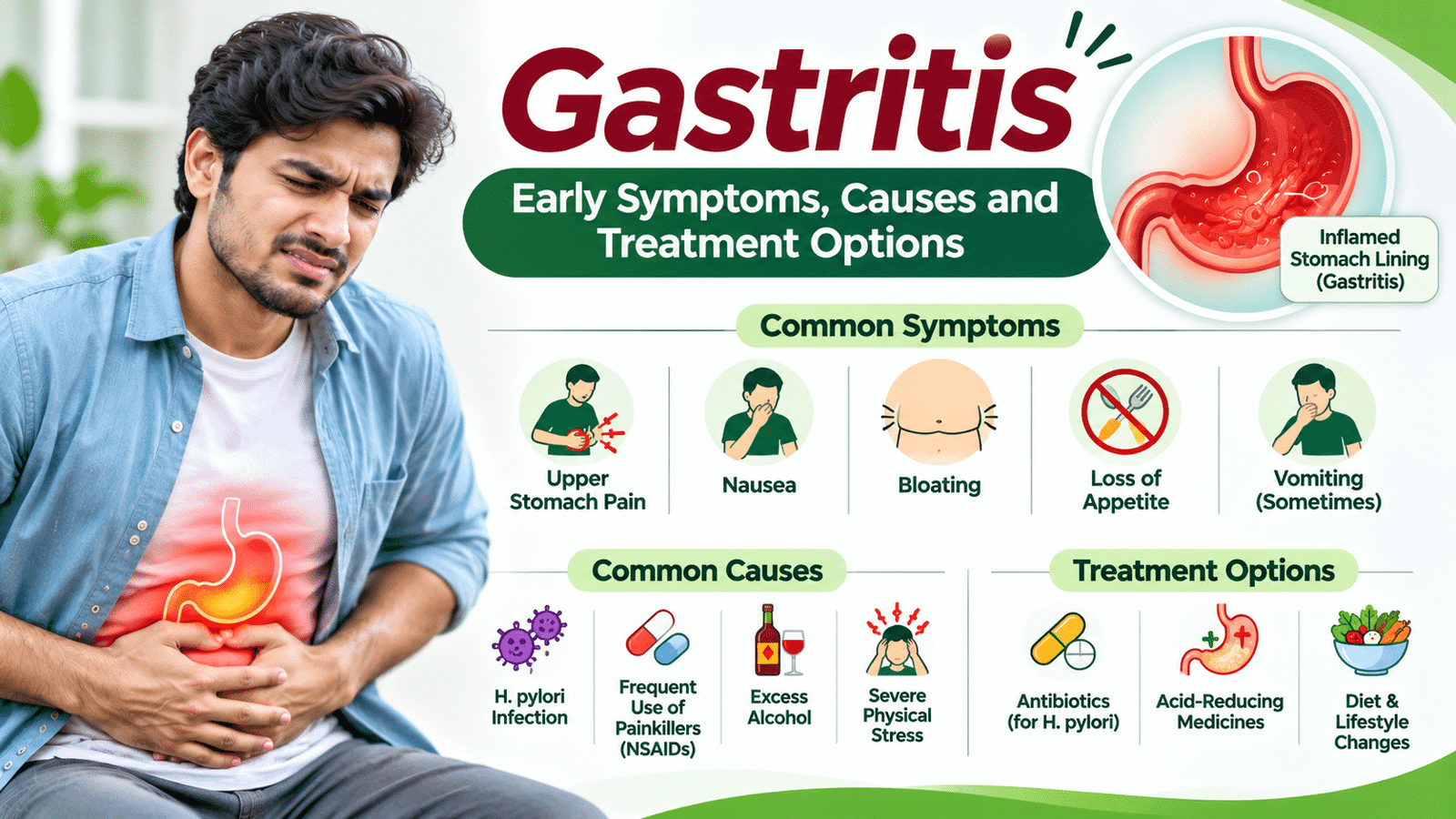
Gastritis: Early Symptoms, Causes and Treatment Options
Do you often experience a burning sensation in your upper stomach, nausea or discomfort after eating? These symptoms may sometimes be related to gastritis, a condition that affects the lining of the stomach.
Gastritis can develop suddenly or gradually. Some people notice stomach pain and indigestion, while others have no symptoms at all. The condition may be temporary or continue for a longer period, depending on its cause.
Understanding the early symptoms is important. Identifying the cause helps doctors choose the right treatment and reduce the risk of complications.
Gastritis is inflammation of the stomach lining. Common causes include Helicobacter pylori (H. pylori) infection and certain pain-relieving medicines. Treatment depends on the cause and may include antibiotics, acid-reducing medicines or changes to medicines that irritate the stomach.
What Is Gastritis?
Gastritis is inflammation of the inner lining of the stomach. This lining protects the stomach from digestive acid and other substances involved in digestion.
When the lining becomes inflamed, irritated or damaged, it may cause symptoms such as upper abdominal pain, nausea and indigestion.
Gastritis can be classified in different ways:
- Acute gastritis: Inflammation that develops suddenly and usually lasts for a shorter period.
- Chronic gastritis: Inflammation that develops gradually and may continue for months or years.
- Erosive gastritis: A form in which the stomach lining develops surface damage or erosions. It may sometimes cause bleeding.
- Non-erosive gastritis: Inflammation without the same type of visible surface erosion.
Doctors may also distinguish gastritis from gastropathy. Gastritis involves inflammation, while gastropathy refers to damage to the stomach lining with little or no inflammation.
Early Symptoms of Gastritis
Gastritis does not cause noticeable symptoms in everyone. Some people discover the condition during tests performed for another reason.
When symptoms occur, they may include the following.
1. Burning Sensation in the Upper Abdomen
You may feel burning, discomfort or pain in the upper part of your stomach, just below the chest. The discomfort may come and go or remain for longer periods.
2. Nausea
Some people feel sick or uncomfortable, particularly when the stomach is empty or after eating. Nausea may occur with or without vomiting.
3. Bloating and Burping
You may feel unusually full or notice frequent burping. These symptoms can also occur with other digestive conditions, so they do not confirm gastritis on their own.
4. Feeling Full After Eating a Small Amount
Some people feel full sooner than usual during meals. This is known as early satiety. Persistent early fullness should be assessed by a doctor.
5. Loss of Appetite
Stomach discomfort and nausea may reduce your interest in food. If your appetite remains low or you start losing weight without trying, seek medical advice.
6. Vomiting
Gastritis may sometimes cause vomiting. Repeated vomiting is not something to ignore, especially if you cannot keep fluids down or notice blood in the vomit.
These symptoms are not specific to gastritis. Acid reflux, indigestion, peptic ulcers and other digestive conditions can cause similar problems. A medical assessment is needed to identify the actual cause.
What Causes Gastritis?
Gastritis can develop for several reasons. Identifying the underlying cause is important because treatment differs from one type to another.
1. H. pylori Infection
Helicobacter pylori, commonly called H. pylori, is a type of bacteria that can live in the stomach and cause inflammation of its lining.
Many people with H. pylori infection do not have noticeable symptoms. In some people, the infection leads to chronic gastritis and can increase the risk of peptic ulcers.
Doctors can test for H. pylori using breath tests, stool tests or samples collected during an endoscopy.
2. Frequent Use of Certain Painkillers
Non-steroidal anti-inflammatory drugs (NSAIDs) can irritate or damage the stomach lining, especially when used regularly or over long periods.
Examples include:
- Ibuprofen.
- Aspirin.
- Naproxen.
If you regularly take these medicines and experience stomach discomfort, discuss it with your doctor. Do not stop prescribed aspirin or other medication without medical advice.
3. Excessive Alcohol Consumption
Alcohol can irritate the stomach lining. Heavy or repeated alcohol consumption may cause inflammation and damage to the stomach.
Reducing or avoiding alcohol may be an important part of treatment, depending on the cause and severity of the condition.
4. Autoimmune Gastritis
In autoimmune gastritis, the immune system mistakenly attacks healthy cells in the stomach lining.
This can affect the stomach’s ability to absorb certain nutrients, including vitamin B12 and iron. Some people may develop anaemia as a result.
5. Severe Physical Illness or Injury
Serious illness, major surgery, severe burns or critical injuries can sometimes affect the blood supply and protective lining of the stomach. This may lead to a form of acute stomach injury often called stress-related gastritis.
This is different from everyday emotional stress. Ordinary stress should not automatically be assumed to be the cause of gastritis.
6. Bile Reflux
Bile is a digestive fluid produced by the liver. It normally moves from the liver and gallbladder into the small intestine.
In some situations, bile can flow backwards into the stomach and irritate its lining. This is called bile reflux and may cause a condition known as reactive gastropathy.
Foods and Drinks: What Should You Know?
Many people assume that spicy food is the main cause of gastritis. However, most cases of gastritis are not caused by eating particular foods.
H. pylori infection and certain medicines are important causes. Alcohol can also irritate the stomach lining.
Although diet may not be the main cause, some foods and drinks can make digestive symptoms worse for certain people.
If you notice that particular foods trigger discomfort, consider reducing them and discussing your symptoms with a healthcare professional.
Foods and Drinks That May Worsen Symptoms
- Alcoholic beverages.
- Very spicy foods, if they trigger discomfort.
- Deep-fried or high-fat foods, if they worsen indigestion.
- Excessive tea, coffee or other caffeinated drinks.
- Carbonated beverages, if they increase bloating.
Healthy Eating Habits
- Eat balanced meals at regular times.
- Choose vegetables, fruits and suitable sources of protein.
- Drink enough water throughout the day.
- Avoid overeating if large meals cause discomfort.
- Notice and manage foods that repeatedly trigger symptoms.
There is no single gastritis diet that works for everyone. Your food choices should be based on your symptoms, nutritional needs and medical advice.
How Is Gastritis Diagnosed?
Gastritis cannot be confirmed from symptoms alone. A doctor may review your medical history, medicines, alcohol use and digestive symptoms before recommending investigations.
Depending on your condition, the following tests may be considered.
1. H. pylori Breath Test
This test checks for H. pylori infection. You may be asked to drink a special solution and provide a breath sample. The test detects substances produced when the bacteria break down the solution.
2. Stool Test
A stool sample may be tested for H. pylori. Stool tests can also be used to investigate signs of bleeding or other digestive problems when appropriate.
3. Blood Tests
Blood tests may help identify anaemia or possible nutritional deficiencies. Depending on the suspected type of gastritis, additional blood tests may be recommended.
4. Upper GI Endoscopy
An upper gastrointestinal endoscopy, also called gastroscopy, allows the doctor to examine the food pipe, stomach and the first part of the small intestine.
A thin, flexible tube with a small camera is passed through the mouth. If necessary, the doctor may take small tissue samples, called biopsies, for laboratory examination.
Endoscopy may help identify inflammation, erosions, ulcers and other abnormalities. It is not required for every person with stomach discomfort.
Gastritis Treatment Options
Treatment depends on the cause, type and severity of gastritis. The main goal is to address the underlying problem, reduce irritation and allow the stomach lining to heal.
1. Antibiotics for H. pylori Infection
If testing confirms H. pylori infection, doctors usually prescribe a combination of medicines to eliminate the bacteria.
Treatment commonly includes:
- Two or more antibiotics.
- A proton pump inhibitor (PPI) to reduce stomach acid.
- Bismuth in certain treatment combinations.
The exact combination depends on factors such as previous antibiotic use, allergies and local antibiotic resistance patterns.
Complete the prescribed course. Your doctor may also recommend a follow-up test to confirm that the infection has been successfully treated.
2. Acid-Reducing Medicines
Medicines that reduce stomach acid may help relieve symptoms and allow the stomach lining to heal.
Depending on the condition, doctors may recommend:
- Proton pump inhibitors (PPIs).
- H2-receptor blockers.
- Antacids for short-term symptom relief.
- Other medicines in selected cases.
The appropriate medicine and treatment duration depend on your diagnosis. Avoid taking acid-reducing medicines for long periods without medical guidance.
3. Reviewing Medicines That Irritate the Stomach
If NSAIDs or other medicines are contributing to stomach damage, your doctor may review their use and consider an alternative or adjusted treatment plan.
Do not discontinue prescribed medicines on your own. This is especially important for medicines prescribed to prevent heart attacks, strokes or other serious conditions.
4. Treatment for Autoimmune Gastritis
People with autoimmune gastritis may need monitoring for vitamin B12 and iron deficiencies. Supplements or vitamin B12 injections may be recommended when a deficiency is confirmed.
Your doctor may also recommend follow-up tests based on your individual risk.
5. Avoiding Irritating Substances
If alcohol or another substance is contributing to stomach irritation, avoiding it may help the stomach lining recover.
Smoking cessation and appropriate dietary changes may also support overall digestive health.
Antibiotics should only be used when prescribed for an appropriate diagnosis. Taking the wrong antibiotics or stopping treatment early can contribute to antibiotic resistance and treatment failure.
Can Gastritis Be Prevented?
Not every type of gastritis can be prevented. However, some practical steps may reduce the risk of stomach irritation and related problems.
- Use pain-relieving medicines only as directed by a healthcare professional.
- Discuss frequent NSAID use with your doctor.
- Limit or avoid alcohol.
- Avoid smoking.
- Seek medical assessment if you have persistent stomach discomfort.
- Get tested and treated for H. pylori when medically indicated.
- Follow your prescribed treatment plan.
Good hygiene and safe food and water practices are sensible general health measures, although they cannot guarantee prevention of H. pylori infection.
When Should You Consult a Gastroenterologist?
Occasional stomach discomfort may not indicate a serious condition. However, repeated or persistent symptoms deserve medical attention.
Consult a gastroenterologist if you experience:
- Upper abdominal pain that keeps returning.
- Persistent indigestion or bloating.
- Frequent nausea or vomiting.
- Loss of appetite.
- Feeling full after eating very little.
- Unexplained weight loss.
- Symptoms that do not improve with appropriate treatment.
- Vomiting fresh blood.
- Vomiting material that looks like coffee grounds.
- Black, tarry stools.
- Sudden or severe abdominal pain.
- Fainting, severe dizziness or marked weakness along with possible bleeding.
Frequently Asked Questions About Gastritis
1. What are the first signs of gastritis?
Early symptoms may include upper abdominal discomfort, nausea, bloating, indigestion and feeling full sooner than usual. Some people with gastritis have no symptoms.
2. Is gastritis a serious condition?
Many cases can be treated effectively, but the seriousness depends on the cause and type. Some forms can lead to ulcers, bleeding or other complications if not managed properly.
3. Can gastritis be cured permanently?
Some forms of gastritis improve when the underlying cause is treated. For example, H. pylori-related gastritis may improve after successful infection treatment. Chronic or autoimmune forms may need ongoing monitoring.
4. Does spicy food cause gastritis?
Spicy food may worsen symptoms in some people, but it is not the main cause of most gastritis cases. H. pylori infection and certain medicines are more important causes.
5. Can H. pylori cause gastritis?
Yes. H. pylori is a major cause of chronic gastritis. A doctor may recommend a breath test, stool test or other investigation to check for the infection.
6. Is endoscopy necessary for gastritis?
No. Not everyone with suspected gastritis needs endoscopy. Your doctor may recommend it if symptoms, risk factors or test results indicate that a closer examination is necessary.
7. Can gastritis cause vomiting?
Yes. Some people with gastritis experience nausea and vomiting. Repeated vomiting, inability to keep fluids down or blood in vomit requires prompt medical assessment.
8. How long does gastritis take to heal?
Recovery time varies according to the cause, severity and treatment. Some cases improve relatively quickly after the cause is addressed, while chronic gastritis may require longer-term care and monitoring.
Medical Disclaimer
This article is intended for general health education. It does not replace professional medical advice, diagnosis or treatment. Gastritis can have different causes and may require different investigations and treatments. Consult a qualified healthcare professional for personalised medical guidance.

