
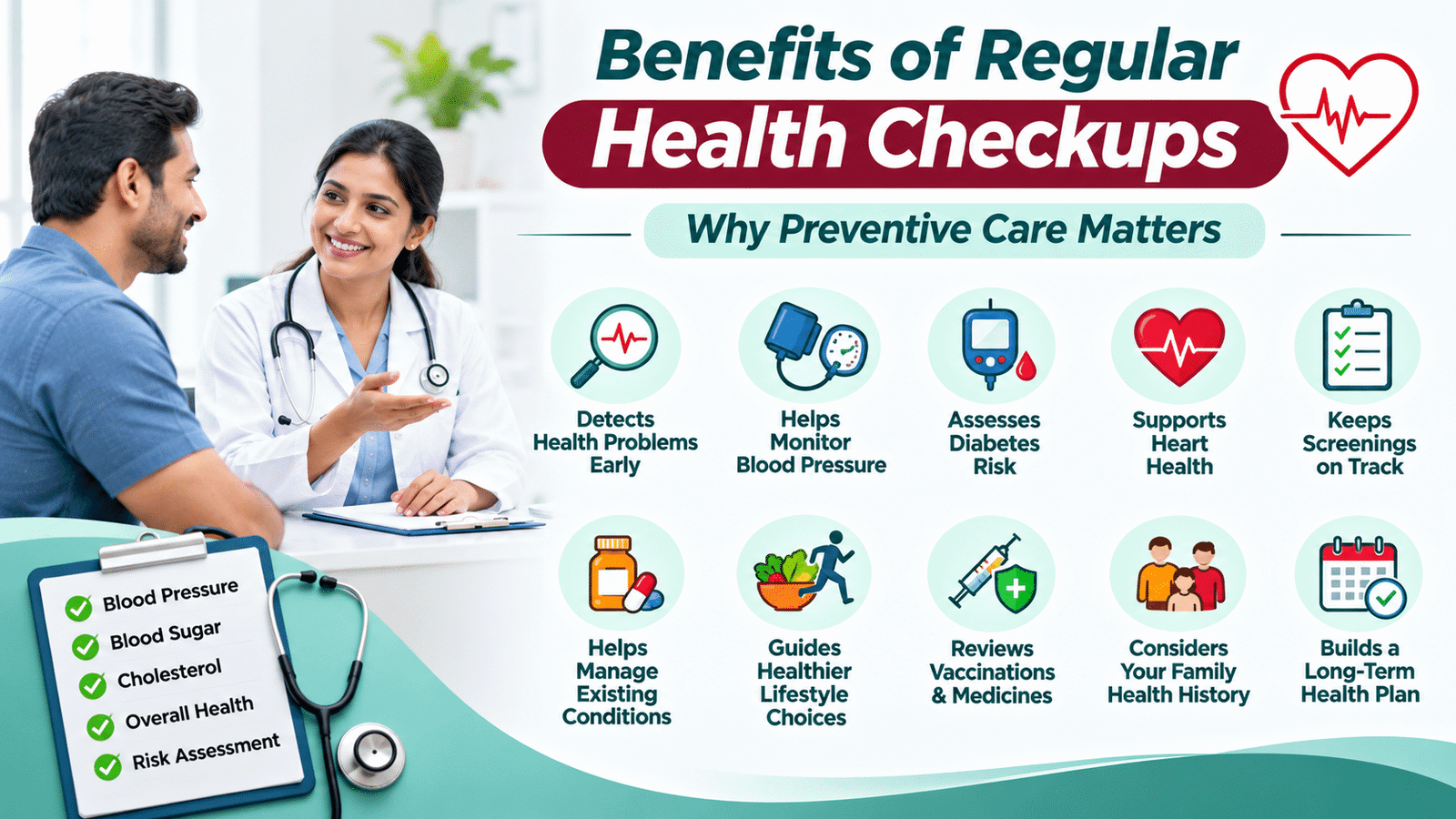
Benefits of Regular Health Checkups: Why Preventive Care Matters
Many people visit a hospital only when they develop a health problem. They may ignore a routine checkup because they feel healthy, have a busy schedule or believe that medical tests are needed only when symptoms appear.
However, some health conditions can develop without obvious warning signs. High blood pressure, raised blood sugar and unhealthy cholesterol levels may go unnoticed for a long time. A suitable preventive health assessment can help identify these risks and give you an opportunity to discuss what to do next.
Regular health checkups are not about taking every available test. They are about understanding your health, reviewing your risk factors and choosing the right preventive care at the right time.
What Is a Regular Health Checkup?
A regular health checkup is a planned consultation with a healthcare professional to review your general health and identify areas that may need attention. It may include a discussion about your medical history, lifestyle, family health history and any symptoms you have noticed.
Depending on your individual needs, the doctor may recommend:
- Blood pressure, pulse, height and weight measurements.
- Review of existing medical conditions and medicines.
- Blood sugar or cholesterol testing when appropriate.
- Screening tests recommended for your age and risk profile.
- Vaccination review.
- Advice about diet, exercise, sleep and tobacco or alcohol use.
Not every person needs every test. The purpose of a good checkup is to select investigations that are useful for that particular individual.
10 Important Benefits of Regular Health Checkups
1. Helps Identify Health Problems Early
One of the main reasons for preventive healthcare is to identify certain conditions before they cause noticeable problems. For example, high blood pressure and high cholesterol may not produce clear symptoms in their early stages.
Appropriate screening and medical assessment can help detect these issues. Early identification gives you and your doctor an opportunity to discuss lifestyle changes, monitoring or treatment when needed.
However, not every disease can be detected through a routine checkup. The tests used should be selected according to established medical recommendations.
2. Helps Monitor Blood Pressure
High blood pressure is common and often has no obvious symptoms. If it remains uncontrolled, it can increase the risk of heart disease, stroke and kidney problems.
Checking your blood pressure at suitable intervals can help identify raised readings. If a reading is high, your doctor may recommend repeat measurements or home monitoring before confirming a diagnosis.
Regular monitoring is particularly important for people who already have hypertension or other cardiovascular risk factors.
3. Supports Diabetes Risk Assessment
Type 2 diabetes can develop gradually. Some people may not notice symptoms until blood sugar levels have been high for some time.
A doctor may recommend a blood glucose test or HbA1c test depending on your age, weight, family history, symptoms and other risk factors.
Identifying raised blood sugar can help you take appropriate steps, such as improving food choices, becoming more active and receiving medical treatment when necessary.
4. Helps Assess Heart Health
Heart health depends on several factors, including blood pressure, cholesterol, blood sugar, smoking, physical activity, family history and age.
During a checkup, your doctor can review these factors and estimate whether you may have an increased risk of cardiovascular disease.
Depending on the findings, the doctor may recommend cholesterol testing, lifestyle changes or further evaluation. An ECG or other cardiac investigation is not automatically necessary for every healthy person; it should be advised when clinically appropriate.
5. Helps Monitor Existing Health Conditions
If you already have a medical condition, regular follow-up appointments can help your healthcare team understand whether it is being managed effectively.
For example, people living with diabetes, hypertension, thyroid disorders, kidney disease or heart conditions may need periodic reviews.
These visits can help doctors:
- Review symptoms and treatment progress.
- Monitor relevant test results.
- Check whether medicines are working as expected.
- Identify possible side effects.
- Adjust the treatment plan when needed.
Follow-up schedules differ depending on the condition and how well it is controlled.
6. Keeps Recommended Health Screenings on Track
Some screening tests are designed to identify health conditions before symptoms develop. Examples include certain breast, cervical and colorectal cancer screening tests.
Whether you need a particular screening test depends on factors such as your age, sex, family history, previous results and personal risk.
A doctor can explain which screenings are suitable, when to have them and how often they should be repeated.
7. Provides an Opportunity to Review Your Lifestyle
A health checkup is a useful time to discuss everyday habits that influence long-term health. Your doctor may ask about your eating pattern, physical activity, sleep, tobacco use and alcohol consumption.
Based on your health needs, you may receive guidance about:
- Choosing a balanced diet.
- Maintaining a healthy weight.
- Getting regular physical activity.
- Improving sleep habits.
- Stopping tobacco use.
- Reducing harmful alcohol consumption.
Small, consistent lifestyle changes can support better health over time. Your doctor can help you choose realistic goals rather than making several difficult changes at once.
8. Helps Review Family Health History
Some health conditions are more common in people with a family history of the same or related conditions. These may include diabetes, heart disease and certain cancers.
Sharing your family health history helps your doctor understand whether you may need earlier or more frequent screening than someone at average risk.
Before your appointment, try to find out whether close family members have had major health conditions and, if possible, the age at which they were diagnosed.
9. Helps Review Medicines and Vaccinations
If you take medicines regularly, a checkup gives you an opportunity to review them with your doctor. This is particularly useful if you take several medicines or receive treatment from different specialists.
Your doctor may review:
- Whether your current medicines are still required.
- How and when you should take them.
- Possible side effects or medicine interactions.
- Whether any monitoring tests are needed.
- Whether your vaccinations are up to date.
Never stop or change a prescribed medicine without medical advice.
10. Builds a Long-Term Relationship with Your Doctor
Seeing the same healthcare professional for preventive care and follow-up can make it easier to discuss changes in your health over time.
Your doctor may already know your medical history, previous test results, medicines and personal health concerns. This background can support more informed decisions about future care.
It also gives you a comfortable opportunity to ask questions about symptoms, preventive measures and healthy lifestyle choices.
Which Tests May Be Included in a Health Checkup?
The tests included in a health assessment should depend on your individual health profile. There is no single full-body test package that is suitable for everyone.
| Assessment or Test | What It May Help Evaluate |
|---|---|
| Blood pressure measurement | Raised blood pressure and cardiovascular risk. |
| Blood glucose or HbA1c | Diabetes or increased blood sugar risk, when indicated. |
| Lipid profile | Cholesterol and triglyceride levels. |
| Weight and BMI assessment | Weight-related health risks, interpreted alongside other factors. |
| Kidney function tests | Kidney health, when appropriate for the individual’s risk. |
| Liver function tests | Selected aspects of liver health when clinically indicated. |
| Age- and risk-based cancer screening | Detection of certain cancers before symptoms develop. |
| Vaccination review | Whether recommended immunisations are up to date. |
Some people may need additional tests because of symptoms, existing conditions, pregnancy, family history or occupational exposure. Your doctor should explain why a test is being recommended and what its result may mean.
How Often Should You Get a Health Checkup?
There is no universal rule that every adult must undergo the same complete health checkup every year. The appropriate schedule depends on your age, medical history, risk factors, previous test results and local screening recommendations.
For example:
- Young adults: Preventive visits can provide an opportunity to review vaccinations, lifestyle, blood pressure and relevant risk factors.
- Adults with risk factors: People with obesity, a family history of diabetes or heart disease, or other identified risks may need more frequent assessment.
- People with chronic conditions: Follow-up appointments should follow the treatment and monitoring plan recommended by their doctor.
- Older adults: Preventive care may also include medication review, vaccination, fall-risk assessment, vision and hearing concerns, and other age-related needs.
Ask your doctor to create a screening and follow-up schedule based on your health rather than relying on a fixed package or timetable.
Who Should Pay Particular Attention to Preventive Health Checkups?
Preventive care is useful across different stages of life, but some people may benefit from closer medical monitoring.
- People with a family history of diabetes, heart disease or certain cancers.
- People who are overweight or have obesity-related health risks.
- People with high blood pressure or raised cholesterol.
- People who smoke or regularly consume alcohol.
- People taking long-term medication.
- People living with chronic medical conditions.
- Older adults who may need age-related health assessments.
If you have symptoms such as chest pain, breathlessness, unexplained weight loss, persistent fever or unusual bleeding, do not wait for your next routine checkup. Seek medical advice promptly.
Are Full Body Health Checkup Packages Necessary?
Many hospitals and diagnostic centres offer full body health checkup packages. These may include blood tests, imaging and other investigations.
However, a package with more tests is not automatically better. Testing people without a clear medical reason can sometimes produce false-positive results, identify findings that may never cause harm, or lead to further investigations that are not needed.
Before choosing a package, consider the following questions:
- Are the tests suitable for my age and medical history?
- Do I have symptoms or risk factors that require specific investigations?
- Will the results change my treatment or preventive care plan?
- Has a doctor explained the benefits and possible limitations of the tests?
How to Prepare for Your Health Checkup
A little preparation can make your appointment more useful. Before visiting the hospital, try to:
- Carry previous medical reports and investigation results.
- Prepare a list of medicines and supplements you currently take.
- Write down any symptoms or health concerns.
- Share relevant family medical history.
- Ask whether any test requires fasting or other preparation.
- Inform the doctor about allergies and existing medical conditions.
- Prepare questions about your results and next steps.
Do not fast unless you have been specifically instructed to do so. Preparation requirements vary between tests.
Frequently Asked Questions About Regular Health Checkups
1. Why are regular health checkups important?
They provide an opportunity to review your health, identify certain risk factors, discuss preventive care and monitor existing medical conditions. The tests recommended should be based on your individual needs.
2. Can a health checkup detect diseases early?
Some screening tests can identify certain conditions before symptoms appear. However, no routine checkup can detect every disease, and a normal result does not guarantee that you are free from all health problems.
3. Is a full body checkup necessary every year?
Not necessarily. Everyone does not need the same set of blood tests or scans every year. Discuss the appropriate screening schedule with your doctor based on your age, health history and risk factors.
4. Which tests are commonly included in preventive health assessments?
Depending on your health profile, assessments may include blood pressure, weight, blood glucose, cholesterol and selected screening tests. Additional investigations are recommended when there is a clinical reason.
5. Should healthy people get regular health checkups?
People who feel healthy can still benefit from appropriate preventive care, such as vaccination review, risk assessment and recommended screening. The frequency and type of assessment should be personalised.
6. What is the difference between a health checkup and a diagnostic test?
A preventive health checkup reviews health risks and recommended screening in someone who may not have symptoms. A diagnostic test is used to investigate a symptom, abnormal finding or suspected medical condition.
7. What should I do if my health checkup report shows an abnormal result?
Discuss the report with your doctor. An abnormal result does not always mean that you have a disease. Your doctor may recommend repeating the test, monitoring the result or carrying out further evaluation.
Conclusion: Make Preventive Healthcare Part of Your Routine
Taking care of your health should not begin only when you feel unwell. Appropriate preventive checkups can help you understand your health risks, monitor existing conditions and stay up to date with recommended screenings and vaccinations.
The most useful checkup is not necessarily the one with the most tests. It is the one that considers your age, medical history, lifestyle and individual needs.
Speak with a healthcare professional to plan the preventive care that is right for you. A thoughtful approach today can help you make better-informed health decisions in the years ahead.
