
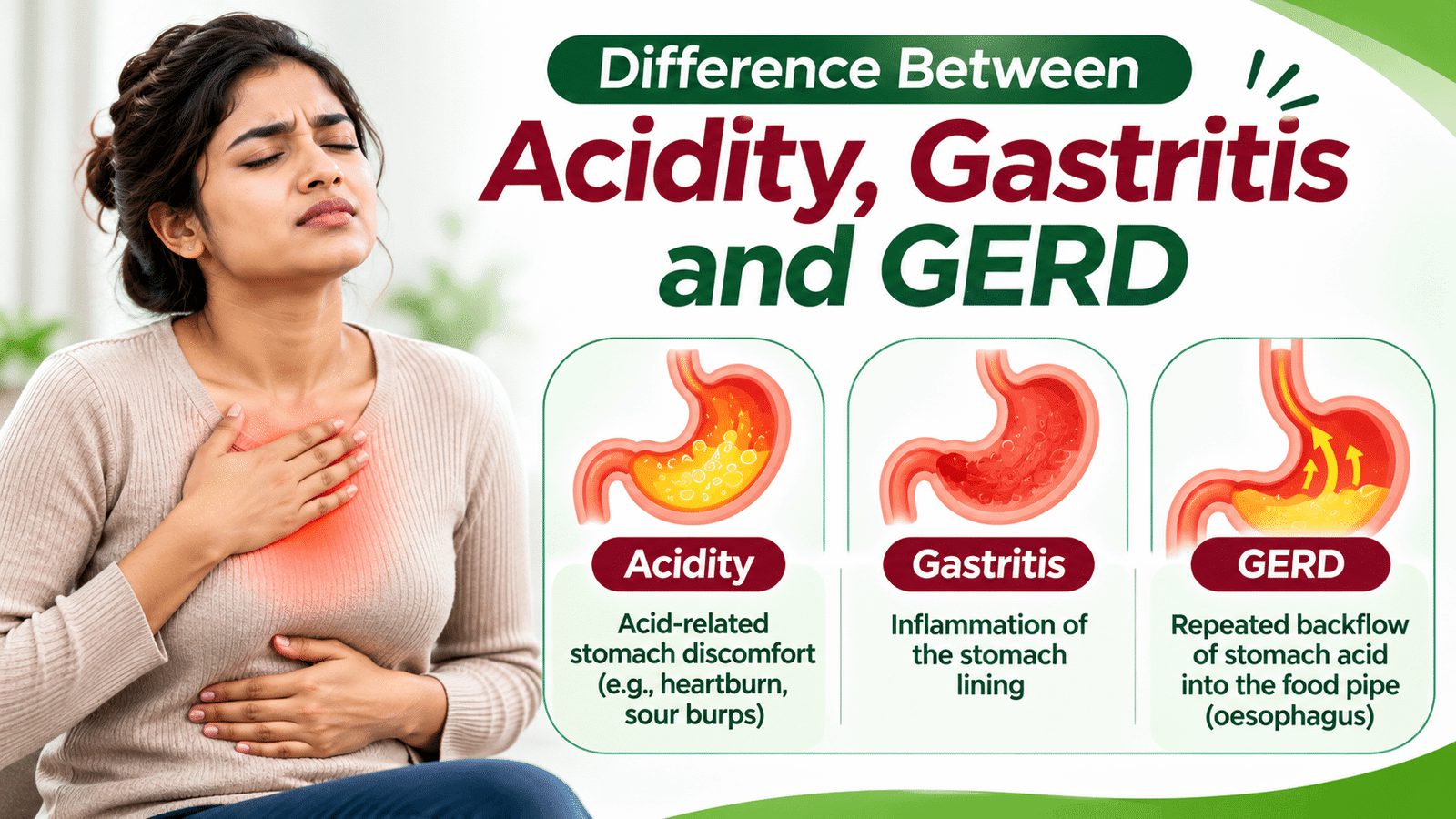
Difference Between Acidity, Gastritis and GERD
Do you experience a burning sensation in your stomach, chest discomfort or repeated burping after meals? These symptoms are often described as acidity. Some people may also be told that they have gastritis or GERD.
Because the symptoms can overlap, it is easy to confuse these three conditions. However, acidity, gastritis and GERD are not the same thing.
Understanding the difference is important because the cause of your discomfort determines the right treatment. Taking medicines without knowing the actual problem may provide temporary relief while the underlying condition remains untreated.
- Acidity: A commonly used term for acid-related symptoms such as heartburn or sour burps. It is not a precise medical diagnosis.
- Gastritis: Inflammation of the stomach lining.
- GERD: A digestive condition in which stomach contents repeatedly flow back into the food pipe, causing troublesome symptoms or complications.
1. What Is Acidity?
Acidity is a common term used to describe symptoms that people associate with stomach acid. These may include a burning feeling in the upper abdomen, heartburn, sour burps or an unpleasant taste in the mouth.
It is important to understand that acidity is not one specific disease. Similar symptoms can occur due to acid reflux, indigestion, gastritis or other digestive conditions.
Common Symptoms of Acidity
- Burning sensation in the upper abdomen.
- Heartburn or burning discomfort behind the breastbone.
- Sour or bitter taste in the mouth.
- Repeated burping.
- Feeling uncomfortable after heavy meals.
- Stomach discomfort after eating spicy or fatty foods.
Common Causes and Triggers
Acid-related symptoms may occur for several reasons. Common triggers include:
- Eating large meals.
- Eating too quickly.
- Having very oily or fatty foods.
- Drinking too much tea or coffee if these trigger symptoms.
- Consuming alcohol.
- Lying down soon after eating.
- Being overweight, which may worsen reflux symptoms.
Not everyone reacts to the same foods. Keeping a food and symptom diary can help identify your personal triggers.
2. What Is Gastritis?
Gastritis is inflammation of the stomach lining. The stomach has a protective lining that helps it tolerate digestive acids. When this lining becomes inflamed or damaged, it may cause discomfort and other digestive symptoms.
Some people with gastritis have no noticeable symptoms. Others experience upper abdominal pain, nausea or a feeling of fullness after eating.
Common Symptoms of Gastritis
- Pain or discomfort in the upper abdomen.
- Nausea or vomiting.
- Feeling full after eating a small amount.
- Bloating and indigestion.
- Reduced appetite.
- Discomfort that may occur after meals.
What Causes Gastritis?
Gastritis can develop for several reasons. Common causes include:
- H. pylori infection: Helicobacter pylori is a bacterium that can infect the stomach lining and cause inflammation.
- Pain-relieving medicines: Regular use of certain medicines, including ibuprofen and aspirin, can irritate or damage the stomach lining.
- Alcohol: Excessive alcohol consumption can irritate the stomach lining.
- Autoimmune conditions: In some people, the immune system attacks cells in the stomach lining.
- Severe physical illness: Serious illness or major physical stress can cause certain forms of gastritis.
Gastritis should not be diagnosed only from symptoms. A doctor may recommend investigations to identify the cause.
3. What Is GERD?
GERD stands for Gastroesophageal Reflux Disease. It occurs when stomach contents repeatedly flow backwards into the oesophagus, also called the food pipe, and cause troublesome symptoms or complications.
A ring of muscle at the lower end of the food pipe normally helps prevent stomach contents from moving upwards. This is called the lower oesophageal sphincter.
If this barrier does not work properly, stomach contents can move into the food pipe and cause irritation.
Occasional acid reflux can happen to many people. It does not automatically mean that they have GERD. GERD is considered when reflux causes repeated troublesome symptoms or complications.
Common Symptoms of GERD
- Heartburn: A burning sensation behind the breastbone, sometimes moving towards the throat.
- Regurgitation: Food or sour liquid coming back into the throat or mouth.
- Chest discomfort: Burning or discomfort that may occur after meals or when lying down.
- Difficulty swallowing: A feeling that food is sticking while swallowing.
- Chronic cough: Some people experience a persistent cough associated with reflux.
- Hoarse voice: Reflux may contribute to throat irritation or voice changes in some people.
Common GERD Triggers and Risk Factors
- Large meals, especially close to bedtime.
- Lying down soon after eating.
- Being overweight or having obesity.
- Smoking.
- Alcohol consumption.
- Foods that trigger reflux symptoms, such as fatty or spicy foods in some people.
4. Difference Between Acidity, Gastritis and GERD
Although these conditions can cause similar discomfort, they affect the digestive system in different ways.
| Feature | Acidity | Gastritis | GERD |
|---|---|---|---|
| Meaning | Common term for acid-related symptoms. | Inflammation of the stomach lining. | Repeated reflux causing troublesome symptoms or complications. |
| Main area involved | Depends on the underlying cause. | Stomach lining. | Food pipe (oesophagus). |
| Common symptom | Burning or sour taste. | Upper abdominal pain or nausea. | Heartburn and regurgitation. |
| Common causes | Acid-related symptoms, reflux or indigestion. | H. pylori, certain medicines or autoimmune conditions. | Repeated backward flow of stomach contents. |
| Diagnosis | Depends on the actual cause of symptoms. | Medical assessment and sometimes tests or endoscopy. | Symptoms and medical history; additional tests when needed. |
| Treatment | Depends on the underlying condition. | Treat the cause and manage inflammation. | Lifestyle changes and appropriate reflux treatment. |
Acidity is not another name for gastritis or GERD. A person may experience overlapping symptoms, so a medical assessment is important when discomfort keeps returning.
5. Can Acidity, Gastritis and GERD Occur Together?
Yes. Some people may have symptoms that overlap between these conditions.
For example, someone with GERD may describe their symptoms as acidity because they experience a burning sensation in the chest. A person with gastritis may also experience indigestion or upper abdominal discomfort.
However, GERD does not automatically mean that the stomach lining is inflamed. Similarly, gastritis does not necessarily mean that stomach acid is flowing back into the food pipe.
This is why identifying the actual cause is more useful than treating every digestive complaint as acidity.
6. How Are These Conditions Diagnosed?
A gastroenterologist may first ask about your symptoms, eating habits, medical history and medicines. The doctor may also examine your abdomen and decide whether further tests are needed.
Tests for Gastritis
Depending on your symptoms, investigations may include:
- H. pylori breath test: Helps identify H. pylori infection.
- Stool test: May detect H. pylori or investigate other digestive problems.
- Blood tests: May help check for anaemia or other health concerns.
- Upper GI endoscopy: Allows the doctor to examine the stomach lining and take a small tissue sample if needed.
Tests for GERD
GERD is often diagnosed by reviewing symptoms and medical history. If symptoms do not improve or there are concerns about complications, the doctor may recommend:
- Upper GI endoscopy: Examines the food pipe, stomach and upper small intestine.
- Oesophageal pH monitoring: Measures acid exposure in the food pipe.
- Oesophageal manometry: Measures the muscle contractions and pressure in the food pipe when clinically indicated.
Not everyone needs an endoscopy or other specialised test. The doctor chooses investigations based on the individual’s symptoms and risk factors.
7. Treatment Options for Acidity, Gastritis and GERD
Treatment depends on the underlying cause. The same medicine may not be suitable for every person with a burning sensation or stomach discomfort.
Treatment for Acidity Symptoms
For occasional mild acid-related symptoms, a healthcare professional may recommend suitable antacids or alginates. If symptoms keep returning, the cause should be assessed rather than relying on repeated self-medication.
Treatment for Gastritis
Treatment depends on what caused the stomach inflammation.
- H. pylori infection may require a combination of antibiotics and acid-reducing medicines.
- Medicines that reduce stomach acid may help the stomach lining heal.
- Alcohol-related irritation may require avoiding alcohol.
- If pain-relieving medicines are contributing, the doctor may review your medication and suggest alternatives when appropriate.
Treatment for GERD
GERD treatment may include lifestyle changes and medicines that reduce stomach acid. Some people need additional investigations or specialist treatment if symptoms continue despite appropriate care.
Do not start antibiotics, long-term acid-reducing medicines or other prescription treatments without medical advice.
8. Lifestyle Tips to Reduce Acid-Related Symptoms
Healthy daily habits can help reduce symptoms in many people. The most useful changes depend on whether you have reflux, gastritis or another digestive condition.
Eat Smaller Meals
Very large meals can increase discomfort and may worsen reflux. Try moderate portions and eat at a comfortable pace.
Identify Your Food Triggers
Some people experience symptoms after coffee, chocolate, tomato-based foods, spicy dishes or fatty meals. These foods do not affect everyone in the same way. Identify your own triggers instead of following an unnecessarily restrictive diet.
Avoid Lying Down After Meals
If you have reflux symptoms, try to leave around three hours between your last meal and bedtime.
Maintain a Healthy Weight
If you are overweight, gradual weight loss may help reduce GERD symptoms. Ask your doctor or dietitian for a suitable plan.
Reduce Alcohol and Stop Smoking
Alcohol can irritate the stomach lining and may worsen reflux. Smoking can also contribute to reflux symptoms. Avoiding these habits can support digestive health.
Review Your Medicines
If you regularly use painkillers such as ibuprofen or aspirin and experience stomach discomfort, discuss this with your doctor. Do not stop prescribed aspirin or other medication without medical guidance.
9. When Should You Consult a Gastroenterologist?
Occasional heartburn or mild stomach discomfort may happen after a heavy meal. However, frequent or persistent symptoms should not be ignored.
Consult a gastroenterologist if you experience:
- Repeated burning in the chest or upper abdomen.
- Frequent sour burps or regurgitation.
- Persistent stomach pain or indigestion.
- Difficulty or pain while swallowing.
- Repeated nausea or vomiting.
- Unexplained weight loss.
- Loss of appetite or feeling full after very small meals.
- Symptoms that do not improve with appropriate treatment.
- Vomiting blood or material that looks like coffee grounds.
- Black, tarry stools.
- Sudden or severe abdominal pain.
- Severe chest pain, especially with sweating, breathlessness or pain spreading to the arm, jaw or neck.
10. Frequently Asked Questions
1. Is acidity the same as gastritis?
No. Acidity is a common term for acid-related symptoms, while gastritis means inflammation of the stomach lining. They can cause similar discomfort, but they are different.
2. Is GERD more serious than acidity?
GERD is a recognised chronic digestive condition that can cause repeated symptoms and complications. Acidity is a general term and does not identify a specific disease. The seriousness depends on the actual cause and symptoms.
3. Can gastritis cause heartburn?
Gastritis can cause upper abdominal discomfort and indigestion. Heartburn is more commonly associated with acid reflux. Symptoms can overlap, so a doctor may need to assess the cause.
4. Can GERD be cured permanently?
Many people can control GERD symptoms effectively with appropriate lifestyle changes and treatment. The long-term outcome varies from person to person, and some people need ongoing medical care.
5. Does spicy food cause gastritis?
Spicy food may worsen discomfort in some people, but it is not a common underlying cause of gastritis. H. pylori infection and certain medicines are important causes of stomach inflammation.
6. Which test can identify gastritis?
Doctors may recommend H. pylori tests, blood tests or upper GI endoscopy depending on symptoms and medical history. An endoscopy allows the doctor to examine the stomach lining and take a biopsy if necessary.
7. When should I get an endoscopy for acidity or GERD?
An endoscopy may be recommended if symptoms persist despite treatment, if swallowing becomes difficult, or if there are warning signs such as bleeding or unexplained weight loss. Your doctor will decide whether the procedure is necessary.
8. Can I take acidity medicine every day?
Some medicines are suitable for specific treatment periods, but regular long-term use should be reviewed by a healthcare professional. Repeated symptoms need an assessment to identify their cause.
Medical Disclaimer
This article is intended for general health education. It does not replace professional medical advice, diagnosis or treatment. Acidity-like symptoms may have different causes, and treatment depends on the individual’s condition. Consult a qualified healthcare professional for personalised medical guidance.
