
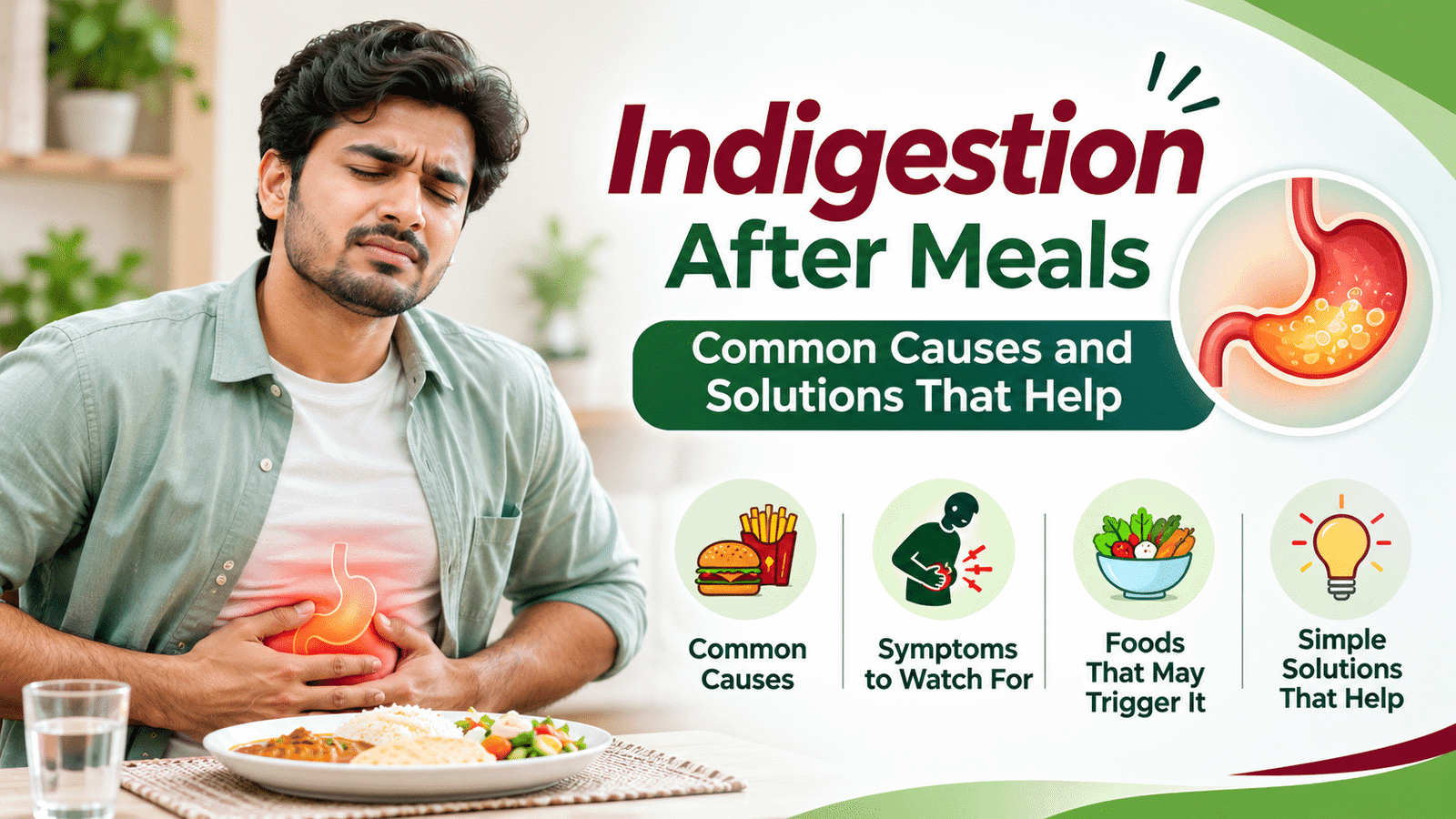
Indigestion After Meals: Common Causes and Solutions That Help
Have you ever finished a meal and felt uncomfortable almost immediately? Your stomach may feel heavy, tight or unusually full. You might also experience burping, bloating, nausea or a burning sensation in your upper abdomen.
This discomfort is commonly called indigestion. It can happen occasionally after a heavy meal, but repeated symptoms may affect your appetite, sleep and daily routine.
Indigestion does not always mean that something is seriously wrong. However, if it happens frequently, it is important to understand what may be causing it.
Understand the common causes of indigestion after meals, recognise its symptoms, identify possible food triggers, learn practical ways to manage discomfort and know when to consult a gastroenterologist.
What Is Indigestion?
Indigestion, medically known as dyspepsia, is a group of symptoms that causes discomfort in the upper abdomen. It often occurs during or after eating, although it is not always directly related to food.
Some people feel full after eating only a small amount. Others experience bloating, upper abdominal pain, nausea or repeated burping.
Indigestion is a symptom rather than a disease. It may be related to eating habits, certain medicines or an underlying digestive condition.
Common Symptoms of Indigestion After Meals
Symptoms can vary from person to person. You may experience one symptom or several at the same time.
Common symptoms include:
- Stomach discomfort: Pain, burning or an uncomfortable feeling in the upper abdomen.
- Bloating: A feeling of swelling, pressure or tightness in the stomach.
- Feeling full quickly: You may feel unable to finish your usual meal.
- Excessive burping: Releasing air through the mouth more often than usual.
- Nausea: Feeling sick or uncomfortable after eating.
- Post-meal heaviness: Feeling unusually full for a long time after a meal.
- Burning sensation: Discomfort in the upper abdomen, sometimes accompanied by heartburn.
Heartburn and indigestion can occur together, but they are not the same condition. Heartburn usually causes a burning feeling behind the breastbone, often when stomach contents move back into the food pipe.
What Causes Indigestion After Eating?
There is no single cause of indigestion. Sometimes it follows an unusually large meal. In other cases, repeated symptoms may be associated with a digestive condition or medication.
1. Eating Too Much at One Time
Large meals can leave you feeling uncomfortably full. When you eat more than your usual amount, you may notice abdominal pressure, bloating or nausea.
For example, a heavy lunch followed by sweets and sugary drinks may leave some people feeling uncomfortable for several hours.
Eating smaller portions and allowing enough time for meals may help.
2. Eating Too Quickly
When you rush through a meal, you may swallow more air and fail to chew your food properly. This can contribute to burping, bloating and discomfort.
Try to eat slowly, chew your food well and avoid rushing through lunch or dinner.
3. Spicy, Oily and Fatty Foods
Some people notice indigestion after eating rich, oily or spicy foods. Deep-fried snacks, heavy gravies and large portions of fatty foods may worsen symptoms in certain individuals.
However, food triggers are different for everyone. You do not need to avoid every spicy or traditional Indian dish. Pay attention to the foods that repeatedly cause discomfort.
4. Acid Reflux and GERD
Acid reflux occurs when stomach contents move back into the food pipe. It may cause heartburn, a sour taste in the mouth or food coming back into the throat.
When reflux symptoms happen frequently, the condition may be called gastroesophageal reflux disease (GERD).
People with GERD may notice symptoms after large meals or when lying down soon after eating.
5. Gastritis
Gastritis refers to inflammation of the stomach lining. It can cause upper abdominal discomfort, nausea and a feeling of fullness.
Possible causes include Helicobacter pylori infection, certain medicines and other factors that irritate the stomach lining.
If you experience repeated stomach discomfort, a doctor can assess whether gastritis or another condition is responsible.
6. Peptic Ulcers
Peptic ulcers are open sores that develop in the lining of the stomach or the upper part of the small intestine.
They may cause upper abdominal pain, nausea or discomfort related to meals. Common causes include H. pylori infection and the use of certain pain-relieving medicines, particularly non-steroidal anti-inflammatory drugs (NSAIDs).
Ulcers need appropriate medical diagnosis and treatment. Do not assume that recurring stomach pain is simply acidity.
7. Functional Dyspepsia
Some people experience frequent indigestion even when tests do not identify a clear structural problem in the digestive system.
This is called functional dyspepsia. It is a disorder involving communication between the gut and brain. The stomach may also be unusually sensitive to normal digestive activity or may not relax properly when food enters.
Symptoms can include early fullness, upper abdominal discomfort and bloating.
8. Medicines That Affect Digestion
Certain medicines may cause indigestion as a side effect.
Examples include:
- Some antibiotics.
- Non-steroidal anti-inflammatory painkillers, such as ibuprofen.
- Iron supplements.
- Some medicines used for osteoporosis.
- Some medicines used to manage diabetes or obesity.
If you think a medicine is causing your symptoms, speak with your doctor. Do not stop prescribed treatment without medical advice.
Foods and Drinks That May Trigger Indigestion
Food triggers differ from person to person. A meal that causes discomfort for one person may be perfectly comfortable for someone else.
Some commonly reported triggers include:
- Deep-fried foods and oily snacks.
- Very large or heavy meals.
- Excessive tea or coffee.
- Carbonated drinks.
- Alcohol.
- Very spicy foods.
- Chocolate and certain acidic foods in people with reflux symptoms.
Instead of following a very restrictive diet, keep a food diary for a few weeks. Record what you eat, when symptoms begin and how long they last. This can help you and your doctor identify possible triggers.
8 Practical Ways to Reduce Indigestion After Meals
Simple changes to your eating habits and daily routine may improve mild indigestion. Try the following steps and observe how your body responds.
1. Eat Smaller Portions
Very large meals can increase the feeling of fullness and discomfort. Try moderate portions and avoid eating beyond your comfort level.
2. Eat Slowly
Take enough time to finish your meal. Chew food properly and avoid eating in a hurry. This may also reduce the amount of air you swallow.
3. Identify Your Food Triggers
Notice whether particular foods repeatedly cause symptoms. Reduce foods that clearly worsen your discomfort rather than eliminating several food groups unnecessarily.
4. Avoid Lying Down Immediately After Eating
If you experience heartburn or acid reflux, avoid going to bed immediately after a meal. Leaving around three hours between your last meal and bedtime may help reduce nighttime reflux symptoms.
5. Take a Gentle Walk
A comfortable walk after eating may help you avoid prolonged sitting and support general digestive health. Choose a gentle pace rather than intense exercise immediately after a heavy meal.
6. Reduce Excess Tea, Coffee and Fizzy Drinks
Caffeine and carbonated drinks can worsen symptoms in some people. If you notice a connection, gradually reduce your intake and see whether you feel better.
7. Maintain a Healthy Body Weight
Being overweight can increase the risk of acid reflux in some people. If weight management is appropriate for your health, gradual and sustainable changes may help reduce symptoms.
8. Manage Stress and Maintain Regular Meal Habits
Stress and anxiety can influence the way the gut and brain interact. Try to eat in a relaxed environment, maintain regular meal timings and make time for adequate sleep.
There is no single diet that cures indigestion. A balanced diet, suitable portion sizes and identifying personal triggers are more useful than relying on unverified home remedies or detox drinks.
How Is Indigestion Diagnosed?
If indigestion keeps returning, a gastroenterologist may recommend an evaluation to identify its cause.
The doctor may ask about:
- When your symptoms started.
- Whether discomfort occurs before, during or after meals.
- Which foods seem to make symptoms worse.
- Whether you experience heartburn, vomiting or changes in bowel habits.
- Any medicines or supplements you take.
- Your medical and family history.
Depending on your symptoms, the doctor may recommend investigations such as:
H. pylori Testing
Breath tests, stool tests or other appropriate investigations may be used to check for H. pylori infection.
Blood Tests
Blood tests may help investigate anaemia, infection or other conditions depending on your symptoms.
Upper GI Endoscopy
Endoscopy allows a doctor to examine the lining of the food pipe, stomach and first part of the small intestine using a flexible tube with a camera.
It may be recommended when symptoms, examination findings or risk factors suggest the need for further evaluation.
Not everyone with indigestion needs an endoscopy. Your doctor will decide whether testing is necessary.
How Is Indigestion Treated?
Treatment depends on the cause. Occasional mild symptoms may improve with changes to eating habits and lifestyle. Repeated symptoms may need medical evaluation and specific treatment.
Depending on the diagnosis, a doctor may recommend:
- Dietary and lifestyle changes.
- Medicines that reduce stomach acid.
- Medicines that help relieve certain indigestion symptoms.
- Antibiotic treatment when H. pylori infection is confirmed.
- Changes to medicines that may be contributing to symptoms.
- Further treatment for an underlying digestive condition.
Do not take acid-reducing medicines or antibiotics for long periods without medical guidance. The right medicine and treatment duration depend on the diagnosis.
When Should You Consult a Gastroenterologist?
Occasional indigestion after a heavy meal is common. However, repeated or persistent symptoms should not be ignored.
Consult a doctor if you experience:
- Indigestion that keeps returning.
- Persistent upper abdominal pain or discomfort.
- Frequent nausea or vomiting.
- Difficulty swallowing or painful swallowing.
- Unexplained weight loss.
- Loss of appetite or feeling full after eating very little.
- Ongoing bloating or abdominal swelling.
- Severe or constant abdominal pain.
- Vomiting blood or material that looks like coffee grounds.
- Black, tarry stools.
- Chest pain, especially with sweating, breathlessness or pain spreading to the arm, jaw or neck.
- Severe shortness of breath.
Frequently Asked Questions About Indigestion After Meals
1. Why do I feel indigestion after every meal?
Repeated indigestion may be related to eating habits, acid reflux, gastritis, functional dyspepsia, ulcers or certain medicines. If it happens after most meals, consult a doctor to identify the cause.
2. Is indigestion the same as acidity?
No. Indigestion is a group of upper abdominal symptoms, while acidity is a commonly used term for acid-related discomfort. Acid reflux and heartburn can occur alongside indigestion, but they are not identical conditions.
3. Can drinking water help with indigestion?
Staying hydrated supports general health, but drinking water does not treat every cause of indigestion. If symptoms continue, medical assessment may be needed.
4. Does walking after meals help digestion?
A gentle walk after eating can be a useful healthy habit. It may help some people feel more comfortable, although it does not treat an underlying digestive disease.
5. Can stress cause indigestion?
Yes. Stress and anxiety can influence communication between the gut and brain. They may contribute to or worsen symptoms in people with functional dyspepsia.
6. When should I get an endoscopy for indigestion?
An endoscopy may be recommended when symptoms persist, treatment does not help or there are concerning features such as difficulty swallowing, bleeding, unexplained weight loss or repeated vomiting. The decision should be made by a doctor.
7. Can indigestion go away on its own?
Occasional indigestion may improve without specific treatment, particularly when related to a heavy meal. Repeated or persistent symptoms should be evaluated to check for an underlying cause.
Medical Disclaimer
This article is intended for general health education. It does not replace professional medical advice, diagnosis or treatment. Indigestion can have different causes, and treatment depends on the individual’s condition. Consult a qualified healthcare professional for personalised medical guidance.

