
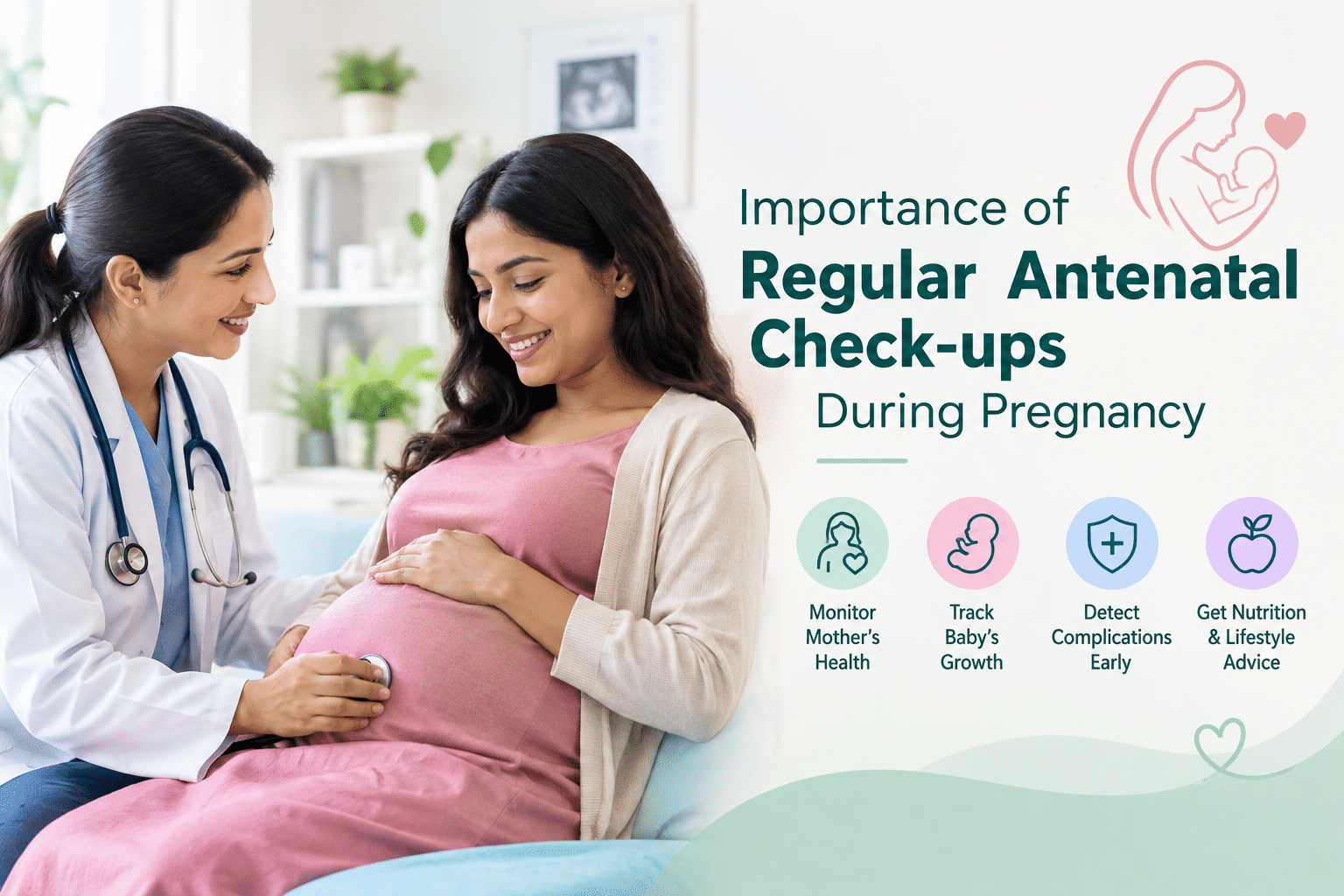
Importance of Regular Antenatal Check-ups During Pregnancy
Pregnancy is an exciting time, but it also brings many physical and emotional changes. Regular antenatal check-ups help you and your healthcare team follow these changes, identify possible problems early, and make informed decisions about your care.
Antenatal care, also called prenatal care, is the healthcare a woman receives during pregnancy. It is not only about checking the baby’s growth. A good antenatal visit also looks at the mother’s health, nutrition, blood pressure, symptoms, medications, emotional well-being, and any factors that may affect pregnancy.
What Are Antenatal Check-ups?
An antenatal check-up is a scheduled visit with an obstetrician, gynaecologist, midwife or other qualified healthcare professional during pregnancy.
The exact care provided at each appointment depends on how far the pregnancy has progressed and the mother’s individual health needs. Routine prenatal care may include measurements, physical assessment, laboratory tests, ultrasound examinations, discussions about symptoms, nutrition advice, and preparation for birth.
Why Are Regular Antenatal Check-ups Important?
Some pregnancy-related health problems can develop without obvious symptoms. Regular appointments allow your healthcare provider to look for changes that you may not notice yourself.
Monitor the Mother’s Health
Blood pressure, weight, symptoms, medical history and other health measurements can be monitored throughout pregnancy.
Follow the Baby’s Growth
Your healthcare provider can monitor fetal development and use appropriate examinations or ultrasound when needed.
Identify Pregnancy Complications
Regular assessment can help identify conditions such as high blood pressure or gestational diabetes that may require further evaluation and management.
Receive Personalised Advice
Antenatal visits are a chance to discuss nutrition, physical activity, medicines, vaccinations, symptoms and questions about pregnancy.
When Should You Start Antenatal Care?
It is a good idea to arrange your first pregnancy appointment early, rather than waiting until you are several months pregnant. Early care gives your healthcare provider an opportunity to review your health history, medications, previous pregnancies and other factors that may influence your care.
How Often Should You Have Antenatal Check-ups?
There is no single appointment schedule that is suitable for every pregnant woman. A low-risk pregnancy and a pregnancy with medical or obstetric risk may require different levels of monitoring.
The first visit generally focuses on confirming and assessing the pregnancy, reviewing medical and pregnancy history, and planning appropriate tests and care.
Visits continue to monitor maternal health and fetal development. Depending on your circumstances, screening and diagnostic tests may be recommended.
Visits generally become more focused on monitoring the mother and baby, preparing for birth, and recognising problems that require timely care.
What Happens During an Antenatal Check-up?
Your appointment will depend on your stage of pregnancy and individual needs. Common elements of antenatal care may include:
- Checking blood pressure and weight.
- Reviewing symptoms and general health.
- Monitoring fetal growth and development.
- Checking fetal heart sounds when appropriate.
- Discussing nutrition and healthy lifestyle habits.
- Reviewing medicines, supplements and relevant medical conditions.
- Arranging blood, urine or other tests when indicated.
- Discussing questions, concerns and emotional well-being.
- Providing information about birth preparation and pregnancy warning signs.
What Tests Are Done During Pregnancy?
Pregnancy tests are not identical for everyone. Your doctor recommends investigations based on your stage of pregnancy, medical history, symptoms and risk factors.
Common examples include:
- Complete blood count to check for problems such as anaemia.
- Blood group and Rh factor testing.
- Urine testing and, when appropriate, urine culture.
- Screening for certain infections.
- Blood glucose testing for gestational diabetes at the appropriate stage.
- Ultrasound examinations when clinically indicated.
- Other screening or diagnostic tests based on individual circumstances.
Antenatal Visits Are Also About Nutrition
Eating well during pregnancy is important for both mother and baby. Antenatal appointments provide an opportunity to discuss your diet and whether you need specific supplements.
Folic acid is especially important early in pregnancy, while iron supplementation is commonly recommended during pregnancy according to clinical guidance and individual needs. Your doctor can advise you on the right supplement, dose and duration rather than relying on self-prescribed products.
If you have questions about food, nausea, constipation, heartburn, weight gain or supplements, bring them up during your appointment. Small changes can often make pregnancy more comfortable.
Who May Need More Frequent Antenatal Monitoring?
Some women need closer monitoring because of their medical history or because a complication develops during pregnancy.
Additional appointments or tests may be recommended for women with conditions such as diabetes or high blood pressure, as well as certain pregnancy-related complications, multiple pregnancies or other risk factors.
This does not mean that every pregnancy with a risk factor will have a complication. It means the pregnancy may need a more individualised monitoring plan.
When Should You Contact Your Doctor?
Regular appointments are important, but you should not wait for your next scheduled visit if you develop a concerning symptom.
Seek prompt medical advice for concerning symptoms
Depending on your stage of pregnancy, symptoms that require prompt medical assessment may include vaginal bleeding, severe abdominal pain, severe headache or visual changes, significant swelling, leaking fluid, fever, difficulty breathing, or a noticeable change in fetal movements later in pregnancy.
If you believe you are experiencing an emergency, seek urgent medical care rather than waiting for a routine appointment.
Questions to Ask During Your Antenatal Visit
Your antenatal appointment is also a chance to speak openly with your healthcare provider. You can ask about:
- Is my blood pressure within the expected range?
- Is my baby’s growth progressing as expected?
- Which tests do I need at this stage?
- Which supplements should I take?
- What foods or activities should I avoid?
- Which symptoms should make me call the hospital?
- When should I return for my next appointment?
Explore Pregnancy & Women’s Healthcare at Jeevika Hospital
If you are looking for pregnancy and women’s healthcare services in Marathahalli, you can learn more about Jeevika Hospital’s Gynecology & Obstetrics services .
You can also meet the hospital’s Obstetrics & Gynaecology doctors and learn more about their areas of expertise.
If you are ready to discuss your pregnancy care, you can contact Jeevika Hospital or request an appointment .
Key Takeaway
Regular antenatal check-ups are an important part of a healthy pregnancy. They allow your healthcare team to monitor your health, follow your baby’s development, recommend appropriate tests, discuss nutrition and lifestyle, and respond to problems when they arise.
Most importantly, antenatal care is not just about tests. It is an opportunity to ask questions, understand what is happening during your pregnancy and make decisions together with your healthcare provider.
Start pregnancy care early, keep your scheduled appointments and tell your doctor about any new or unusual symptoms. Your antenatal care plan should always be tailored to your individual pregnancy.
Looking for Antenatal Care in Marathahalli?
Jeevika Hospital provides obstetrics and gynaecology care in Marathahalli, Bangalore. Speak with the healthcare team about your pregnancy care and appointment requirements.
Book an Appointment