
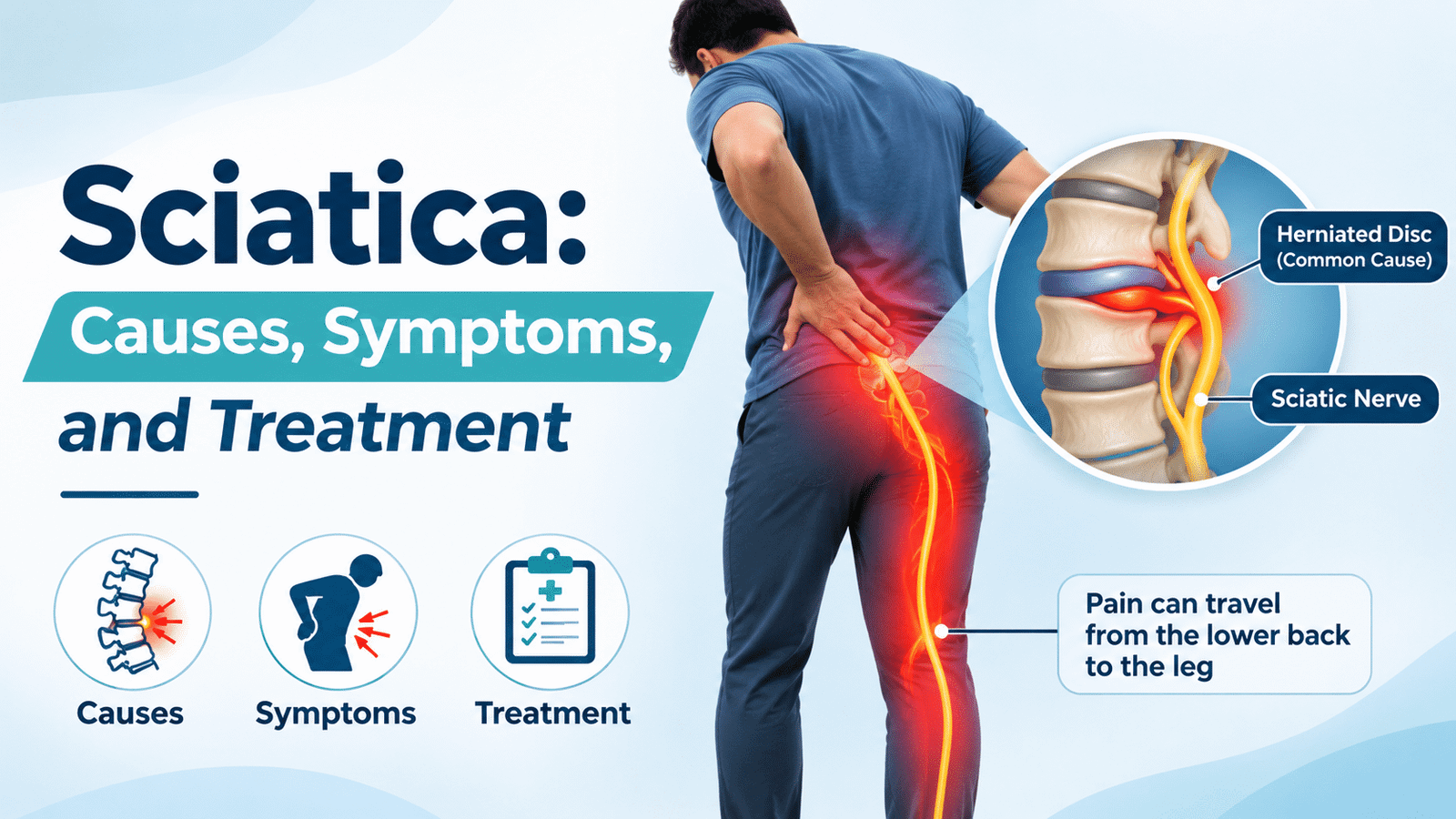
Sciatica: Causes, Symptoms, and Treatment
Are you experiencing pain that starts in your lower back and travels down your leg? Do you feel tingling, numbness, or a burning sensation while sitting, standing, or walking? These symptoms may be related to sciatica.
Sciatica is a condition that develops when the sciatic nerve or its nerve roots become irritated or compressed. The pain can affect everyday activities, including sitting at work, climbing stairs, sleeping, and walking.
The good news is that many people with sciatica improve with appropriate treatment, regular movement, and guided exercises. However, persistent or severe symptoms should not be ignored.
- Sciatica usually causes pain that travels from the lower back or buttock down one leg.
- A slipped or herniated disc is one of the common causes.
- Symptoms may include burning pain, tingling, numbness, and leg weakness.
- Treatment may include activity modification, physiotherapy, medication, and selected medical procedures.
- Sudden bladder or bowel problems, saddle numbness, or progressive leg weakness require emergency medical assessment.
1. What Is Sciatica?
Sciatica is nerve-related pain that travels along the path of the sciatic nerve. This is the largest nerve in the human body. It begins in the lower back, passes through the buttock, and travels down the back of each leg towards the foot.
The sciatic nerve is formed by nerve roots that emerge from the lower part of the spine. When one of these nerve roots becomes irritated, inflamed, or compressed, a person may experience pain or other unusual sensations along the nerve’s pathway.
Unlike ordinary muscle pain, sciatica often travels beyond the lower back. Some people experience pain mainly in the buttock or thigh, while others feel discomfort extending towards the calf, ankle, or toes.
Sciatica commonly affects one side of the body, although symptoms can occasionally affect both legs.
It is important to understand that sciatica is a description of symptoms rather than a specific disease. Identifying the underlying cause helps doctors decide on the right treatment.
2. Common Causes of Sciatica
Sciatica usually develops when a nerve root in the lower spine becomes irritated or compressed. Several spinal conditions and injuries can contribute to this problem.
1. Herniated or Slipped Disc
A herniated disc is one of the most common causes of sciatica. The discs between the spinal bones act as cushions and help the spine move comfortably.
When the soft inner material of a disc pushes through its outer layer, it may irritate or compress a nearby nerve root. This can produce pain that travels from the lower back into the leg.
2. Spinal Stenosis
Spinal stenosis refers to narrowing of the spaces within the spine. This narrowing can put pressure on the nerves that travel through the spinal canal or openings between the vertebrae.
People with lumbar spinal stenosis may experience leg pain, numbness, or weakness. Symptoms may become worse while standing or walking and improve when sitting or leaning forward.
3. Degenerative Disc Disease
As people age, spinal discs can gradually lose some of their height, flexibility, and water content. These age-related changes may contribute to nerve irritation or narrowing around the spinal nerves.
Not everyone with disc degeneration experiences pain. Treatment depends on the symptoms and clinical examination.
4. Spondylolisthesis
Spondylolisthesis occurs when one vertebra slips forward over the bone below it. Depending on its severity, this condition may narrow the space available for nearby nerves and cause sciatica-like symptoms.
5. Spinal or Back Injuries
Injuries caused by falls, accidents, or heavy physical activities may affect the spine and surrounding structures. In some cases, these injuries can irritate or compress a nerve.
6. Piriformis-Related Nerve Irritation
The piriformis is a small muscle located deep in the buttock. Irritation or tightness around this muscle can sometimes cause pain that resembles sciatica.
However, piriformis-related pain is not always true spinal nerve-root sciatica. A proper examination helps distinguish between these conditions.
3. Symptoms of Sciatica
Sciatica symptoms can range from mild discomfort to severe pain that affects daily activities. The exact symptoms depend on which nerve root is irritated and how severely it is affected.
Common symptoms include:
Lower Back Pain
Some people experience pain in the lower back along with discomfort in the buttock and leg. However, leg pain is often more noticeable than back pain.
Pain Travelling Down One Leg
A shooting or burning sensation may start in the lower back or buttock and travel down the back or side of the thigh and leg. The pain may extend to the foot or toes.
Tingling Sensation
You may experience pins and needles in the leg or foot. This sensation can become more noticeable after sitting or remaining in one position for a long time.
Numbness
Some people experience reduced sensation in parts of the leg or foot. Numbness should be evaluated, especially when it is new or worsening.
Muscle Weakness
When nerve compression affects muscle function, you may notice difficulty lifting the foot, standing on your toes, or walking normally.
Pain That Gets Worse With Certain Activities
Sciatic nerve pain may increase during prolonged sitting, bending, coughing, sneezing, or certain movements. The pattern differs from person to person.
4. Who Is at Risk of Developing Sciatica?
Sciatica can affect adults of different ages. However, certain factors may increase the likelihood of developing lower back and nerve-related problems.
- Age: Age-related changes in spinal discs and joints may increase the risk.
- Prolonged sitting: Spending long periods sitting without movement may aggravate existing back symptoms.
- Heavy lifting: Repeated lifting with poor technique can strain the lower back.
- Excess body weight: Additional body weight may increase mechanical stress on the spine.
- Limited physical activity: Poor physical conditioning may affect back strength and movement tolerance.
- Smoking: Smoking is associated with an increased risk of spinal disc problems.
- Previous back injuries: Earlier injuries may contribute to ongoing spinal problems.
Having one or more risk factors does not mean you will definitely develop sciatica. Maintaining regular physical activity and taking care of your back can help support spinal health.
5. How Is Sciatica Diagnosed?
Correct diagnosis is important because several conditions can cause lower back pain, leg pain, or numbness. A doctor will assess your symptoms, medical history, and physical condition before recommending treatment.
Medical History
Your doctor may ask questions such as:
- When did the pain begin?
- Does the pain travel from your back to your leg?
- Does sitting, walking, or bending make it worse?
- Are you experiencing tingling, numbness, or muscle weakness?
- Have you experienced a previous back injury?
Physical Examination
A physical examination may include checking your walking pattern, leg strength, sensation, reflexes, and lower back movements.
Your doctor may also perform a straight leg raise test. During this examination, the doctor gently raises your leg while you lie on your back to check whether the movement reproduces your symptoms.
Imaging Tests
Not everyone with sciatica needs an imaging test immediately. Your doctor may recommend imaging when symptoms are severe, persistent, unusual, or suggest an underlying condition that requires further investigation.
- MRI scan: Helps examine spinal discs, nerve roots, and other soft tissues.
- X-ray: Can help identify certain bone-related changes, alignment problems, or fractures.
- CT scan: May be recommended when more detailed information about spinal bones is required.
- Nerve conduction studies or EMG: May be considered in selected cases to assess nerve and muscle function.
The choice of test depends on your symptoms and examination findings. Routine early scanning is not necessary for every patient with uncomplicated sciatica.
6. Sciatica Treatment Options
Sciatica treatment depends on the underlying cause, severity of pain, duration of symptoms, and whether nerve function is affected.
Many people improve without surgery. Doctors generally begin with suitable non-surgical treatment when there are no emergency warning signs.
1. Activity Modification
When experiencing sciatic nerve pain, complete bed rest is usually not recommended. Gentle movement and gradually returning to normal activities can support recovery.
Your doctor may advise you to temporarily modify activities that increase pain, such as heavy lifting or prolonged sitting.
2. Physiotherapy
Physiotherapy can play an important role in managing sciatica. A physiotherapist assesses your movement, strength, flexibility, and pain levels before developing an individual exercise programme.
Depending on your condition, the programme may include:
- Gentle mobility exercises.
- Core and abdominal strengthening.
- Back and hip muscle strengthening.
- Selected nerve mobility exercises.
- Posture and movement training.
Exercises should be selected according to your symptoms. Stop an exercise that causes significant worsening pain, new numbness, or weakness and seek professional advice.
3. Medication
A doctor may recommend medication to manage pain or inflammation, depending on your medical history and the suspected cause.
Some anti-inflammatory medicines may not be suitable for people with kidney disease, stomach ulcers, certain heart conditions, or other health problems.
Medicines used for nerve pain also have specific risks and are not appropriate for everyone. Do not start prescription medicines, steroids, or strong painkillers without medical advice.
4. Heat or Cold Therapy
Some people find relief by applying a wrapped cold pack or a warm compress to the painful area for short periods.
Avoid placing ice or very hot objects directly on the skin. People with reduced skin sensation should take extra care to prevent burns or cold injuries.
5. Epidural Steroid Injections
For selected patients with severe sciatica, a specialist may consider an epidural injection containing corticosteroid and local anaesthetic.
The aim is to reduce inflammation around an affected nerve root and provide temporary symptom relief. The benefits vary, and injections are not suitable for every patient.
6. Surgical Treatment
Surgery may be considered when sciatica causes significant ongoing pain or functional limitations despite appropriate non-surgical treatment, or when there is serious or progressive neurological weakness.
Depending on the underlying spinal problem, a surgeon may recommend:
- Microdiscectomy: Removal of the part of a herniated disc pressing on a nerve.
- Spinal decompression: Removal of tissue or bone to create more space for compressed nerves.
The decision to undergo surgery depends on the clinical findings, imaging results, overall health, and expected benefits and risks.
7. Home Care and Pain Management for Sciatica
Along with medical treatment, simple daily habits may help manage symptoms and improve comfort.
Stay Gently Active
Try short walks or other comfortable movements instead of remaining in bed for long periods. Increase activity gradually according to your tolerance.
Avoid Sitting for Too Long
If you work at a desk, take regular movement breaks. Change your position throughout the day and avoid sitting continuously for several hours.
Maintain a Comfortable Sleeping Position
Choose a sleeping position that does not increase your symptoms. Some people find it comfortable to sleep on their side with a pillow between their knees.
Use Safe Lifting Techniques
Keep heavy objects close to your body, bend through your hips and knees, and avoid twisting your back while lifting.
Follow Professional Exercise Advice
Not every stretch or online exercise is suitable for every type of sciatica. Follow a programme recommended by your doctor or physiotherapist.
8. How to Prevent Sciatica
Although sciatica cannot always be prevented, maintaining healthy movement habits may reduce the risk of some back-related problems and help protect spinal health.
- Exercise regularly to improve strength and flexibility.
- Include suitable core-strengthening activities in your fitness routine.
- Maintain a healthy body weight.
- Take breaks from prolonged sitting.
- Use correct lifting techniques.
- Maintain comfortable posture while working at a computer.
- Avoid smoking.
- Address recurring back pain early with professional guidance.
Remember that good posture alone cannot prevent every spinal problem. Regular movement, appropriate exercise, and early medical advice are equally important.
9. When Should You See a Doctor for Sciatica?
You should consult a doctor if:
- Leg pain continues for several weeks without improvement.
- Pain interferes with sleep, work, or daily activities.
- You experience persistent tingling or numbness.
- Walking or standing becomes increasingly difficult.
- You notice weakness in your leg or foot.
- Pain repeatedly returns or becomes progressively worse.
Emergency Warning Signs: Do Not Ignore These Symptoms
Rarely, severe nerve compression can cause a condition called cauda equina syndrome. This is a medical emergency that requires immediate hospital assessment.
Seek emergency medical attention if you experience:
- Difficulty starting urination or inability to pass urine.
- Loss of bladder or bowel control.
- Numbness around the inner thighs, genitals, buttocks, or anus (saddle area).
- Severe or progressive weakness in one or both legs.
- New sciatica symptoms in both legs, particularly with other neurological symptoms.
Do not wait for these symptoms to improve on their own.
10. Why Early Assessment Matters
Living with ongoing leg pain can affect your ability to work, exercise, travel, and enjoy everyday activities. Ignoring persistent symptoms may delay the identification of the underlying problem.
An early medical assessment helps determine whether your symptoms are related to a spinal disc problem, nerve compression, or another condition. Based on the findings, your doctor can recommend an appropriate treatment plan.
If you are experiencing recurring lower back pain or pain travelling down your leg, consider consulting an orthopaedic specialist for an assessment.
11. Frequently Asked Questions About Sciatica
1. What is the main cause of sciatica?
A herniated or slipped disc is one of the most common causes of sciatica. It can irritate or compress a nerve root in the lower spine, causing pain that travels down the leg. Other causes include spinal stenosis and spondylolisthesis.
2. What are the first signs of sciatica?
Early symptoms may include pain in the lower back or buttock that travels down one leg. Tingling, burning sensations, numbness, and leg discomfort may also occur.
3. Can sciatica go away on its own?
Yes. Many cases improve over a few weeks to a few months with appropriate activity modification and conservative treatment. However, persistent or worsening symptoms should be assessed by a doctor.
4. How long does sciatica take to heal?
Recovery varies depending on the cause and severity. Many people improve within several weeks, while others may experience symptoms for several months or longer.
5. Is walking good for sciatica?
Gentle walking can help many people remain active during recovery. Start with short distances and increase gradually. If walking causes significant worsening pain or weakness, seek medical advice.
6. Is sitting harmful for sciatica?
Sitting is not necessarily harmful, but prolonged sitting may aggravate symptoms in some people. Take regular breaks, change positions, and avoid remaining in one position for too long.
7. Can sciatica cause permanent nerve damage?
Most people recover without permanent nerve damage. However, severe or prolonged nerve compression can sometimes cause lasting weakness or sensory changes. Progressive neurological symptoms need prompt assessment.
8. Does sciatica always require surgery?
No. Most people do not require surgery. Treatment commonly starts with activity modification, physiotherapy, and appropriate medical management. Surgery is considered in selected cases.
9. Which doctor should I consult for sciatica?
An orthopaedic specialist or a spine specialist can assess sciatica and identify its underlying cause. Depending on your symptoms, you may also benefit from physiotherapy or further specialist care.
10. Can exercise make sciatica worse?
Some exercises may aggravate symptoms if they are unsuitable for your condition. A doctor or physiotherapist can help select exercises that match your symptoms and physical ability.
Medical disclaimer
This article is intended for general educational purposes and should not replace professional medical advice, diagnosis, or treatment.
