
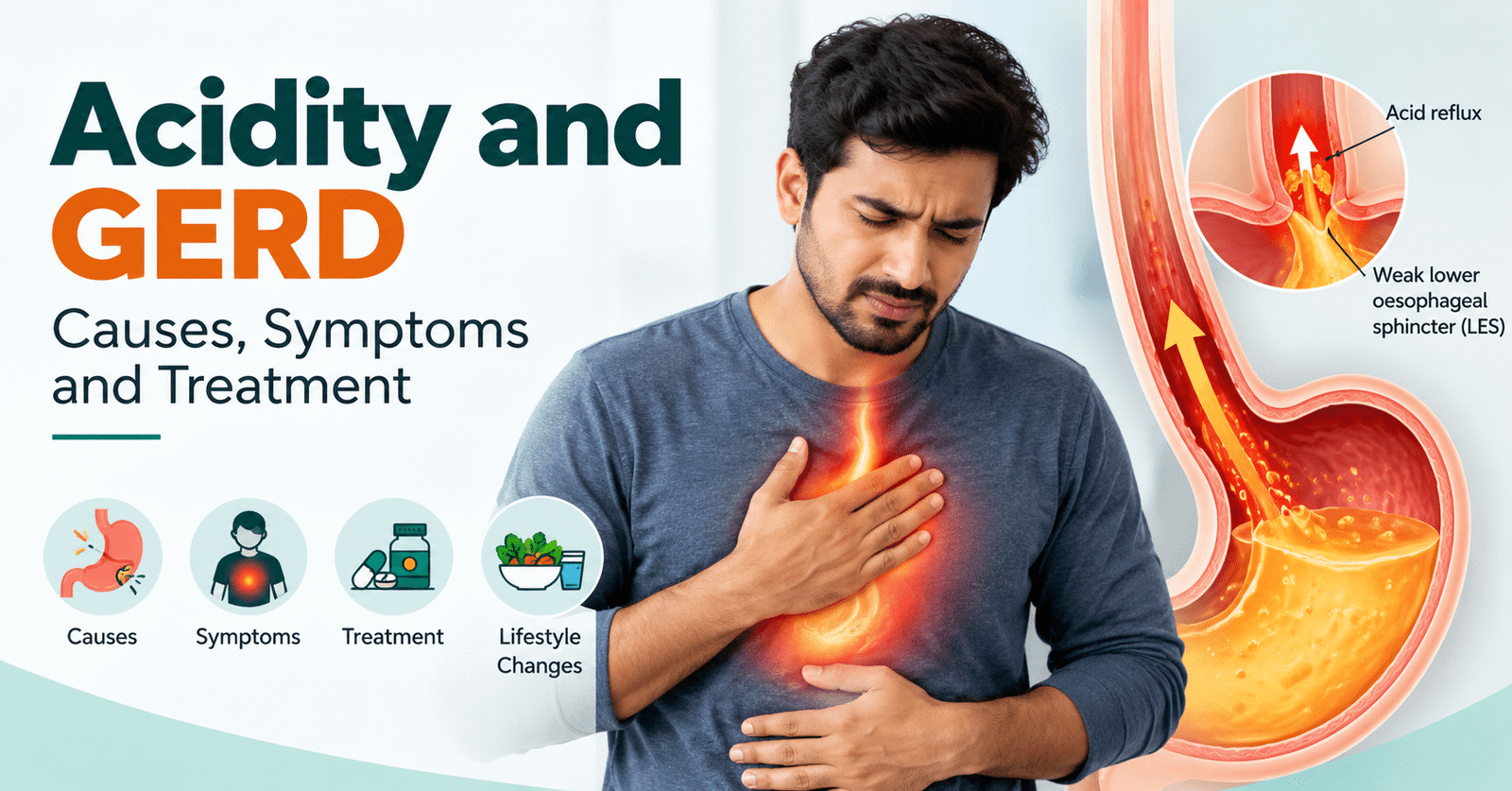
Acidity and GERD: Causes, Symptoms and Treatment
Do you frequently experience a burning sensation in your chest after eating? Does sour liquid sometimes come up into your throat, especially when you lie down after a meal? These symptoms are commonly associated with acidity and acid reflux.
Occasional acidity may happen after a heavy meal. However, when acid reflux happens repeatedly and affects your daily life, it could be a sign of Gastroesophageal Reflux Disease (GERD).
Understanding the causes, recognising the symptoms and getting the right treatment can help prevent discomfort and reduce the risk of complications. In this article, we explain everything you need to know about acidity and GERD in simple terms.
1. What Is Acidity?
Acidity is a commonly used term for symptoms such as heartburn, a burning sensation in the upper abdomen or chest, and sour burps. It often occurs when stomach contents move backwards into the food pipe, a condition known as acid reflux.
Your stomach naturally produces hydrochloric acid to break down food and support digestion. The stomach has a protective lining that helps prevent this acid from damaging its walls.
However, when stomach contents move into the oesophagus (food pipe), they can irritate its sensitive lining and cause a burning sensation.
Occasional acid reflux is common and does not necessarily mean you have a digestive disease. Frequent or troublesome symptoms need medical attention.
2. What Is GERD?
GERD stands for Gastroesophageal Reflux Disease. It is a long-term digestive condition in which stomach contents repeatedly flow backwards into the oesophagus, causing troublesome symptoms or complications.
A ring-shaped muscle at the lower end of the oesophagus is called the lower oesophageal sphincter (LES). It normally opens to allow food into the stomach and closes to prevent stomach contents from flowing backwards.
When this muscle becomes weak or relaxes at inappropriate times, acid and other stomach contents can travel back into the food pipe.
Repeated exposure to stomach acid can irritate the oesophagus and sometimes cause inflammation or other complications.
Acidity occasionally after a meal is not the same as GERD. If symptoms occur frequently, disturb your sleep or interfere with daily activities, consult a gastroenterologist for an evaluation.
3. Difference Between Acidity, Acid Reflux and GERD
These terms are often used interchangeably, but they do not mean exactly the same thing.
| Condition | Meaning | Common experience |
|---|---|---|
| Acidity | A common term for acid-related digestive discomfort. | Burning sensation or sour burps. |
| Acid reflux | Movement of stomach contents backwards into the oesophagus. | Heartburn or sour liquid coming into the throat. |
| GERD | A persistent or troublesome form of reflux that causes symptoms or complications. | Repeated heartburn, regurgitation or other reflux-related symptoms. |
Identifying the type and frequency of your symptoms helps doctors decide whether further tests or treatment are necessary.
4. Common Causes of Acidity and GERD
Several factors can contribute to acidity and GERD. Some affect the lower oesophageal sphincter, while others increase pressure on the stomach or make reflux symptoms more noticeable.
1. Weak Lower Oesophageal Sphincter
The lower oesophageal sphincter acts like a valve between the food pipe and stomach. If it does not close properly, stomach contents can move upwards and cause acid reflux.
2. Eating Large Meals
Eating large portions at one time can stretch the stomach and increase the likelihood of reflux, particularly when you lie down soon after eating.
3. Being Overweight or Obese
Excess body weight, particularly around the abdomen, can increase pressure on the stomach. This may make it easier for stomach contents to move into the oesophagus.
4. Pregnancy
Hormonal changes during pregnancy can relax the lower oesophageal sphincter. The growing uterus can also increase pressure on the stomach, making heartburn more common.
5. Smoking
Smoking can affect the normal function of the lower oesophageal sphincter and may increase reflux symptoms.
6. Hiatal Hernia
A hiatal hernia occurs when part of the stomach moves upwards through an opening in the diaphragm. This can interfere with the normal barrier against reflux.
7. Certain Medicines
Some medicines may worsen reflux symptoms in certain people. These include certain blood pressure medicines, sedatives, some asthma medicines and anti-inflammatory painkillers.
Do not stop prescribed medicines on your own. Speak with your doctor if you notice that your symptoms started or worsened after beginning a medicine.
5. Symptoms of Acidity and GERD
The symptoms can vary from person to person. Some people experience occasional heartburn, while others have repeated discomfort that affects eating, sleeping and everyday activities.
Common Symptoms
- Heartburn: A burning feeling behind the breastbone, sometimes spreading towards the throat.
- Acid regurgitation: Sour or bitter liquid coming back into the mouth or throat.
- Sour burping: Frequent burping accompanied by an acidic taste.
- Chest discomfort: A feeling of burning or pain in the chest.
- Nausea: A feeling of sickness, particularly after eating.
- Difficulty swallowing: A sensation that food is sticking in the throat or chest.
- Chronic cough: A persistent cough that may sometimes be associated with reflux.
- Hoarseness: Changes in the voice, particularly in the morning.
Not everyone with GERD experiences heartburn. Some people mainly notice throat symptoms, regurgitation or swallowing difficulties.
Chest pain should never automatically be assumed to be acidity. Heart-related conditions can cause similar symptoms. Sudden or severe chest pain, particularly with breathlessness, sweating, dizziness or pain spreading to the arm or jaw, requires immediate emergency medical attention.
6. Foods and Habits That Can Trigger Acid Reflux
Food triggers are different for each person. A food that causes discomfort in one individual may not affect another.
Some commonly reported triggers include:
- Spicy foods and heavily seasoned meals.
- Deep-fried and high-fat foods.
- Tomatoes and tomato-based preparations.
- Oranges, lemons and other citrus fruits.
- Chocolate.
- Coffee, tea and other caffeinated beverages.
- Carbonated drinks.
- Mint-based products.
- Alcoholic beverages.
Eating Habits That May Worsen Acidity
- Eating large meals late at night.
- Lying down immediately after eating.
- Eating too quickly.
- Going to bed soon after dinner.
- Wearing very tight clothing around the abdomen.
Maintain a food and symptom diary for two weeks. Record what you eat, when symptoms occur and how severe they are. This can help you identify your personal triggers without unnecessarily avoiding many foods.
7. How Is GERD Diagnosed?
A gastroenterologist usually starts by understanding your symptoms, medical history, eating habits and medication use.
Many people with typical reflux symptoms can initially be assessed based on their history and response to treatment. However, additional tests may be recommended if symptoms persist, the diagnosis is uncertain or warning signs are present.
1. Medical History and Physical Examination
Your doctor may ask about the frequency of heartburn, food triggers, nighttime symptoms, swallowing difficulties and medicines you take.
2. Upper GI Endoscopy
An upper gastrointestinal endoscopy uses a thin, flexible tube with a camera to examine the oesophagus, stomach and upper part of the small intestine.
It can help identify inflammation, ulcers, narrowing or other abnormalities. A small tissue sample may be collected for examination when needed.
3. Ambulatory pH Monitoring
This test measures acid exposure in the oesophagus over a period of time. It can help confirm whether reflux is responsible for symptoms.
4. Oesophageal Manometry
This test measures the pressure and movement of muscles in the oesophagus. It may be recommended when doctors need to assess swallowing function or investigate persistent symptoms.
Not every patient requires all these tests. Your doctor will recommend investigations based on your symptoms and clinical findings.
8. Acidity and GERD Treatment Options
Acidity and GERD treatment depends on the severity of symptoms, their frequency and whether any complications are present.
The main aim of treatment is to reduce reflux, relieve discomfort and allow any irritated oesophageal tissue to heal.
1. Antacids
Antacids help neutralise stomach acid and may provide quick, short-term relief from occasional heartburn.
They are generally used for mild symptoms. They do not treat the underlying cause of persistent GERD and should not be relied on every day without medical advice.
2. H2-Receptor Blockers
These medicines reduce the amount of acid produced by the stomach. They may be recommended for some people with mild or intermittent reflux symptoms.
3. Proton Pump Inhibitors (PPIs)
Proton pump inhibitors reduce stomach acid production and are commonly prescribed for GERD. They can help relieve symptoms and heal acid-related inflammation of the oesophagus.
Examples include omeprazole, pantoprazole and esomeprazole. The choice of medicine, dose and treatment duration should be decided by a doctor.
When prescribed, PPIs are generally taken before a meal, according to the specific medicine and your doctor’s instructions.
4. Other Medicines
In selected cases, doctors may recommend other treatments depending on the underlying problem. The right option depends on the patient’s diagnosis rather than symptoms alone.
5. Surgical Treatment
When GERD is confirmed and symptoms remain troublesome despite appropriate medical management, or when long-term treatment considerations warrant it, an anti-reflux procedure may be discussed.
One option is fundoplication, a surgical procedure that strengthens the barrier between the stomach and oesophagus. Other selected procedures may be considered for suitable patients after specialist evaluation and appropriate testing.
Avoid self-medicating with acid-reducing medicines for long periods. Your doctor can help determine whether you need short-term treatment, ongoing medication or additional investigations.
9. Lifestyle Changes and Home Care for Acidity
Simple daily changes can make a meaningful difference for many people with acid reflux. These measures are often used alongside medical treatment.
Eat Smaller Meals
Try eating smaller portions instead of consuming a very large meal at once. Eat slowly and avoid overeating.
Avoid Lying Down After Meals
Allow at least two to three hours between your last meal and bedtime. This gives your stomach time to empty and may reduce nighttime reflux.
Maintain a Healthy Weight
If you are overweight, gradual weight reduction may help reduce pressure on your stomach and improve GERD symptoms.
Elevate Your Head While Sleeping
If you experience nighttime reflux, raise the head of your bed using a suitable wedge or bed elevation. Simply adding multiple soft pillows may not provide the same benefit.
Sleep on Your Left Side
Some people experience fewer nighttime reflux symptoms when sleeping on their left side.
Stop Smoking
Avoid smoking and exposure to tobacco smoke. Quitting smoking can improve overall health and may help reduce reflux symptoms.
Identify Your Food Triggers
Pay attention to how your body responds to different foods. Reduce foods that consistently trigger symptoms rather than following unnecessarily restrictive diets.
Stay Physically Active
Regular physical activity can support healthy weight management. Avoid strenuous exercise immediately after meals if it causes reflux.
10. Possible Complications of Untreated GERD
Persistent GERD may cause complications if acid repeatedly irritates and damages the oesophageal lining.
Oesophagitis
Repeated exposure to stomach acid can cause inflammation of the oesophagus. This may result in pain, discomfort or difficulty swallowing.
Oesophageal Stricture
Long-term inflammation can sometimes lead to scar tissue and narrowing of the food pipe. This may make swallowing difficult.
Barrett’s Oesophagus
Some people with long-standing GERD develop changes in the cells lining the lower oesophagus. This condition is known as Barrett’s oesophagus and is associated with an increased risk of oesophageal cancer.
However, most people with GERD do not develop oesophageal cancer. Doctors recommend further assessment and monitoring for selected patients based on their risk factors and test results.
11. When Should You See a Doctor for Acidity?
Occasional heartburn may improve with simple lifestyle changes. However, recurring symptoms should not be ignored.
Consult a gastroenterologist if you experience:
- Frequent heartburn or acid reflux.
- Symptoms that disturb your sleep.
- Difficulty or pain while swallowing.
- Persistent nausea or vomiting.
- Unexplained weight loss.
- Symptoms that do not improve with appropriate treatment.
- Repeated need for over-the-counter acidity medicines.
- Vomiting blood or material that looks like coffee grounds.
- Black, tarry stools or signs of digestive tract bleeding.
- Severe or sudden chest pain.
- Chest pain accompanied by breathlessness, sweating or faintness.
Do not delay emergency assessment while trying home remedies or acidity medicines.
12. How to Prevent Acidity and GERD
Although acidity cannot always be prevented, certain habits can help reduce the frequency of symptoms.
- Eat meals at regular times and avoid overeating.
- Choose balanced meals that suit your digestive health.
- Avoid lying down for two to three hours after eating.
- Maintain a healthy body weight.
- Limit foods and drinks that trigger your symptoms.
- Avoid smoking and tobacco products.
- Stay physically active.
- Maintain a consistent sleep routine.
- Follow your doctor’s advice regarding medicines.
Remember that the goal is not to eliminate every acidic food from your diet. It is to identify what triggers your symptoms and manage the underlying condition appropriately.
13. Get Expert Care for Digestive Problems at Jeevika Hospital
Persistent acidity, heartburn and acid reflux can affect your comfort, sleep and quality of life. Identifying the cause early can help you receive appropriate treatment and avoid unnecessary complications.
At Jeevika Hospital, Marathahalli, Bangalore, patients can seek evaluation and care for digestive health concerns through the gastroenterology department.
Whether you are experiencing recurring acidity, difficulty swallowing, abdominal discomfort or symptoms of GERD, consult a qualified gastroenterologist for an individual assessment and treatment plan.
Experiencing Frequent Acidity or Heartburn?
Do not ignore recurring digestive symptoms. Speak with a gastroenterologist and understand the right treatment for your condition.
Jeevika Hospital, Marathahalli, Bangalore
Explore Gastroenterology Care14. Frequently Asked Questions About Acidity and GERD
1. What is the main cause of acidity?
Acidity-related symptoms commonly occur when stomach contents flow backwards into the oesophagus. A weak or improperly relaxing lower oesophageal sphincter, large meals, excess body weight, pregnancy and certain lifestyle factors can contribute to acid reflux.
2. What is the difference between acidity and GERD?
Acidity is a commonly used term for acid-related digestive discomfort. GERD is a persistent or troublesome condition in which stomach contents repeatedly flow back into the oesophagus and cause symptoms or complications.
3. Can GERD be cured permanently?
Many people can control GERD symptoms effectively with lifestyle changes and medication. Some carefully selected patients may benefit from anti-reflux procedures. Long-term outcomes vary depending on the cause and severity of the condition.
4. Which foods should I avoid if I have acidity?
Common triggers include spicy foods, fried foods, chocolate, coffee, citrus fruits, tomatoes and carbonated drinks. However, triggers vary between individuals. Avoid foods that consistently worsen your symptoms.
5. Is drinking milk good for acidity?
Milk may provide temporary relief for some people, but it is not a proven treatment for GERD. High-fat milk may worsen symptoms in some individuals. It should not replace appropriate medical treatment.
6. Can acidity cause chest pain?
Yes. Acid reflux can cause burning discomfort or pain in the chest. However, heart-related conditions can produce similar symptoms. New, severe or unexplained chest pain needs urgent medical assessment.
7. Is GERD a serious condition?
GERD is manageable in many people, but persistent untreated reflux can sometimes lead to oesophagitis, narrowing of the oesophagus or Barrett’s oesophagus. Medical assessment is important when symptoms are frequent or persistent.
8. When should I consult a gastroenterologist?
Consult a gastroenterologist if you experience frequent heartburn, repeated acid reflux, difficulty swallowing, unexplained weight loss or symptoms that do not improve with appropriate treatment.
9. Can stress cause acidity?
Stress may influence digestive symptoms and make some people more sensitive to discomfort. However, stress alone does not explain every case of acid reflux. Persistent symptoms should be evaluated by a doctor.
10. Can GERD occur at night?
Yes. Reflux can become more noticeable when lying down. Avoiding meals two to three hours before bedtime and elevating the head of the bed may help reduce nighttime symptoms.
Medical Disclaimer
This article is intended for general health education and awareness. It does not replace professional medical advice, diagnosis or treatment. Symptoms and treatment requirements differ between individuals. Consult a qualified healthcare professional for personalised medical guidance.

