
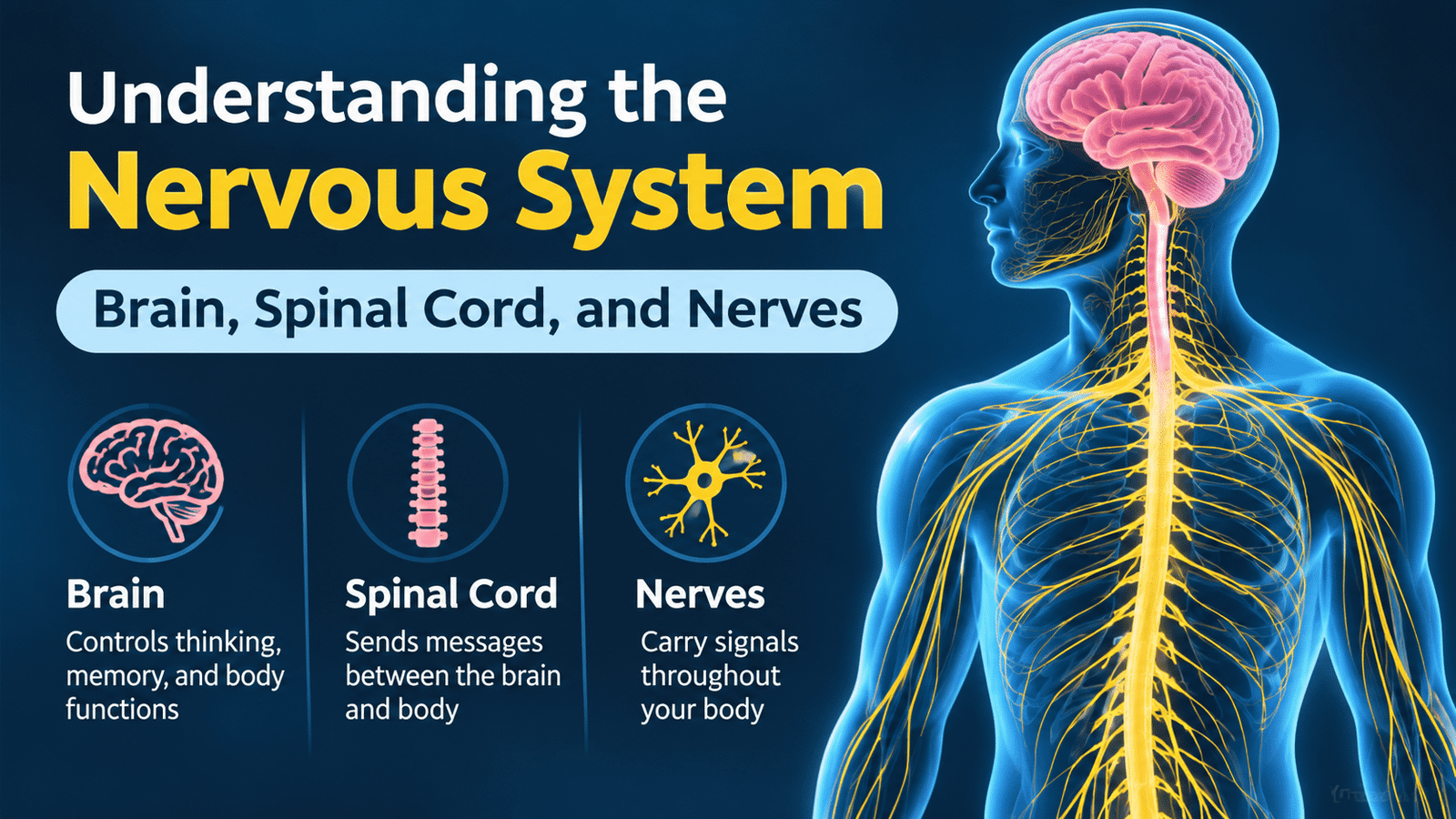
Understanding the Nervous System: Brain, Spinal Cord, and Nerves
Have you ever touched something hot and pulled your hand away before you even had time to think? Or wondered how you can walk, speak, remember a face, and breathe without consciously controlling every movement? Your nervous system makes these activities possible.
The nervous system is the body’s communication and control network. It receives information from the world around you, processes that information, and sends signals to different parts of the body. It also helps regulate important functions such as breathing, digestion, heart rate, movement, sensation, learning, and memory.
The three main structures discussed in this guide are the brain, spinal cord, and nerves. Understanding how they work together can help you recognise possible warning signs and understand when medical advice may be necessary.
What Is the Nervous System?
The nervous system is a network of specialised cells, nerve fibres, and organs that allows the body to receive and respond to information. It helps you understand your surroundings, control your muscles, recognise pain, and maintain many internal body functions.
For example, when you step onto a cold floor, sensory receptors in your skin detect the temperature. Nerves carry signals towards the spinal cord and brain, where the information is processed. Your brain can then help you decide whether to put on slippers or move somewhere warmer.
Nerve cells are called neurons. They communicate using electrical impulses and chemical messengers. Supporting cells, known as glial cells, help protect, nourish, and maintain the environment around neurons.
The nervous system has two main divisions: the central nervous system and the peripheral nervous system.
What Are the Main Parts of the Nervous System?
The nervous system is divided into two major parts based on where its structures are located and how they function.
| Part | Main structures | Primary role |
|---|---|---|
| Central nervous system (CNS) | Brain and spinal cord | Processes information and coordinates responses. |
| Peripheral nervous system (PNS) | Nerves and associated ganglia outside the CNS | Carries information between the CNS and the rest of the body. |
1. Central Nervous System
The central nervous system acts as the body’s main information processing centre. The brain interprets information and coordinates many responses, while the spinal cord carries signals between the brain and the body and also helps organise certain reflexes.
2. Peripheral Nervous System
The peripheral nervous system includes nerves outside the brain and spinal cord. These nerves carry sensory information towards the central nervous system and deliver commands to muscles, glands, and internal organs.
Together, these two divisions help the body respond to its environment while keeping internal functions running.
The Brain: The Body’s Main Control Centre
The brain is a complex organ protected by the skull and surrounded by protective membranes and cerebrospinal fluid. It receives information from the senses, coordinates movement, supports thinking and memory, and regulates many essential body functions.
Different areas of the brain have specialised roles, but they work together as connected networks. Many everyday activities, such as speaking while walking or recognising a familiar person, involve several brain regions working at the same time.
The Major Parts of the Brain
1. Cerebrum
The cerebrum is the largest part of the brain. It plays a major role in thinking, learning, memory, language, interpreting sensory information, emotions, and voluntary movement.
Its outer layer, called the cerebral cortex, contains areas involved in functions such as planning, understanding language, processing touch, and controlling intentional movements.
2. Cerebellum
The cerebellum, located towards the back of the brain, helps coordinate movement, balance, posture, and motor learning. When these functions are affected, a person may experience poor coordination or difficulty walking steadily.
3. Brainstem
The brainstem connects the brain with the spinal cord. It contains pathways and centres involved in important functions such as breathing, heart rate, alertness, swallowing, and sleep-wake regulation.
What Does the Brain Control?
- Thinking, learning, decision-making, and memory.
- Speech, understanding language, and communication.
- Vision, hearing, smell, taste, and aspects of touch perception.
- Voluntary movements such as walking, writing, and lifting objects.
- Emotional responses and behaviour.
- Coordination of essential functions such as breathing and alertness.
Brain function depends on communication among many connected areas. An injury or disease affecting one area may produce different symptoms from a condition affecting another.
Related reading: Explore neurological care information at Jeevika Hospital .
The Spinal Cord: The Communication Pathway
The spinal cord is a long bundle of nervous tissue that extends from the lower part of the brainstem through the spinal canal in the backbone. It carries signals between the brain and much of the body. It also processes certain rapid responses called reflexes.
The spinal cord is protected by the vertebral column, protective membranes, and cerebrospinal fluid. Spinal nerves branch off from it and connect with different parts of the body.
What Are the Main Functions of the Spinal Cord?
- Signal transmission: It carries sensory information towards the brain and motor commands from the brain towards the body.
- Reflex actions: It helps coordinate some quick responses without waiting for conscious processing by the brain.
- Movement and sensation: Its pathways are important for muscle control and the ability to feel touch, pain, temperature, and body position.
What Happens When the Spinal Cord Is Injured?
A spinal cord injury can interfere with movement, sensation, and automatic body functions below the affected area. The effects depend on the location and severity of the injury.
Some spinal conditions affect nearby nerve roots rather than the spinal cord itself. For example, a herniated disc may compress a nerve root and cause pain, tingling, or weakness in an arm or leg. These symptoms require assessment because several conditions can cause similar problems.
What Are Nerves and What Do They Do?
Nerves are bundles of nerve fibres that carry information between the central nervous system and other parts of the body. Many nerves contain fibres that transmit different kinds of signals.
Some fibres carry sensory information, such as the feeling of heat or pressure. Others carry motor commands that help muscles contract. Additional nerve pathways help regulate internal organs and glands.
Types of Nerve Functions
1. Sensory Nerves
Sensory pathways carry information from sensory receptors towards the central nervous system. They help you feel touch, temperature, pain, vibration, and the position of your body parts.
2. Motor Nerves
Motor pathways carry signals from the central nervous system to muscles. They allow you to perform actions such as walking, holding a cup, typing, and climbing stairs.
3. Autonomic Nerve Pathways
The autonomic nervous system regulates many involuntary functions, including aspects of heart rate, digestion, sweating, pupil size, and blood vessel activity. These processes help maintain a stable internal environment.
The autonomic nervous system includes sympathetic and parasympathetic divisions, which often have complementary effects on organs. The enteric nervous system, a network of neurons in the digestive tract, also plays an important role in gut function.
How Do Nerve Cells Send Messages?
A neuron receives signals through specialised parts of its cell membrane. When conditions are right, it generates an electrical impulse that travels along its axon. At many connections between neurons, chemical messengers called neurotransmitters help pass the signal to the next cell.
Some axons are covered by a fatty insulating layer called myelin. Myelin helps electrical signals travel efficiently along these nerve fibres.
Damage to peripheral nerves may cause numbness, burning pain, tingling, muscle weakness, or changes in sensation. The symptoms depend on which nerves are affected and why.
How Do the Brain, Spinal Cord, and Nerves Work Together?
The nervous system works through continuous communication. Sensory information travels towards the central nervous system, where it is processed. The body then produces an appropriate response when needed.
Example: Pulling Your Hand Away From a Hot Surface
- Detection: Sensory receptors in your skin detect a potentially harmful temperature.
- Signal transmission: Sensory nerve fibres carry information towards the spinal cord.
- Rapid response: Spinal circuits can activate muscles to withdraw your hand before you consciously process the pain.
- Awareness: Signals reaching the brain help you become aware of the heat and pain.
- Further action: The brain helps you decide what to do next, such as cooling the affected area or seeking care.
This is an example of a withdrawal reflex. Not every reflex follows exactly the same pathway, but the example shows how the spinal cord and brain have different yet connected roles.
Common Symptoms of Nervous System Problems
Nervous system conditions can cause many different symptoms. Some develop gradually, while others begin suddenly. A symptom alone does not establish a diagnosis, because problems involving muscles, circulation, metabolism, and other body systems can cause similar complaints.
Possible symptoms include:
- Frequent or persistent headaches.
- Numbness, tingling, or burning sensations.
- Muscle weakness or unexplained loss of coordination.
- Tremors or other involuntary movements.
- Difficulty with balance or walking.
- Changes in memory, concentration, or alertness.
- Changes in vision, speech, or swallowing.
- Seizures or episodes of unexplained loss of awareness.
- Persistent pain that follows a nerve pathway.
Seek medical assessment if symptoms persist, recur, worsen, or interfere with daily activities. A clinician can assess the pattern of symptoms and determine whether investigations are necessary.
Common Conditions That Affect the Nervous System
Many different conditions can affect the brain, spinal cord, or peripheral nerves. Some involve inflammation or infection, while others are associated with blood vessel problems, injuries, metabolic disorders, genetic factors, or gradual changes in nerve function.
1. Stroke
A stroke occurs when blood flow to part of the brain is interrupted or when bleeding occurs in or around the brain. It may cause sudden weakness, facial drooping, speech difficulties, vision changes, or problems with balance.
2. Peripheral Neuropathy
Peripheral neuropathy refers to disorders affecting peripheral nerves. Diabetes, certain vitamin deficiencies, some medicines, infections, and other conditions may contribute to nerve damage. Symptoms may include tingling, numbness, pain, or weakness.
3. Parkinson’s Disease
Parkinson’s disease is a progressive neurological condition that affects movement. Symptoms may include slowness of movement, stiffness, tremor, and balance difficulties. Symptoms and their progression vary from person to person.
4. Spinal Cord Injury
Damage to the spinal cord can disrupt communication between the brain and body. Depending on the injury, a person may experience weakness, paralysis, sensory loss, or changes in bladder and bowel function.
5. Multiple Sclerosis
Multiple sclerosis is an immune-mediated disease affecting the central nervous system. It damages myelin and other components of nerve tissue, which can disrupt communication between the brain, spinal cord, and body. Symptoms vary widely.
6. Migraine
Migraine is a neurological disorder that can cause recurring headaches, often with nausea or sensitivity to light and sound. Some people also experience temporary visual or other sensory symptoms called aura.
These conditions differ in their causes, symptoms, and treatments. A healthcare professional can help distinguish between them and recommend care based on the individual’s circumstances.
How Are Nervous System Problems Diagnosed?
Assessment usually begins with a discussion of your symptoms, medical history, medications, and how the symptoms affect your everyday life. Your doctor may then perform a neurological examination.
Depending on the findings, investigations may include:
- Neurological examination: Assessment of strength, sensation, reflexes, coordination, balance, and mental status.
- Blood tests: Used when appropriate to investigate possible causes such as blood sugar abnormalities, vitamin deficiencies, or other metabolic problems.
- MRI or CT scans: Imaging tests that may help identify structural changes, injuries, bleeding, or other abnormalities.
- Nerve conduction studies and electromyography (EMG): Tests that may help evaluate peripheral nerve function and electrical activity in muscles.
- Other specialised tests: Depending on the clinical situation, a doctor may recommend additional tests, such as an electroencephalogram (EEG) or examination of cerebrospinal fluid.
Not everyone needs all these tests. The appropriate investigation depends on the suspected condition and the results of the clinical examination.
How Can You Support Nervous System Health?
Healthy daily habits support general brain and nerve health. They cannot prevent every neurological condition, but they can help manage several risk factors and support overall well-being.
1. Eat a Balanced Diet
Include a variety of vegetables, fruits, whole grains, pulses, nuts, and suitable protein sources. Adequate nutrition supports normal nerve function. If you suspect a vitamin deficiency, seek medical advice rather than taking high-dose supplements without guidance.
2. Stay Physically Active
Regular physical activity supports cardiovascular health, mobility, sleep, and general well-being. Choose activities that match your fitness level and medical needs.
3. Get Enough Sleep
Consistent, adequate sleep supports attention, memory, mood, and everyday functioning. Speak with a healthcare professional if sleep problems persist.
4. Manage Blood Sugar and Blood Pressure
High blood sugar can damage peripheral nerves over time, and high blood pressure increases the risk of stroke. Regular health checks and appropriate treatment can help manage these risks.
5. Protect Your Head and Spine
Use a properly fitted helmet when riding a two-wheeler, wear a seat belt in a vehicle, and follow safety precautions during sports and physical work. These measures can reduce the risk of some serious injuries.
6. Avoid Smoking and Limit Alcohol
Smoking increases cardiovascular risk, while excessive alcohol consumption can contribute to nerve damage and other health problems. Seek professional support if you need help reducing or stopping these habits.
7. Attend Recommended Health Check-Ups
Regular healthcare visits can help identify and manage conditions such as diabetes and high blood pressure. Do not ignore persistent numbness, weakness, balance changes, or other new symptoms.
When Should You Seek Urgent Medical Care?
Seek emergency medical help immediately if you or someone nearby develops any of the following:
- Sudden facial drooping, weakness, or numbness, especially on one side of the body.
- Sudden difficulty speaking or understanding speech.
- Sudden loss of vision, severe dizziness, or difficulty walking.
- A sudden, extremely severe headache, particularly if it is unusual or accompanied by other neurological symptoms.
- A seizure lasting five minutes or longer, repeated seizures without recovery, or a first seizure.
- New weakness or loss of sensation after a significant head, neck, or back injury.
- New loss of bladder or bowel control with severe back pain or numbness around the groin or saddle area.
Even if sudden stroke-like symptoms disappear after a few minutes, emergency evaluation is important because they may indicate a transient ischaemic attack or another serious problem.
Frequently Asked Questions About the Nervous System
1. What are the three main parts of the nervous system?
The brain, spinal cord, and peripheral nerves are the three main structures commonly discussed when explaining the nervous system. Anatomically, the brain and spinal cord form the central nervous system, while nerves outside them belong to the peripheral nervous system.
2. What is the difference between the brain and the spinal cord?
The brain processes information and coordinates many body functions. The spinal cord carries signals between the brain and the body and helps coordinate certain reflexes.
3. What is the main function of nerves?
Nerves carry sensory information towards the central nervous system and transmit signals that control muscles, glands, and internal organs.
4. Can damaged nerves recover?
Recovery depends on the cause, location, and severity of nerve damage. Some peripheral nerve injuries improve over time, while severe injuries or certain diseases may cause lasting problems. The brain and spinal cord have different repair limitations. Medical assessment helps establish the likely cause and appropriate management.
5. What are the early signs of nerve damage?
Possible signs include persistent tingling, numbness, burning pain, reduced sensation, muscle weakness, or balance difficulties. These symptoms can have several causes, so a healthcare professional should assess persistent or worsening symptoms.
6. Which doctor treats nervous system disorders?
A neurologist diagnoses and treats many conditions involving the brain, spinal cord, and nerves. Depending on the problem, care may also involve a neurosurgeon, orthopaedic specialist, rehabilitation professional, or another clinician.
7. Can diabetes affect the nervous system?
Yes. Diabetes can damage peripheral nerves, particularly when blood glucose remains high over time. Symptoms may include numbness, tingling, burning pain, or reduced sensation in the feet and hands. Appropriate diabetes management and regular foot checks are important.
8. How can I keep my brain and nerves healthy?
Helpful habits include regular physical activity, adequate sleep, balanced nutrition, avoiding smoking, limiting alcohol, protecting the head and spine, and managing conditions such as diabetes and high blood pressure.
Conclusion
The nervous system makes it possible to think, move, feel, learn, and respond to the world around us. The brain processes information, the spinal cord carries signals and coordinates certain reflexes, and peripheral nerves connect the central nervous system with the rest of the body.
Recognising changes such as persistent numbness, unexplained weakness, or difficulty with balance can help you seek appropriate medical advice. Sudden neurological symptoms require immediate attention.
If you have concerns about your neurological health, consult a qualified healthcare professional for an assessment tailored to your symptoms and medical history.
Medical Disclaimer
Disclaimer: This article is for general educational purposes only. It does not replace professional medical advice, diagnosis, or treatment.

