
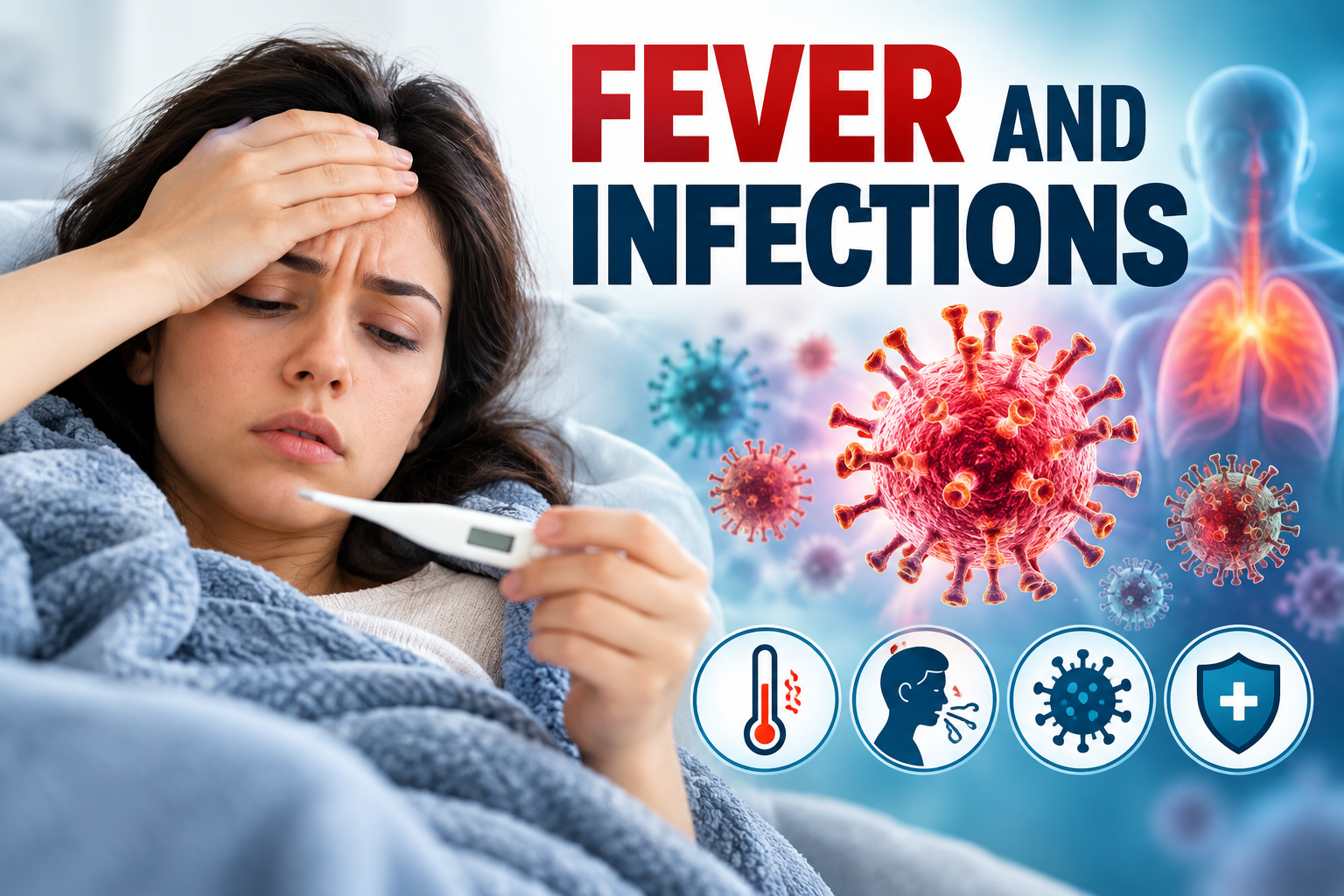
Fever and infections

Fever and Infections: Causes, Symptoms, Treatment and When to See a Doctor

Fever is one of the most common reasons people look for medical advice. Sometimes it appears with a cough or sore throat. At other times, fever may come with body pain, chills, stomach problems, burning while urinating, or unusual tiredness.

In many cases, fever is the body’s natural response to an infection. However, the temperature alone does not tell you what is causing the illness. A viral infection, bacterial infection, urinary infection, respiratory infection, or another medical condition can produce fever.

Understanding the symptoms that come with fever can help you decide when home care may be reasonable and when you should consult a doctor.

What Is a Fever?

Fever is a temporary rise in body temperature that can occur when the body responds to an illness. It is not a disease by itself. Instead, fever is usually a sign that something is happening inside the body.

Infection is one of the most common causes of fever. Viruses and bacteria can trigger an immune response, and that response may raise body temperature. Other conditions can also cause fever, so it is important to consider the complete picture rather than looking only at the thermometer.

Important:

A high temperature does not automatically mean that an infection is severe. Similarly, some serious illnesses may not always produce a high fever. Your symptoms, medical history, age, and overall condition all matter.

Why Do Infections Cause Fever?

Your immune system constantly works to identify and control harmful germs. When the body detects an infection, immune responses can affect the brain’s temperature-regulating system. This can result in a rise in body temperature.

Fever may therefore be part of the body’s response to infection rather than the illness itself. The treatment needed depends on what is causing the infection and how seriously it is affecting the person.

This is one reason why treating the number on the thermometer alone may not be enough. Finding the cause is often more important than simply bringing the temperature down.

Common Infections That Can Cause Fever

Many different infections can cause fever. The symptoms often provide clues about where the infection may be located.

1. Respiratory infections

Colds, influenza, throat infections, bronchitis and pneumonia can cause fever. You may also experience cough, sore throat, blocked or runny nose, headache, chills, fatigue or body aches.

Flu can cause symptoms that begin suddenly, including fever, muscle aches, chills, headache, tiredness and cough. Not everyone with influenza develops a fever.

2. Urinary tract infections

A urinary tract infection may cause burning while urinating, frequent urination, lower abdominal discomfort or cloudy urine. When an infection affects the kidneys, fever, chills, back or side pain and feeling very unwell may occur.

3. Gastrointestinal infections

Some infections affecting the stomach or intestines can cause fever together with diarrhoea, vomiting, nausea or abdominal pain. The main concern in these illnesses is often dehydration, particularly in children and older adults.

4. Skin and soft-tissue infections

A bacterial infection of the skin may cause redness, warmth, swelling, tenderness or pus. Fever can occur when the infection is more significant or is affecting the body more widely.

5. Other infections

Infections can affect many different parts of the body. The appropriate treatment depends on the suspected or confirmed cause, the location of the infection and the person’s overall health.

If you have a fever that is not improving, repeated infections, or symptoms that are difficult to explain, an internal medicine consultation can help identify the possible cause and guide further evaluation.

Symptoms That May Occur With Fever

Fever can appear with many different symptoms. The combination of symptoms often gives a doctor more useful information than the temperature alone.

Fever and chills

You may feel cold or start shivering even while your body temperature is rising. Chills can occur with many types of infections.

Fever and body pain

Muscle aches, headache and tiredness are common with several viral infections, including influenza.

Fever and cough

Fever with cough, sore throat or breathing symptoms may occur with respiratory infections.

Fever and vomiting

Some gastrointestinal infections can cause fever with nausea, vomiting, abdominal discomfort or diarrhoea.

Fever and urinary symptoms

Burning urination, frequent urination or pain in the back or side may point towards a urinary infection.

Fever and unusual weakness

Significant weakness, dizziness or reduced urine output can sometimes indicate dehydration or a more serious illness.

Not Every Fever Needs the Same Treatment

A short fever associated with a mild viral illness may improve with rest, fluids and supportive care. But a fever that persists, repeatedly returns, or occurs with concerning symptoms deserves medical assessment.

People with diabetes, chronic lung disease, heart disease, weakened immunity, or other long-term medical conditions may need medical advice earlier because infections can affect them differently.

Older adults and very young children also require particular attention when they develop fever or signs of infection.

How Do Doctors Find the Cause of a Fever?

There is no single test that identifies every cause of fever. A doctor usually starts by understanding your symptoms and examining you.

  1. Medical history
    The doctor may ask when the fever started, how high it has been, whether it comes and goes, and what other symptoms you have.
  2. Physical examination
    Depending on your symptoms, the doctor may examine your throat, ears, lungs, abdomen, skin and other areas.
  3. Laboratory tests
    Blood or urine tests may be recommended when the clinical assessment suggests that they are needed.
  4. Imaging or other tests
    Tests such as a chest X-ray or other investigations may be considered when symptoms point towards a particular condition.

The tests should be selected according to the patient’s symptoms and clinical findings rather than performed simply because a person has a fever.

How Are Fever and Infections Treated?

Treatment depends on the cause. There is no single medicine that is suitable for every fever.

Viral infections

Many common viral infections improve with supportive care such as adequate fluids, rest and treatment of uncomfortable symptoms. Certain viral infections may require specific antiviral treatment, particularly in people at higher risk of complications.

Bacterial infections

Some bacterial infections require antibiotics. The choice of antibiotic, dose and duration depend on the infection and the individual patient.

Treating the symptoms

Fever-reducing medicines may be recommended when a person is uncomfortable. The appropriate medicine and dose depend on age, medical conditions, other medicines being taken and other factors.

Do not self-medicate with antibiotics.

Antibiotics do not treat viral infections such as most common colds. Unnecessary antibiotic use can cause side effects and contributes to antibiotic resistance.

What Can You Do at Home for a Mild Fever?

If your symptoms are mild and you have no warning signs, simple supportive care can help you recover comfortably.

  • Drink enough fluids to avoid dehydration.
  • Get adequate rest and sleep.
  • Wear comfortable clothing and avoid excessive covering.
  • Eat light, nutritious meals if you feel able to eat.
  • Monitor your temperature if your symptoms are changing.
  • Follow the dosage instructions for any fever medicine recommended by your doctor.
  • Avoid taking antibiotics without medical advice.

If vomiting or diarrhoea is present, maintaining hydration becomes especially important. Reduced urination, very dry mouth, dizziness or unusual weakness may be signs of dehydration.

When Should You Consider an Internal Medicine Consultation?

If fever keeps returning, lasts longer than expected, or occurs together with other unexplained symptoms, An internal medicine specialist can evaluate the problem and decide whether further tests are required.

Do You Always Need Antibiotics for Fever?

No. Fever itself is not a reason to take an antibiotic.

Antibiotics are medicines used to treat certain bacterial infections. They do not work against viruses. Many common respiratory illnesses are caused by viruses and improve without antibiotics.

Taking an antibiotic when it is not needed may expose you to unnecessary side effects and contributes to antibiotic resistance. A doctor can decide whether an antibiotic is appropriate after considering your symptoms, examination and, when necessary, test results.

When Should You See a Doctor for Fever?

Consider medical evaluation when fever is persistent, keeps returning, or is accompanied by symptoms that concern you.

  • Fever lasting for several days without clear improvement.
  • Fever that improves and then returns or becomes worse.
  • Difficulty breathing or shortness of breath.
  • Chest pain or persistent chest pressure.
  • Repeated vomiting or inability to keep fluids down.
  • Signs of dehydration or very little urine.
  • Confusion, unusual drowsiness or difficulty waking.
  • Severe weakness or worsening overall condition.
  • Severe headache with a stiff neck.
  • A new rash or unusual bruising along with fever.
  • Fever in a person with significant chronic disease or weakened immunity.

When Is Fever an Emergency?

Seek urgent medical attention if fever occurs together with serious warning signs such as:

  • Severe difficulty breathing
  • Blue or grey lips or face
  • Severe chest pain or pressure
  • Confusion or inability to stay awake
  • Seizures
  • Severe dehydration or inability to urinate
  • Severe weakness or inability to stand or walk normally
  • Severe headache with a stiff neck

Emergency symptoms should not be managed at home while waiting for the fever to come down.

How Can You Reduce the Risk of Infections?

You cannot prevent every infection, but everyday habits can reduce the chance of getting sick or spreading infections to others.

  • Wash your hands regularly with soap and water.
  • Avoid touching your eyes, nose and mouth with unwashed hands.
  • Cover coughs and sneezes appropriately.
  • Stay home and limit close contact with others when you are clearly unwell.
  • Keep recommended vaccinations up to date.
  • Drink safe water and follow good food hygiene.
  • Follow medical advice when managing chronic conditions such as diabetes.
  • Seek medical advice when symptoms are persistent or worsening.

Frequently Asked Questions About Fever and Infections

Is fever always caused by an infection?

No. Infection is a common cause, but fever can also occur with inflammatory conditions, certain medicines and other medical conditions. The cause needs to be considered along with the person’s symptoms and medical history.

Can a viral infection cause a high fever?

Yes. Some viral infections can cause a high fever. The height of the fever alone does not determine whether an illness is viral or bacterial or how serious it is.

Should I take antibiotics when I have fever?

Not unless they are recommended for a suspected or confirmed bacterial infection. Antibiotics do not treat viral infections.

What should I drink when I have fever?

Water and other suitable fluids can help maintain hydration. If vomiting or diarrhoea is present, ask a healthcare professional about appropriate fluid and electrolyte replacement.

Can fever and body pain happen together?

Yes. Fever, muscle aches, headache, chills and tiredness commonly occur together with some viral infections, including influenza.

When should I consult an internal medicine doctor?

Consider an internal medicine consultation when fever persists, repeatedly returns, is accompanied by unexplained symptoms, or occurs in someone with chronic medical conditions.

Can children and older adults have different symptoms?

Yes. Symptoms and the risk of complications can vary with age. Very young children, older adults and people with weakened immunity may need medical assessment sooner.

Medical Disclaimer:

This article is provided for general health education and should not replace an examination, diagnosis or treatment plan from a qualified healthcare professional. Fever can have many causes, and the appropriate evaluation depends on the person’s age, symptoms, medical history and clinical condition. If symptoms are severe, worsening or concerning, seek medical attention promptly.

Leave a Comment

Your email address will not be published. Required fields are marked *