
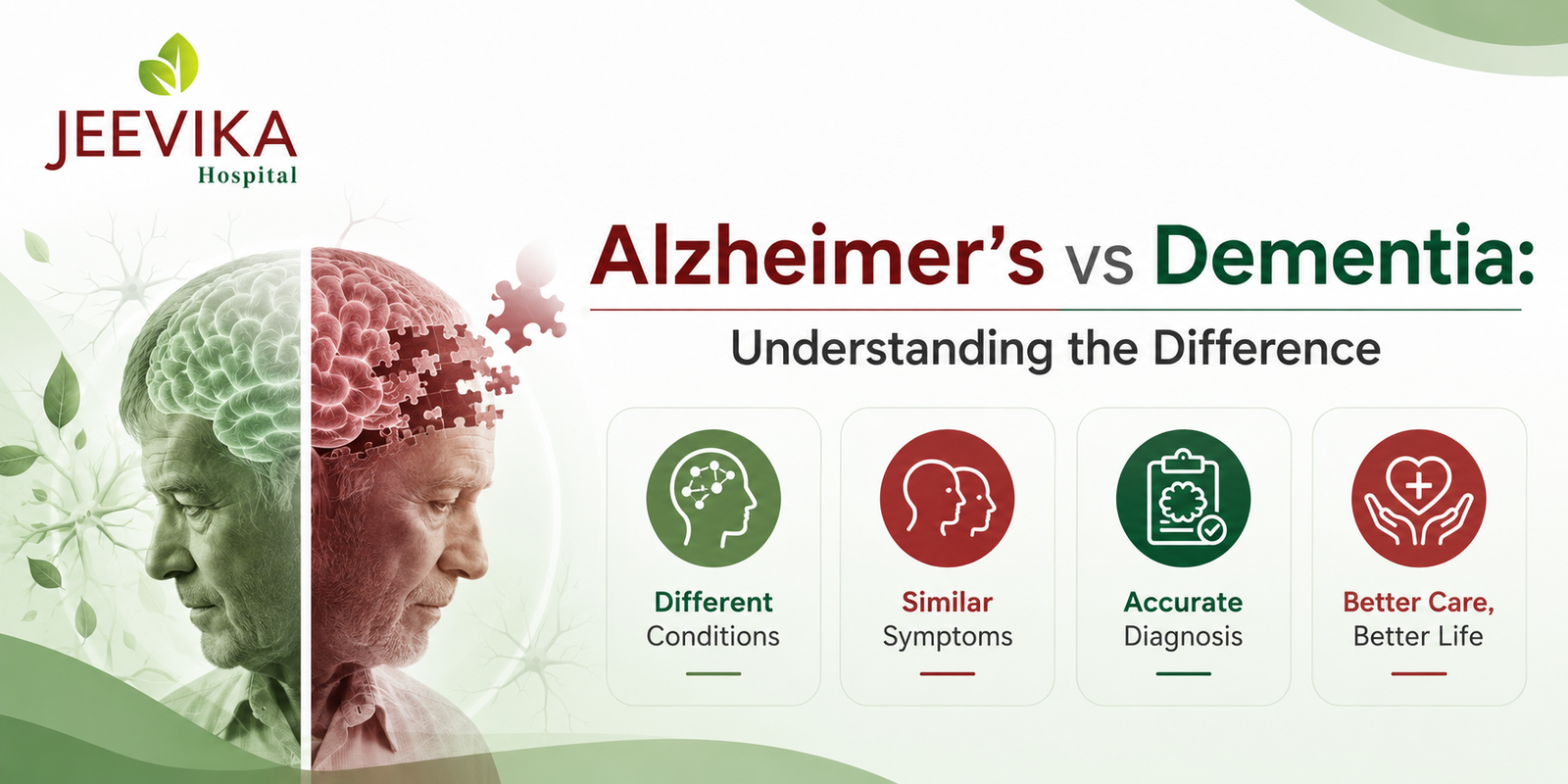
When my grandmother began misplacing her keys, neighbors whispered, “It might be Alzheimer’s.” Another friend insisted, “Maybe it’s just dementia.” The mix-up is common. So, let’s clear the fog surrounding Alzheimer’s vs dementia: understanding the difference.
Alzheimer’s vs Dementia :Two Words, Two Meanings
Dementia is not a single illness. Instead, it is an umbrella term for a set of symptoms that affect memory, thinking, and daily skills. Alzheimer’s disease is one specific, and the most common, cause of those symptoms. Picture dementia as a playlist; Alzheimer’s is only one song on it.
Key Features of Dementia
- Dementia is a group of symptoms rather than a specific disease.
- Caused by a variety of factors: Alzheimer’s, blood flow problems, Parkinson’s, even vitamin deficiencies
- Symptoms: forgetfulness, language problems, mood swings, difficulty with daily tasks
Key Features of Alzheimer’s
- Brain disease that gets worse over time, characterised by sticky protein deposits and tangles
- Begins with short-term memory loss, then gradually impacts reasoning, language and behaviour
- No cure yet, but some treatments can help manage certain symptoms.
How Doctors Differentiate
Ever wonder why one family member receives a diagnosis with an “Alzheimer’s” label, while another receives a more general “dementia” note? The doctors will:
- Talk to your family and look at your medical history.
- Blood tests to check for thyroid or vitamin deficiencies.
- Brain imaging (CT scan or MRI) to look for a stroke or shrinkage of your brain.
- Cognitive tests such as recalling lists or drawing clocks
If the pattern fits with Alzheimer’s, that’s the diagnosis. If the cause of the symptoms is unclear or involves multiple factors, the diagnosis remains as ‘dementia.’
Why the Difference Matters
Knowing the exact cause guides care plans.
- Alzheimer’s often benefits from drugs that boost brain chemicals.
- Vascular dementia calls for strict blood-pressure and cholesterol control.
- Some dementias, such as those linked to medication side effects, can even be reversed.
Getting the name right means getting the help right.
Everyday Tips for Carers and Friends
- Keep sentences short and friendly; stress adds confusion.
- Label cupboards or use color-coded drawers—small visual cues minimize frustration.
- Encourage light exercise: a walk can lift mood and slow decline.
- Ask open-ended questions: “Would you like tea or juice?” instead of “Do you want tea?” Simple choices preserve dignity.
A Quick Self-Check
Do you still wonder about the difference between Alzheimer’s and dementia? Ask yourself:
1. Am I talking about a symptom group (dementia) or a specific disease (Alzheimer’s)?
2. Are the symptoms steady, improving, or worsening over time?
3. Have I consulted a professional for proper testing?
Conclusion
Alzheimer’s vs Dementia: Understanding the Difference is less about labels and more about support. If you or someone you love is concerned about changes in memory, talk to your doctor, make notes of what you observe each day, and remember: clarity in the early stages can lead to better care, relief, and moments of connection that matter.

